


Photo-Illustration: Curbed; Photos: Getty
When my friend and her husband first moved into a new-build Brooklyn mid-rise in 2022, the apartment’s floor-to-ceiling windows had been a big selling point. Who doesn’t love natural light? But after living there for a while, it became clear that having big windows was actually kind of a pain. First, it was impossible to find off-the-rack curtains — everything that fit was either extremely expensive or custom. Then there was the fact that despite their size, the windows only opened a tiny crack, making a decent breeze nearly impossible. Opening them also presented other issues: “They have no screens,” she says. “Lots of bugs get in.” Now that she’s looking to move, she’s finding that even more apartments have the same window problems — giant, unopenable, impossible to find a screen for or curtains that fit. She found herself asking, Where have all the normal windows gone?
The trend among new builds over the last few decades has been a move away from classic double-hung windows — the kind you might find in a rent-stabilized prewar building or a brownstone — and toward larger windows, either casements that open fully or tilt-and-turn European-style windows that can both swing inwards and open from the top (although child locks often keep them from opening to their full potential). If you haven’t noticed this yet, take a look at new builds from Fort Greene to Long Island City to Mott Haven. Big windows abound. “For market-rate rentals or condominium buildings, this is quickly becoming the norm,” says Dave Maundrell, executive vice-president of new development at Corcoran. According to the brokers and window experts I talked to, there are a few reasons this style has become more ubiquitous: They’re more energy efficient; double-hung windows don’t make sense in the ever-ubiquitous glass-façade new build; and bigger windows can increase the price developers get for apartments. “Double-hung windows are pretty much out unless it’s required as a Landmark District building,” says Bruce Ehrmann, a broker and new-development specialist at Douglas Elliman.
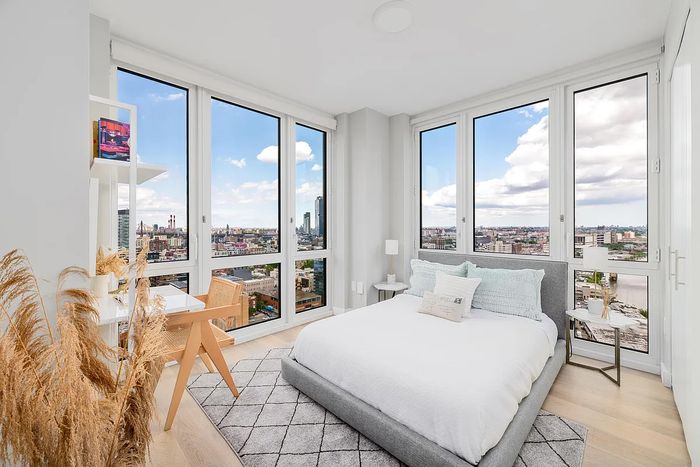
This listing photo shows an example of the type of the common casement or tilt-and-turn windows found in new builds.
Photo: TF Cornerstone

The classic double- or single-hung windows found in older buildings.
Photo: StasyaAnt/Getty Images
So how are the people moving into these buildings keeping, say, giant black flies out of their apartment on a spring afternoon? You can’t just buy something at Home Depot and pop it in, so trying to get fresh air means letting everything else inside, too. People have gone mad, at least on Reddit, trying to solve the issue. “My building is a newer luxury building and it has those windows that open on a hinge inward,” one person wrote. “But I’m in dire need of a screen outside so I stop getting mosquitos. Does anyone have any solutions??” Multiple people respond saying they have the same problem. The issue, in part, is that the energy-efficient seal on these kinds of windows don’t leave much room to throw in a screen insert. One four-year-old thread is still active with people trying to figure out a solution, which includes Gorilla Tape–ing screen mesh directly to their window frames. (“That didn’t work.”)
Ehrmann says the problem isn’t just limited to tilt-and-turns but comes up in all kinds of architectural projects that have irregularly shaped windows. He’s careful to tell me all about the positives to these kinds of windows — they can be aesthetically beautiful and let in lots of light — but he agrees the screen problem, even in multimillion-dollar luxury apartments, is real. “Most people don’t realize it until they move into very expensive apartments,” Ehrmann explains, but the “smart ones” get owners to agree to put in custom screens during lease negotiations. Why not plan for this kind of thing in the building phase? “It rarely happens, but it has come up that sometimes developers just forget,” he says. “In their excitement over the architecture, they don’t think about screens.” What clients do usually notice is if it would be difficult to put in curtains and blinds. “A lot of the large sheets of glass you’re talking about, they’re fanciful, irregular in shape, and curved,” Ehrmann says.
Maundrell at Corcoran has tilt-and-turns in his own condo. His management company ended up hiring a custom screen-making company for the whole building and let residents choose whether or not they’d pay for screens in their apartments. Maundrell opted in. “I just kind of caved because I had those damn lanternflies flying around two years ago,” he says with a laugh. He estimated that it cost at least a few hundred dollars per screen. That kind of investment makes sense if you own your place, but if you rent? That’s a lot of money to drop just for screens.
And why don’t window manufacturers just include screens in the first place? Ernesto Cappello, the co-owner of Window Fix, one of the few companies in the five boroughs that makes custom screens for tilt-and-turns, says that it’s kind of Europe’s fault. (Isn’t everything?) Cappello started seeing these windows come in two decades ago from overseas, where energy-efficient window technology was leaps ahead of the United States. But historically, screens are not popular in Europe. (”It’s not something that we come across in this country,” a British window engineer told the New York Times in the early 2000s.) “It’s the weirdest thing,” Cappello says. “I don’t know if it’s the climate or if they just don’t care for it.” Which means that New Yorkers have to turn to a custom solution. In the spring, when the weather shifts, screens are the leading reason people search for Cappello’s firm on Google. He says they can figure out how to manufacture and install a screen in 99 percent of windows, and it can cost $225 and up per screen.
“They’re more beautiful, expansive, and visually arresting than smaller punch-out windows,” says Ehrmann. But he also tells me that when he was renovating his house upstate, he declined to replace the home’s original double-hung windows with larger ones that would let in more of the surrounding landscape. “For all the reasons we’re discussing,” Ehrmann says, “we decided not to do it.”
Sign Up for the Curbed Newsletter
A daily mix of stories about cities, city life, and our always evolving neighborhoods and skylines.
Vox Media, LLC Terms and Privacy Notice
Related