
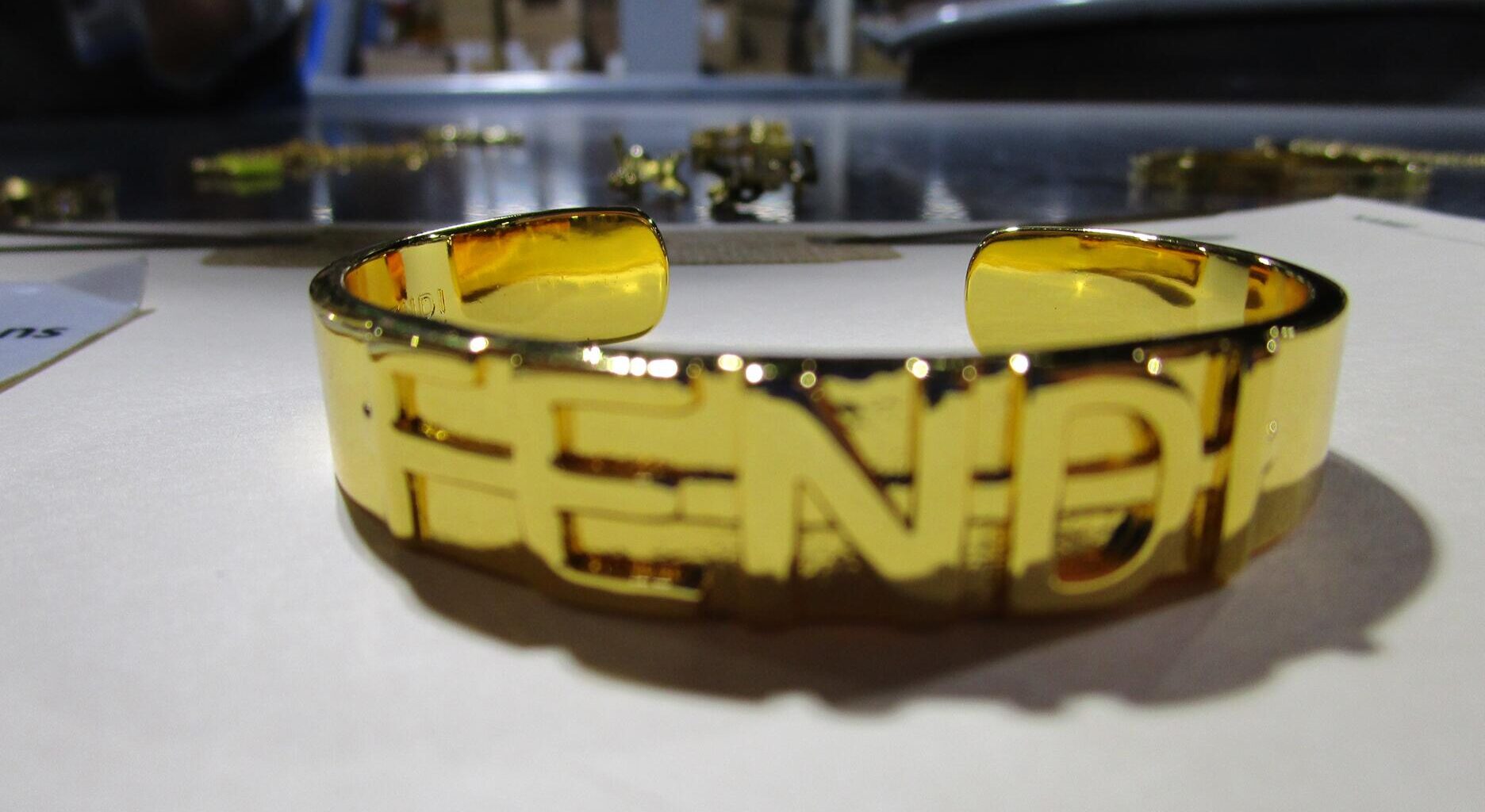
Louisville, Ky.—Customs officials in Kentucky have seized two more shipments of fake designer jewelry, these ones originating in Hong Kong and bound for New York City.
U.S. Customs and Border Protection (CBP) announced last week that agents in Louisville, Kentucky, confiscated 1,588 pieces of jewelry that turned out to be counterfeit.
The seized shipment included: 691 pairs of earrings, 522 bracelets, 197 necklaces, and 178 rings.
CBP said every single piece bore a brand name.
The shipment included pieces made to look like they were from fine jewelry brands—Cartier, Tiffany & Co., and Van Cleef and Arpels—as well as from high-end fashion houses that produce fine and fashion (costume) jewelry: Chanel, Christian Dior, Fendi, Gucci, Louis Vuitton, and Saint Laurent.
The jewelry would have retailed for $9.2 million had it been genuine.
CBP officers pulled the shipment aside because it suspected the jewelry was counterfeit.
They submitted documentation and photos to customs’ trade experts, who worked with the companies that hold the trademarks to verify the products were counterfeit.
Related stories will be right here …
Seizures of counterfeit items are not uncommon.
CBP said it seized more than 78 million counterfeit goods in 2025 that would have been worth more than $7 billion if genuine.
The items confiscated last year included multiple shipments of fake Cartier, Rolex, and Audemars Piguet watches that were headed to New York City, Houston, and Irving, Texas; more than 7,000 pairs of counterfeit Van Cleef & Arpels earrings that were on their way to a residence in Miami; and multiple shipments of fake Cartier and Van Cleef & Arpels jewelry that were headed to residences in Pennsylvania, Florida, and North Carolina, as well as to a business in Wyoming, Michigan.
The CBP noted that counterfeit goods, including all the fake luxury watches and jewelry, are sold via underground outlets and on third-party e-commerce sites, and consumers often buy them thinking they are getting an authentic piece of brand-name jewelry for a great price.
However, the items they are purchasing are of poor quality, and often are made using “harmful and banned” materials by laborers operating under sub-standard conditions, said CBP.