
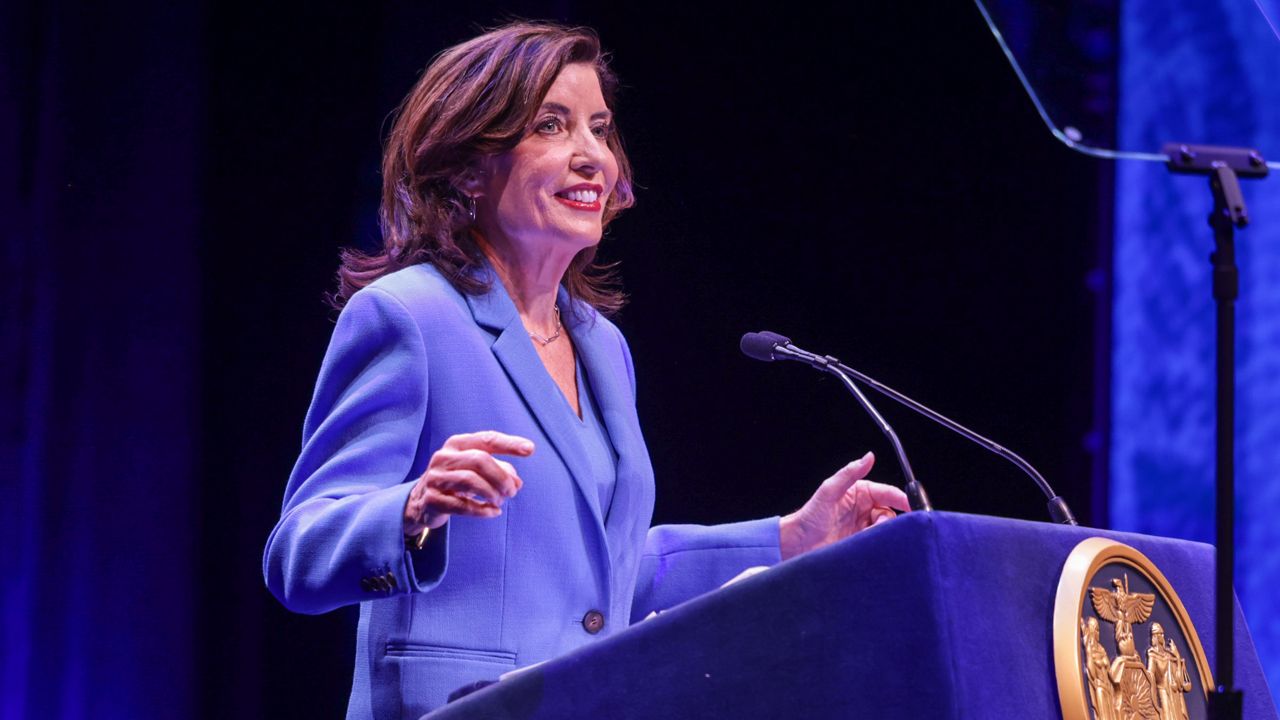
Almost three weeks past the state budget’s April 1 deadline, Gov. Kathy Hochul dug her heels on her proposal to change the state’s auto insurance system, which she argued will make it cheaper for New York drivers.
She said she’s not ready to call it a deal until she gets her way on changes she’s proposed to New York’s auto insurance system.
What You Need To Know
Almost three weeks past the state budget’s April 1 deadline, Gov. Kathy Hochul dug her heels on her proposal to change the state’s auto insurance system
She said she’s not ready to call it a deal until she gets her way on changes she’s proposed to New York’s auto insurance system
Proponents cited data showing the Empire State ranks among the highest nationally for the cost of car insurance
Hochul’s proposal has drawn sharp criticism from some members of the legislature, who are skeptical of promises that it will lower rates and provide adequate coverage for drivers
“My expectation and the only motivation I have in pursuing this is to see premiums decline,” she told reporters at Wagner Farm in Poestenkill, outside of Albany, while pushing proposals she said will make costs cheaper for policyholders.
“What we expect will happen is that we start removing some of the unique aspects of New York, which is liability laws that end up with enormous jackpot payouts in court that you don’t see in other cases. I mean, that’s a huge driver. Plus, the laws on fraud need to be tightened up. I want stricter penalty. I want more aggressive enforcement,” she said when asked about her plan.
Proponents cited data showing the Empire State ranks among the highest nationally for the cost of car insurance.
“As of 2023, New York had the third highest average auto premium in the country. The only states ahead of us, Florida and Louisiana passed reforms to their system, so if you go forward to today in 2026, it’s pretty possible that New York drivers pay the highest average premiums in the country,” said Sean Campion, of the fiscally conservative Citizens Budget Commission, citing testimony presented to the legislature this year.
New York is also one of just a handful of states that provide generous coverage to drivers — even if they are found to be at fault for the accident itself.
“A lot of it’s staged accidents. You’ll see that, you know, there’s evidence out there, which is rather appalling. It’s pretty brazen when you think about what people are doing, literally slamming into an MTA bus and then claiming if the bus is false,” said Hochul.
But when asked when New York drivers will see savings if her plan goes through, Hochul explained it’s unclear.
“In Florida it was a year, then the second year people saw a decline. I think six months is probably not realistic. I want to see more insurers enter the marketplace,” said Hochul.
“So I would say a year,” she added.
Hochul’s proposal has drawn sharp criticism from some members of the legislature, who are skeptical of promises that it will lower rates and provide adequate coverage for drivers.
“If we do these changes, then people will indeed see a reduction in the insurance that they’re going to pay,” said Democratic state Sen. Majority Leader Andrea Stewart-Cousins during a separate news conference at the State Capitol Building on Tuesday.
“We want to see changes in the way our DFS operates; we want to see changes in the way car insurance companies operate,” she added.
The Trial Lawyers Association, one of the main opponents to Hochul’s plan, told NY1 in a statement that while they back her efforts to combat fraud, “What we oppose is rolling back New Yorkers’ rights. While the Governor is parroting insurance company talking points, the companies are making billions by investing the float, which grows the longer claims are delayed or denied. That is the business model. Why should New York reinforce it?”
Meanwhile, the governor is also pushing for new taxes on second homes in New York City, arguing it will help fill Mayor Zohran Mamdani’s $5.4 billion budget hole.
“He’s not calling me on this topic,” she said, reacting to criticism from President Donald Trump after he blamed Mamdani for her proposal.
“It’s a better, small subset of our population that we’re looking to bring in continuous revenues,” she added, defending her idea.
Legislators are on track to pass their sixth budget extender Wednesday.