
In his three decades on the job, Daniel Martuscello has seen it all — but he really didn’t like what he saw last year.
“It’s certainly been the toughest year in my career of 29 years with the agency, and it was traumatic for all involved,” Martuscello, the commissioner of the state’s Department of Corrections and Community Supervision, said.
What You Need To Know
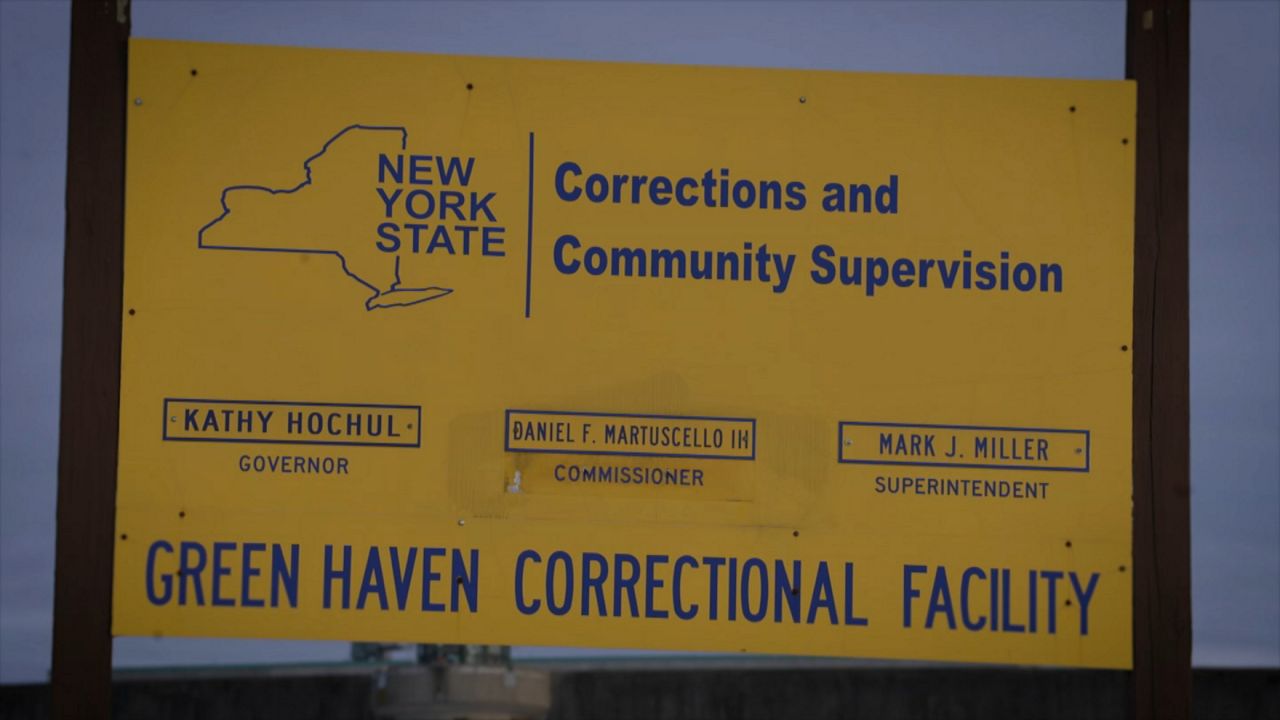
NY1 went inside one of the state’s largest prisons — Green Haven Correctional Facility — for an exclusive look beyond its walls to see how the system and its leadership were managing a crisis
As NY1 has been reporting, violence in state prisons has skyrocketed over the last 10 years. According to exclusive data provided to NY1 through the state’s Freedom of Information Law, use of force incidents by correction staff have increased 156% statewide between 2015 and 2024
At Green Haven, the use of force by correction staff has increased dramatically, going from 89 incidents in 2015 to 357 incidents in 2024, the last full year data was provided to NY1. That’s a 301% increase, far outpacing many other state prisons
NY1 went inside one of the state’s largest prisons — Green Haven Correctional Facility — for an exclusive look beyond its walls to see how the system and its leadership were managing a crisis.
“We’re not perfect, right? Clearly, we murdered two people, right?” the commissioner said. “It’s the worst thing. Two people were murdered at the hands of staff. I was very upfront with public statements early on. And I made immediate changes.”
As NY1 has been reporting, violence in state prisons has skyrocketed over the last 10 years. According to exclusive data provided to NY1 through the state’s Freedom of Information Law, use of force incidents by correction staff have increased 156% statewide between 2015 and 2024.
And Green Haven Correctional Facility in Stormville is no different.
At Green Haven, the use of force by correction staff has increased dramatically, going from 89 incidents in 2015 to 357 incidents in 2024, the last full year data was provided to NY1. That’s a 301% increase, far outpacing many other state prisons.
NY1 asked: How does something like that happen?
“A lot of things have changed over the years,” Martuscello said. “We definitely have a population that is convicted of more violent offenses and as a result we’ve have seen a continued increase over the years of assaults on staff, assaults of incarcerated on incarcerated and allegations of excessive force.
“My focus has really been on reversing that trend, and I am hoping we hit that bell curve this year. And you do that with a variety of ways: you do that training staff, de-escalation, interpersonal communications skills, so that way we’re using our mouth and our minds long before our hands,” he continued.
They are trying to get back to normal, reintroducing programming.
NY1 attended an all-day performance by inmates — who sang, and in one case collaborated with a correction officer — highlighting the tensions between inmates and staff in a skit.
“A lot of times we’re forgotten,” said Officer Charles Hull, who performed alongside men in the prison. “As we talk about the population of the incarcerated individuals [who] are forgotten and left here to rot, sometimes as officers we fall right into being thought of after every other first responder, nurses, state police. We’re locked in these walls. We’re not seen or heard from. Only when something bad happens.”
In the last 18 months, according to the Onondaga County district attorney’s office, 29 officers or sergeants have been charged in connection with the murder of two inmates. Many of them pleaded guilty. Two were convicted, one of manslaughter, another of manslaughter and murder. More trials are expected this spring.
In one of those beatings, that of Messiah Nantwi, officers were accused of obscuring or turning off their body cameras.
So NY1 asked: People look at those two incidents, those two murders, and they say, “How can there not be systemic issues in the state’s prison system?”
“I’ve watched those videos like the world and they were horrific and those people involved in that act were very comfortable with what they were doing,” the commissioner responded. “And we quickly launched investigations, outside prosecutions, and some of those individuals are incarcerated in my system. And as commissioner, I certainly need to ask the question and question everything that’s going on in the system.”
The department hired a private law firm to perform an assessment of the system.
All officers have been equipped with body cameras since last July.
And the state is in the process of installing fixed cameras throughout all of its facilities, the commissioner said.
Of the 41 state prisons, just 11 of them have full camera coverage.
“Cameras tell the truth. Right?” the commissioner said. “No matter who is at fault, cameras capture it, and we can move that moving forward in arbitrations and discipline of incarcerated.”
Still a year after a wildcat strike, where 10,000 officers walked off the job, bringing in the National Guard, the troops are still there.
There are 2,700 members of the National Guard still on duty, working in state prisons because of thousands of vacancies.
“The other key metric for me is how we stabilize the retention,” Martuscello said, “and so we were upwards of 60 to 80 every two weeks losing, and it’s now down to 21.”
Inside one of the housing units at Green Haven, the department is trying a new pilot program.
Here, inmates act as mediators or credible messengers in other parts of the facility — in an attempt to diffuse violent situations.
“We go to every block in the jail within a week,” Horace Hampton, an inmate in the unit, said. “We talk to the inmates and ask them if they have any problems, do they need to talk to us?”
“So I’m from Brooklyn. He’s from the Bronx,” said Dupree Harris, who is also an inmate on the unit. “Let’s say the guy is from the Bronx. We’re gonna make sure [these] gentlemen, Mr. Gig, he pulls up cause he’s from the Bronx and he understands that more than me, cause I’m from Brooklyn.”
Those inside see it making improvements.
“This program is the vehicle for the change,” Leroy Nelson said. “Because a lot of what happened with the strike and what happened with the death is a miscommunication between fellow IIs and the staff. This program has given us workshops where we learn how to communicate with the staff, but we can also hear input from the staff and be able to look at it from their perspective. So, we’re bridging the gap.”
It’s unclear if the department will roll out the program to other prisons across the state.
And it’s a positive thing, the commissioner says, his community should focus on.
“It’s gotta be based on dignity respect and the humanity in one another and we shouldn’t treat each other any differently whether it’s you and I or if it’s an officer and an incarcerated person or anything else and when we can get down to that key foundation and recognize we are people first we will run a safer correctional system in New York,” he said.