
How has your time playing at The Whale shaped your hockey careers?
Hartje: College is a formative time in your life, but playing for the Yale women’s ice hockey team was one of the best decisions I’ve ever made. We were lucky enough to go to the Frozen Four in my sophomore year and Anna’s freshman year. We were ranked first in the nation at one point. We did a lot of winning while we were at Yale. Playing at Yale shaped my hockey career in terms of helping to develop a sense of self in hockey, a leadership style as a captain, and being surrounded by like-minded people who cared so much.
Bargman: Being able to go to the Frozen Four pushed my hockey career to a place of growth and helped me develop so much on the ice and off the ice.
What’s it been like playing together again for the New York Sirens?
Bargman: It’s almost surreal. When I got drafted to New York, Elle had texted me, and one of the first things that I thought was, “Wow! We just spent three years together, and now I’m lucky enough to get another.” It was good to have a friendly face and somebody that I trusted and knew already on and off the ice.
Hartje: When I knew Anna was in the draft, I really wanted to be able to play with her. The odds weren’t great; there’s eight teams and one her. So, I was excited when her name got announced in New York. We were line mates for three years [at Yale] and did pretty well together. We’ve always had some great chemistry, and it’s always so much fun to play with her.
Why do you think women’s hockey is becoming more popular in the U.S.?
Hartje: There’s a lot that came before us, including attempts at different leagues. This is the first time where all the best players in the world are really condensing in one league and wanting to make this thing work. The biggest reason why we’re seeing so much growth is because up top, they’re really committed to providing the resources, the funding, and the media availability and are just pushing this thing forward.
Bargman: The fan base and the interest has always been there under the surface. This was an investment for Mark Walter [founding financier of the PWHL], but he trusted Billie Jean King [who was instrumental in organizing funding for the PWHL’s launch] and the women who said there’s a market here.
What are your hopes for women’s hockey moving forward?
Bargman: I hope that it continues to grow and that it continues to get the attention that it deserves. I hope that girls growing up now and girls growing up in the future can set their sights on the PWHL.
Hartje: In the near term, we’re trying to expand to new markets. Right now, there’s only eight teams, but it’s been announced that there’s going to be some more added. I think people forget this is a very new league. Also, there’s not a national broadcast deal for the entire year yet. Right now, you can watch on YouTube. But I think getting those casual viewers — where you’re just flipping through channels, and you can see the PWHL game in the United States — is a short-term goal that we’re working toward.
Has there been a favorite moment of playing together for the Sirens yet?
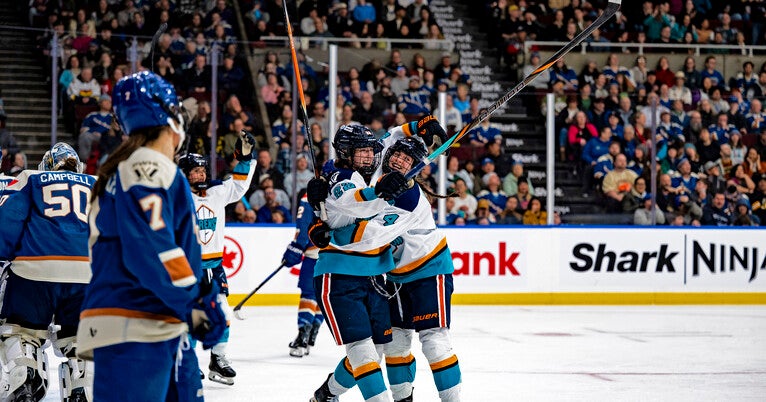
Hartje: We got to be reunited on the line together for one game in Vancouver [in March], and it was sort of like riding a bike. I kind of just always know where she’s going to be. When you play with someone for three years and you’re practicing every single day together, I think that comes with the territory. We’ve always worked so well together. So, when they put us on the line together, we were really excited, and Anna ended up scoring.
Bargman: I just remember singing the Bulldog fight song to Elle, and she was just like, “This feels good.”