
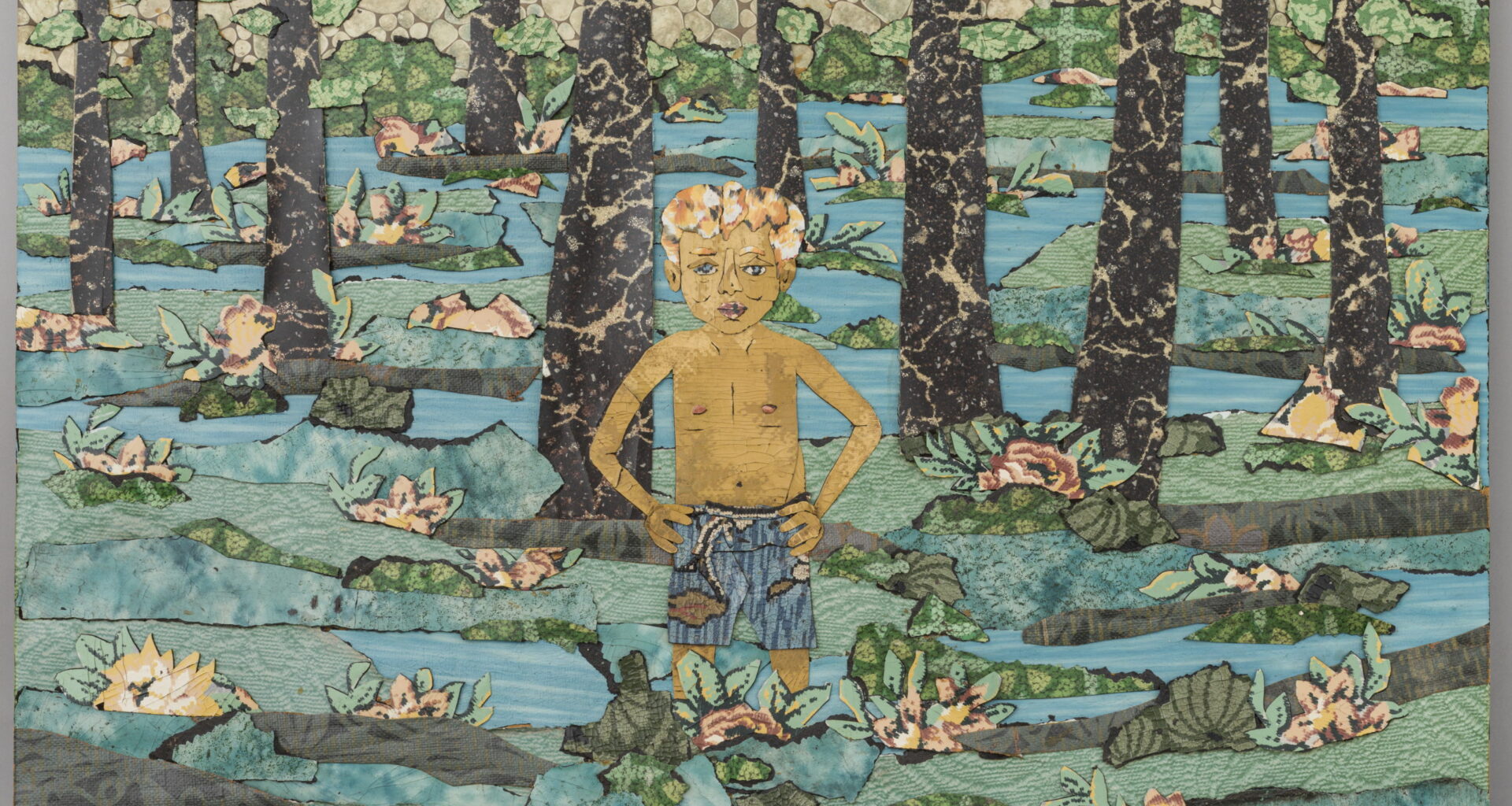
Spring is ushering in a veritable spread of museum shows across New York—from major exhibitions on such art-world luminaries as Marcel Duchamp and Raphael to spotlights on photography, fashion, and architecture, all unfolding alongside the sprawling surveys of the Whitney Biennial and Greater New York. Here’s our round-up of what’s unmissable.
1. “Noguchi’s New York” at the Noguchi Museum
Through September 13
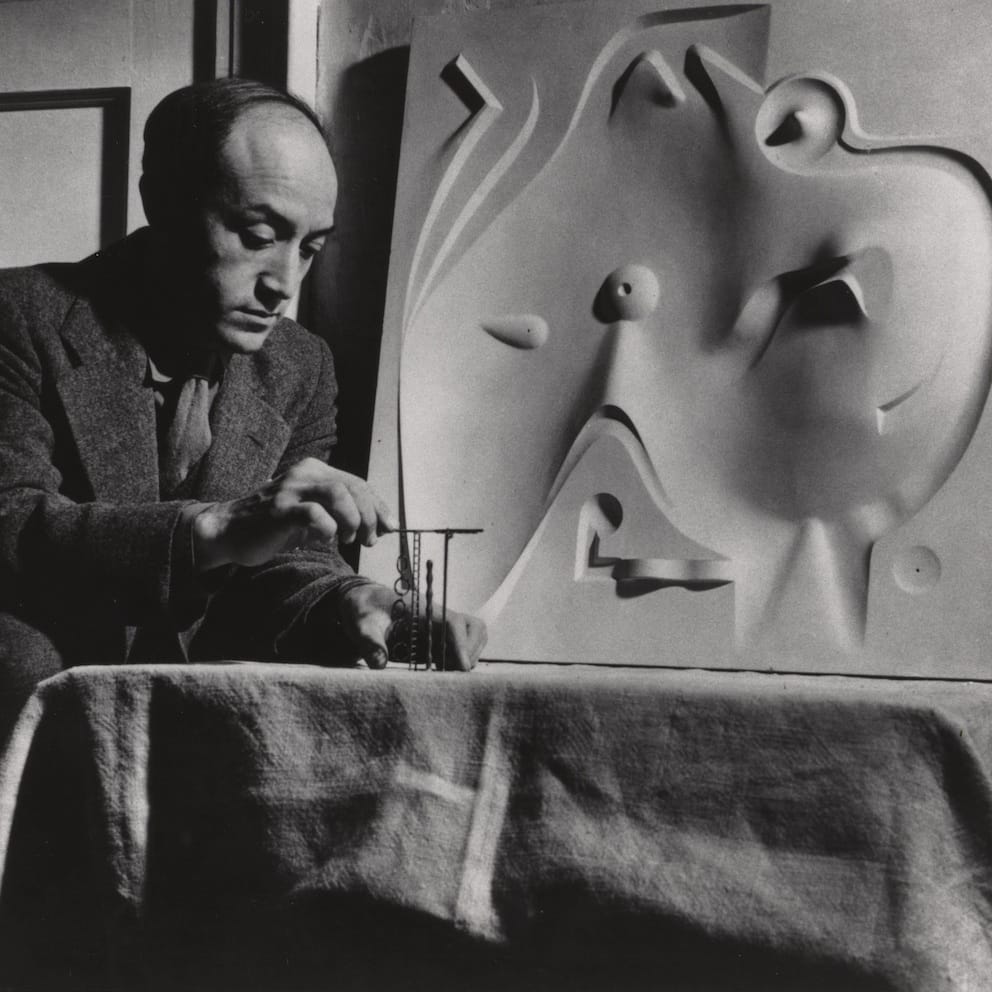
Isamu Noguchi with plaster model for Contoured Playground (1941) and model for a jungle gym element for Ala Moana Park (circa 1940). Photo courtesy of the Noguchi Museum Archive, ©INFGM/ARS.
Although Isamu Noguchi’s practice bore the influences of an itinerant life—from the bark paper and bamboo constructions he encountered in Gifu, Japan, to the treatment of marble he learned in Carrara, Italy—the great sculptor was, ultimately, a New Yorker. Beginning in 1922, the city was Noguchi’s on-and-off home for nearly 70 years and, as an exhibition at the Long Island City museum he established shows, he had a great many ideas for it.
Play Mountain was one such idea: a sloped playground the size of a city block that he dreamed of erecting in the middle of Central Park. He pitched it to the Public Works of Art Project in 1934, but was laughed out of the room by none other than Robert Moses. Later installations planned for the United Nations, Riverside Park, and Bronx Zoo would also be scrapped, stories which are told through the models, archival photographs, and dogged correspondence on display at the exhibition. —Richard Whiddington
2. “Raphael: Sublime Poetry” at the Metropolitan Museum of Art
Through June 28
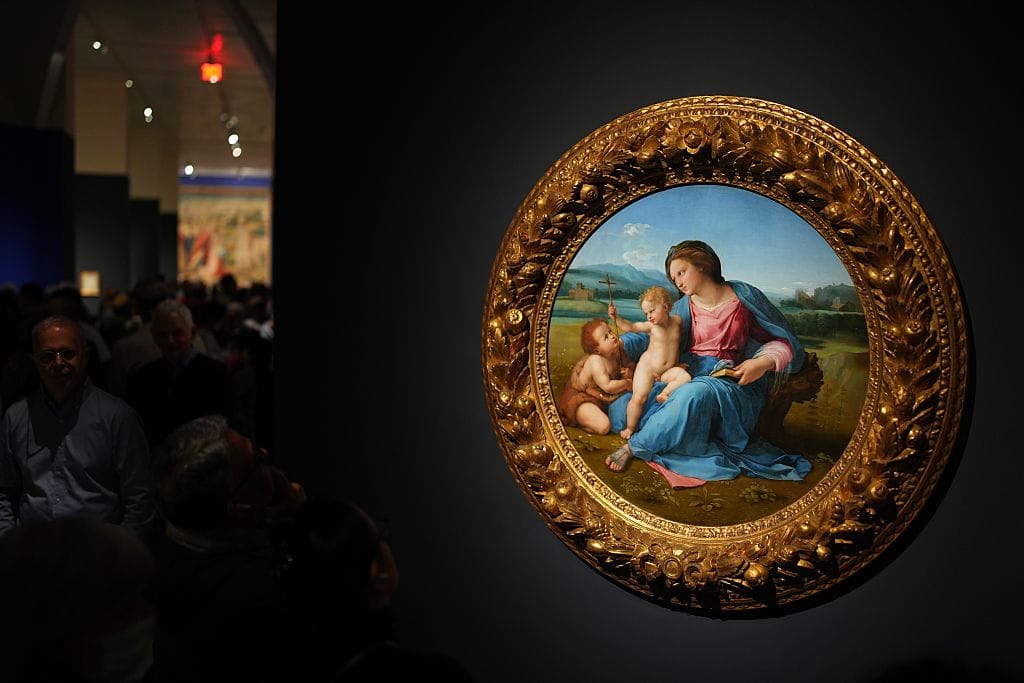
Raphael, The Virgin and Child with Infant Saint John the; Baptist in a Landscape (The Alba Madonna) around 1509-11. Loaned from National Gallery of Art, Washington. On view in “Raphael: Sublime Poetry” at the Metropolitan Museum of Art on March 28, 2026 in New York. Photo by Liao Pan/China News Service/VCG via Getty Images.
In the 1510s, Michelangelo began openly criticizing the hottest painter in Rome for being derivative and employing dozens of assistants to execute his litany of projects. That man was Raffaello di Giovanni Santi—aka Raphael—a precocious talent who had synthesized painterly styles in the late 1400s to become the Vatican’s darling by the age of 25.
Visitors to the Met’s once-in-a-generation show “Raphael: Sublime Poetry” may not share Michelangelo discontents, but through the more than 170 works amassed in New York, they will certainly leave with a fuller sense of the man the Renaissance chronicler Giorgio Vasari called a “mortal god.” The show traces Raphael’s full life, from growing up in Urbino to a middling stint in Florence to his glorious successes at the papal court. Along the way, there were lovers, rivals, oodles of money, and a tragically premature end that, if rumors are to be believed, had Pope Leo X weeping. —R.W.
3. “Gothic by Design: The Dawn of Architectural Draftsmanship” at the Metropolitan Museum of Art
Through July 19
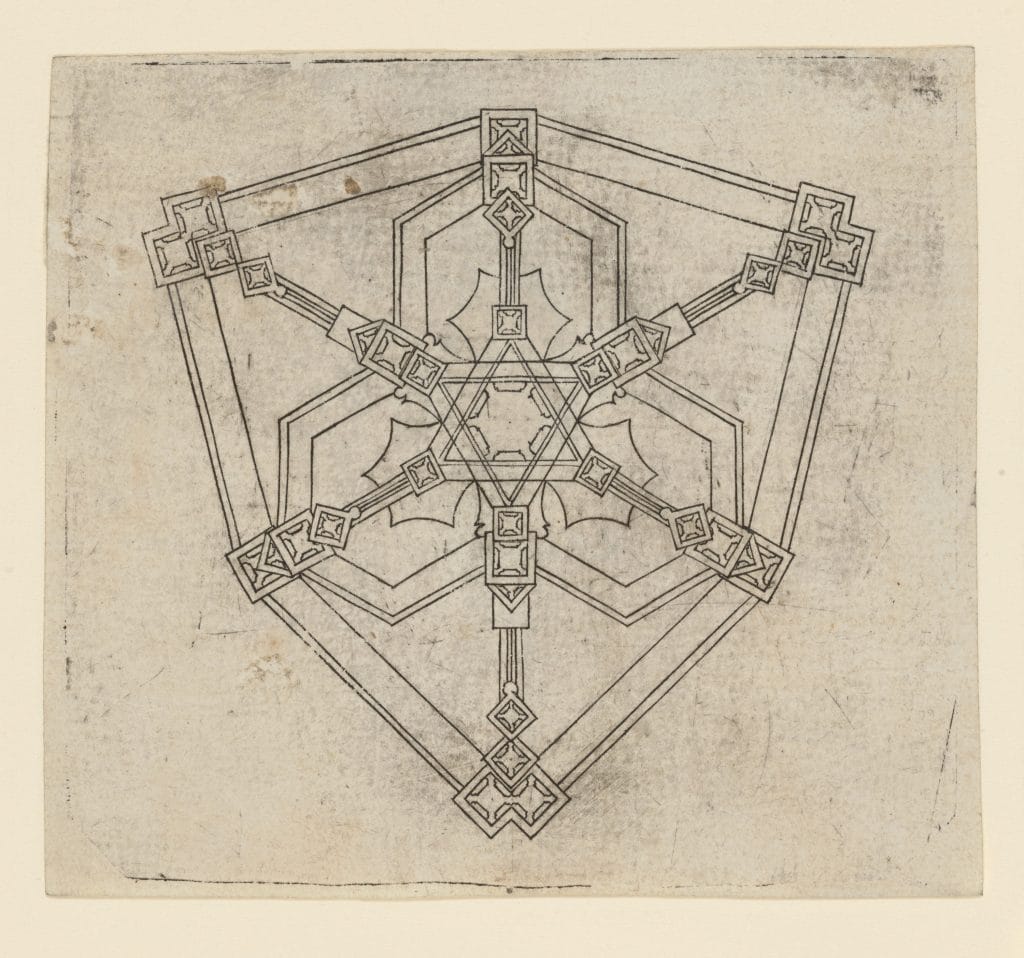
Circle of Erwin von Steinbach, Elevation for the Tower of Freiburg Minster (c. 1300). Germanisches Nationalmuseum, Nuremberg. Photo courtesy of the Met.
Gothic monuments from the Notre-Dame to the Cologne Cathedral transformed the European skyline from the 12th century, sending complex spires and towers upward in a sign of divine aspiration. Within, rib vaults and pointed arches ensured these structures were airy and light-filled. These intricate designs called on an exacting process that began at the architects’ drawing boards. Often left unseen and overlooked, these drawings and prints are getting the rare spotlight at the Met, in a show that explores Gothic architecture drawings within an art-historical context.
Here, we’ll get a glimpse of more than 90 works—from blueprints and goldsmith works to architectural elements—to highlight the impact of drawing on the development of the Gothic style from the 13th to 16th century. These graphic pieces, gathered from the museum’s collections and a dozen lenders, will be juxtaposed against objects from the era, drawing out the strategies, collaborations, and thinking behind the Gothic building practice. These are themes, said curator Femke Speelberg, that “resonate across time and culture, including identity and legacy building, artistic development and creative exploration, and ingenuity and wit in design.” —Min Chen
4. “Marcel Duchamp” at the Museum of Modern Art
Through August 22
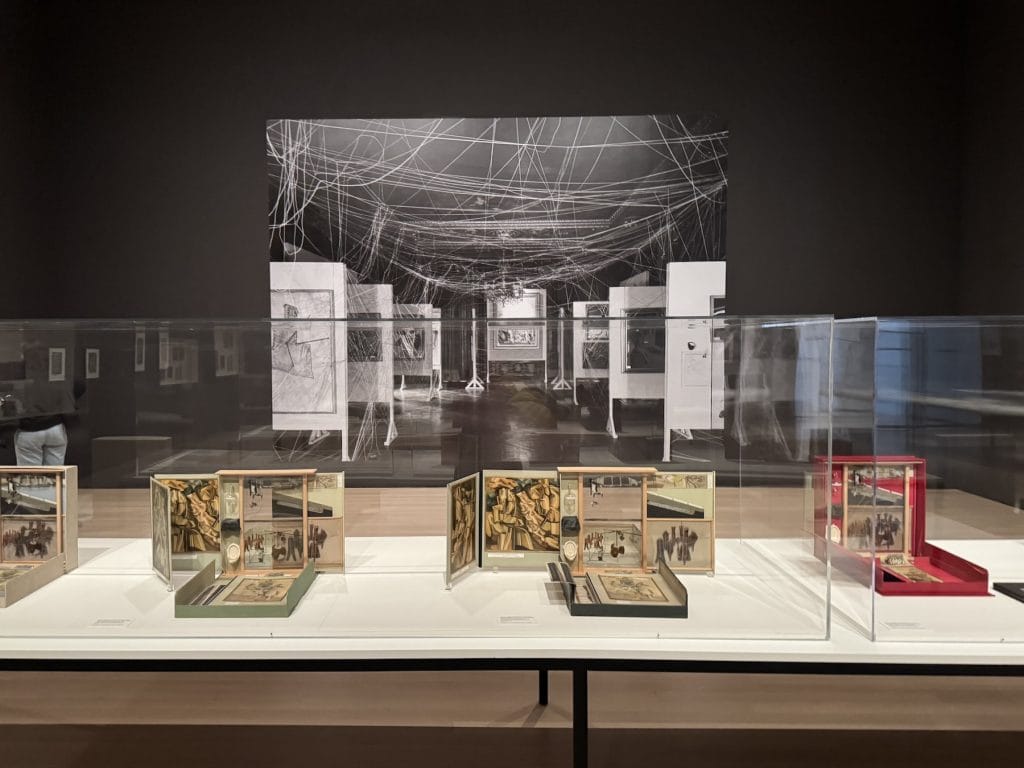
Museum display of Marcel Duchamp’s Boîte-en-valise sets in glass cases, positioned before a large black-and-white photograph of the 1942 “First Papers of Surrealism” exhibition. Photo by Ben Davis.
It’s astounding that Duchamp hasn’t had an American retrospective in over half a century, considering the fact that this French avant garde artist might be the most cited name of our confounding times. MoMA and the Philadelphia Museum of Art organized the last one—and they’ve joined forces on this one, too.
This show’s nine chronological sections span painting and sculpture (including many readymades), plus film, photography, and engrossing ephemera. Most of Duchamp’s most famous works appear, including all three versions of the scandalous Nude Descending a Staircase (1913), the notorious Fountain (1917)—which he took a decade to claim—as well as the mustachioed Mona Lisa in L.H.O.O.Q. (1919).
But, deeper cuts like Duchamp’s paintings aim to humanize the artist and prove there’s still room for revelations, even when it comes to him. Most of all, though, MoMA and the Philadelphia Museum of Art—which will host a fuller edition of the show come October—have constructed an engaging exhibition. Each space inside offers its own universe. Altogether, this just might be the very type of spectacle we can imagine Duchamp would have wanted. —Vittoria Benzine
5. “Hujar:Contact” at the Morgan Library and Museum
May 22–October 25
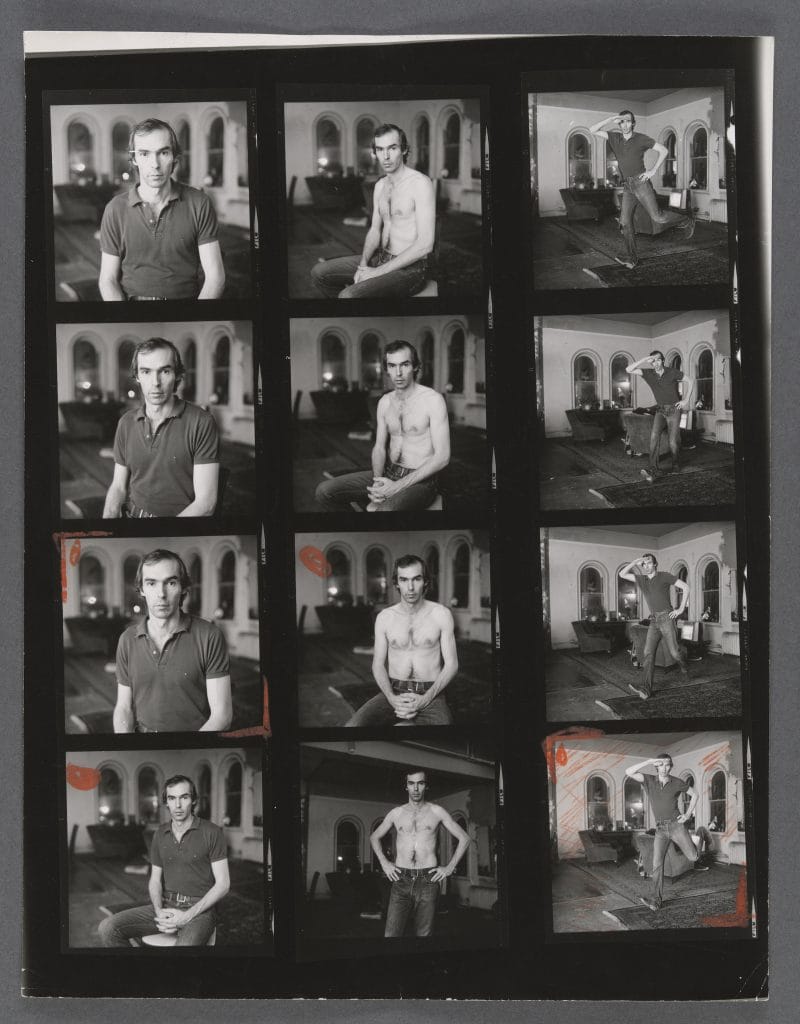
Peter Hujar, Self-portraits at 189 Second Avenue, 1974, job 620. Courtesy of Fraenkel Gallery, San Francisco and Ortuzar, New York; © The Peter Hujar Archive / Artists Rights Society (ARS).
In 1947, at the age of 13, Peter Hujar received his first camera and for the next four decades he was rarely without one. “I can express myself only through photography,” he once said. As visitors to the Morgan Library and Museum will discover, Hujar’s stark and atmospheric black-and-white photographs have rather a lot to express.
The Morgan is the holder of more than 5,700 of Hujar’s contact sheets, which the photographer filed with haphazard organization from 1955 until his death of AIDS-related pneumonia in 1987. More than 100 are on show here, images that trace Hujar’s path from studio assistant to intrepid freelancer of the 1960s to fixture of the East Village scene of the 1970s and 1980s. Many contact sheets are marked with ideas about cropping and printing, offering insight into Hujar’s thought process, an avenue recently explored by a memoir of the photographer and his fickle relationship with the artist Paul Thek. —R.W.
6. “Whitney Biennial” at the Whitney Museum of American Art
Through August 23
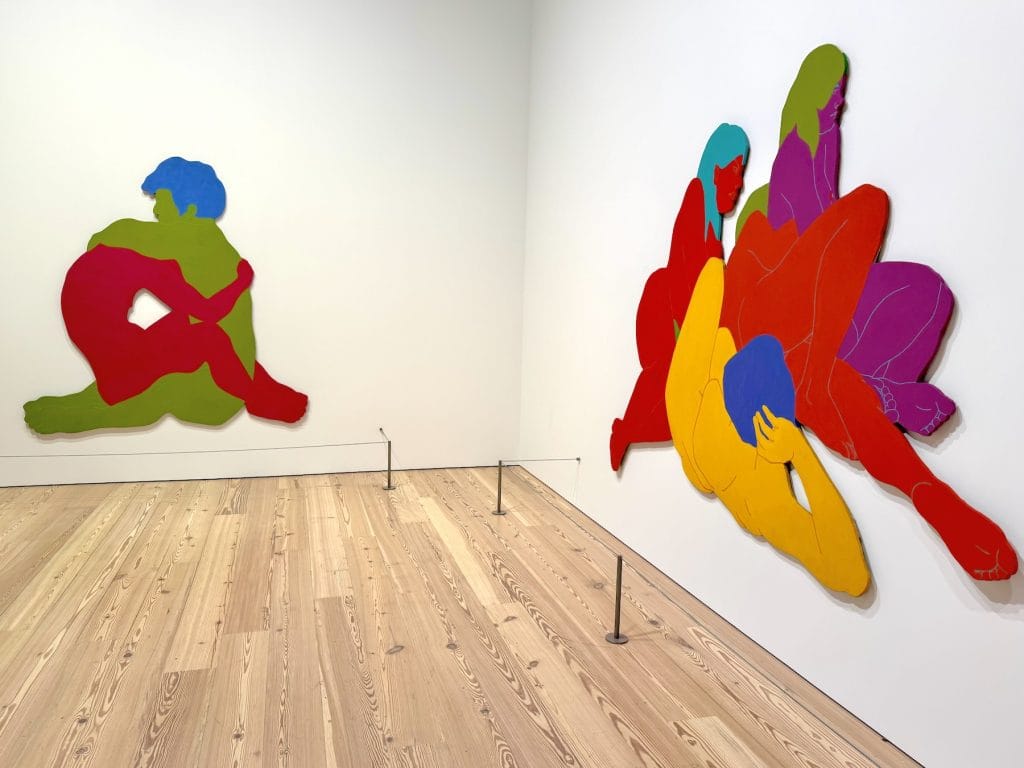
Two works by Carmen de Monteflores in the 2026 Whitney Biennial. Photo by Ben Davis.
Maybe it doesn’t matter if the Whitney Biennial is good—you just have to see it. At 94 years old, it’s America’s longest running survey of domestic art and the blueprint for numerous such shows, a veritable bellwether. But, the Biennial’s also a mirror. I’m not the first writer to notice how much media attention this event gets. I barely saw the art at the opening while catching up with my colleagues.
Two of the Whitney’s in-house curators organized this latest, untitled edition. Critical response overwhelmingly says their work’s “meh.” I would agree that the show feels “roomy”, but I’m not sure if it’s scared, complicit, or something else.
The last Biennial, “Even Better Than the Real Thing,” organized by Whitney curator Chrissie Iles and independent curator Meg Onli, sparked spirited, disparate responses that harmonized into a rich conversation. Critics called the presentation visually compelling, albeit politically toothless, despite its stated aims. America doesn’t know what it wants from art. This latest edition has beauty and spectacle, too. Go sit with Zach Blas’s techno rites on the ground floor, or Kelly Akashi’s ghostly fireplace Monument (Altadena) (2026) on one terrace. If you can’t make it to New York, check out our photos. —V.B.
7. “Andy Warhol Family Album” at the Whitney Museum of American Art
April 30–October 19
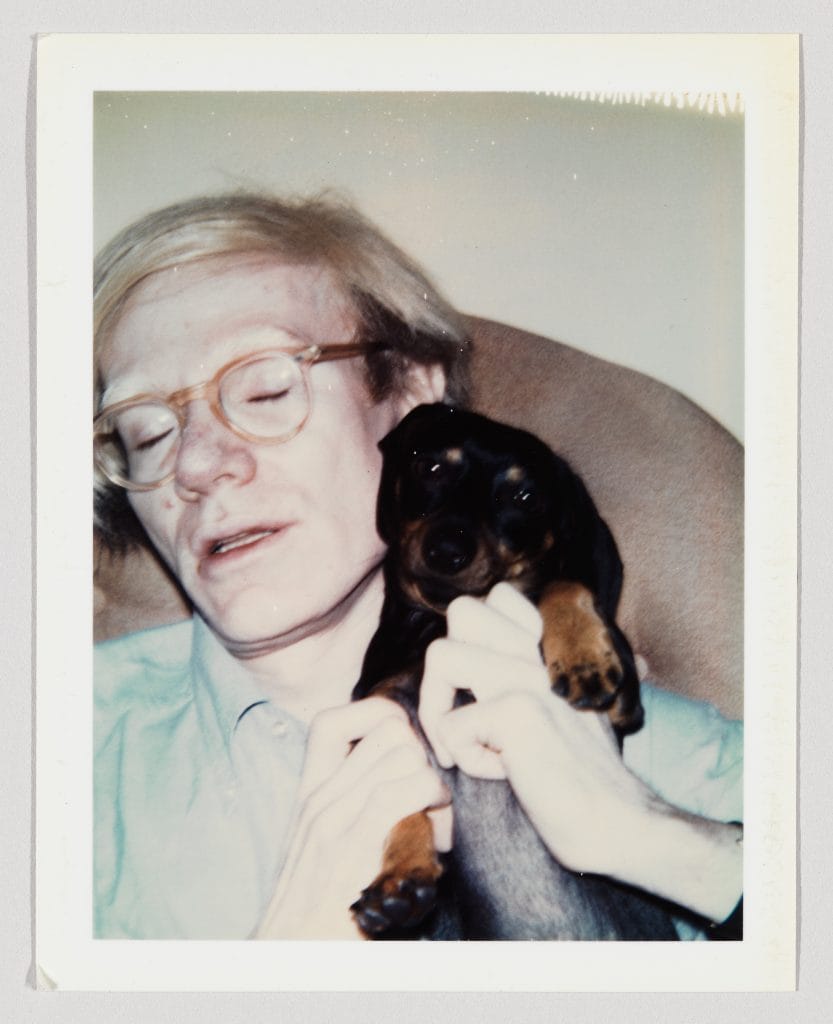
Andy Warhol, Andy Warhol and Archie (1973). © The Andy Warhol Foundation for the Visual Arts, Inc. / Licensed by Artists Rights Society (ARS), New York
After acquiring his first Polaroid camera in the mid-1960s, Andy Warhol was almost never without the device. With it, he snapped hundreds of thousands of images—of his friends and collaborators, his travels, visitors to his home, down to the most mundane detail of his everyday life. These photos came to fill six albums, a personal archive of sorts for the Pop artist—one of which is emerging at the Whitney, revealing 732 Polaroid images that he shot between 1972 and 1973.
It offers an intimate peek into the artist’s daily routine, as well as his starry circle. His Superstars like Ultra Violet show up, as does his one-time lover Jed Johnson. There are snapshots of Diane Von Furstenberg, Yves Saint Laurent, and Bianca Jagger, and even more of Warhol’s beloved pooch Archie. “Some are gorgeous photographs in their own right; some are basically outtakes,” said curator Roxanne Smith. “Together they are an intimate, immersive time capsule of this glamorous world of the early 1970s.” —M.C.
8. “Ruffles & Ribbons: Fashion Plates from the Time of Marie Antoinette” at the Frick
Through August 3, 2026
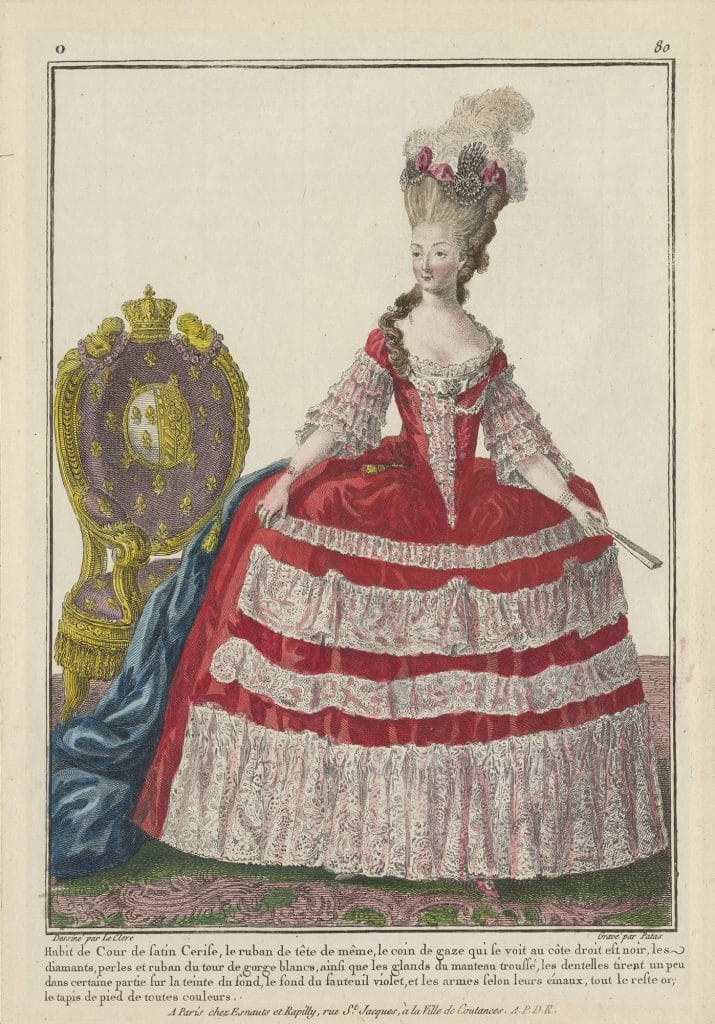
Gallerie des modes et costumes français. 14e Cahier des Costumes Français. 8e Suite d’Habillemens à la mode. O.80 (ca. 1778). Designed by Pierre-Thomas Le Clerc; engraved by Charles Emmanuel (Jean Baptiste) Patas. Courtesy of the Frick Collection.
In conjunction with the Gainsborough show at the Frick, there is a delightful jewel box exhibition of literal fashion plates from the 18th century in “Ruffles & Ribbons.” The 24 hand-colored engravings are sourced from the museum’s impressive 370 collection trove from the Galleries des modes, which predated the glossy fashion magazines of today. As the title promises, there are gobs of ruffles and ribbons, but also exquisitely detailed dressing gowns, voluptuous hoop skirts, evening jackets, and every kind of sartorial confection imaginable. Beyond showcasing the garments themselves, the engravings are a window to the culture of the time, and the exhibition is organized into sections that delve into everyday informal wear, court dress, mourning attire, and the styles Marie Antoinette herself wore. Check out the show while Thomas Gainsborough is still on view (through May 25), as it’s particularly fun to see the trends that would have made their way over to England and onto the sitters in the artist’s canvases. —Caroline Goldstein
9. “Sarah Lucas—VENUS VICTORIA” at New Museum
May 12–Ongoing
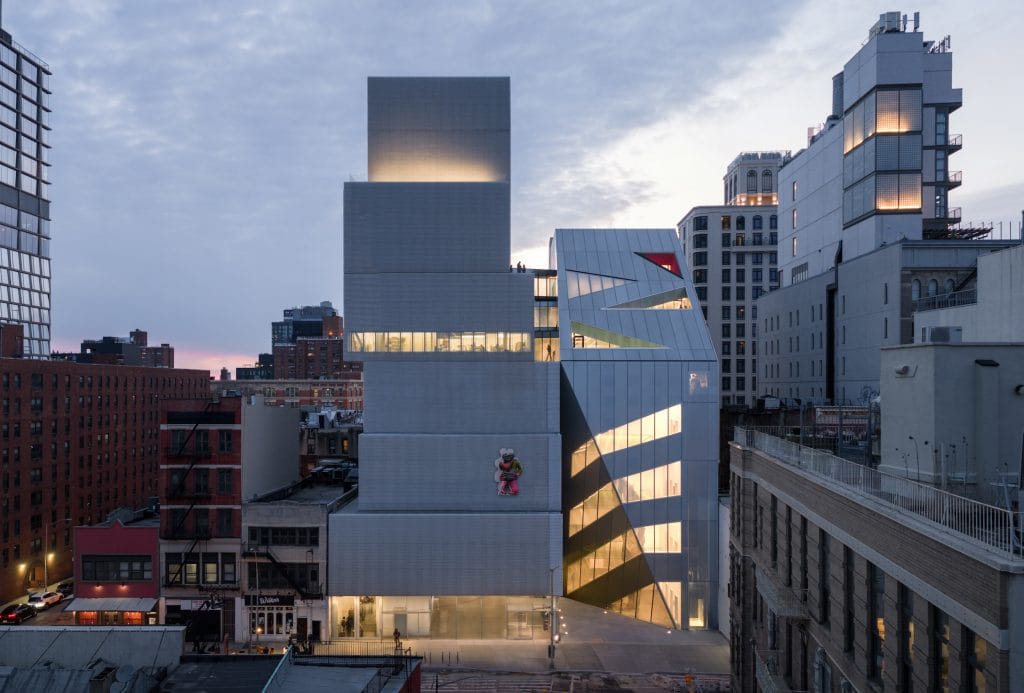
OMA’s new building for the New Museum. Photo by Jason Keen, courtesy of the New Museum, New York.
In 2018, the New Museum granted the provocative British artist Sarah Lucas her first Stateside retrospective, “Au Naturel”, which introduced American audiences to her phallic-laden automobiles, cigarette toilets, and saucy stocking chairs known as “Bunnies.” The relationship is set to continue with the unveiling this May of Venus Victoria, a large-scale work installed in the museum’s new outdoor public plaza. Lucas is the first of five women artists who will receive the $400,000 sculpture prize over the next decade and was chosen by an illustrious all-artist jury comprised of Teresita Fernández, Joan Jonas, Julie Mehretu, Cindy Sherman, and Kiki Smith.
Venus Victoria opens at the newly expanded New Museum, where a renovation led by the Office for Metropolitan Architecture (OMA) doubled museum’s footprint to 120,000 square feet. The museum inaugurated its new space with “New Humans,” a dizzying and encyclopedic look at the relationship between technology and the body. —R.W.
10. “Iris van Herpen: Sculpting the Senses” at the Brooklyn Museum
May 16–December 6
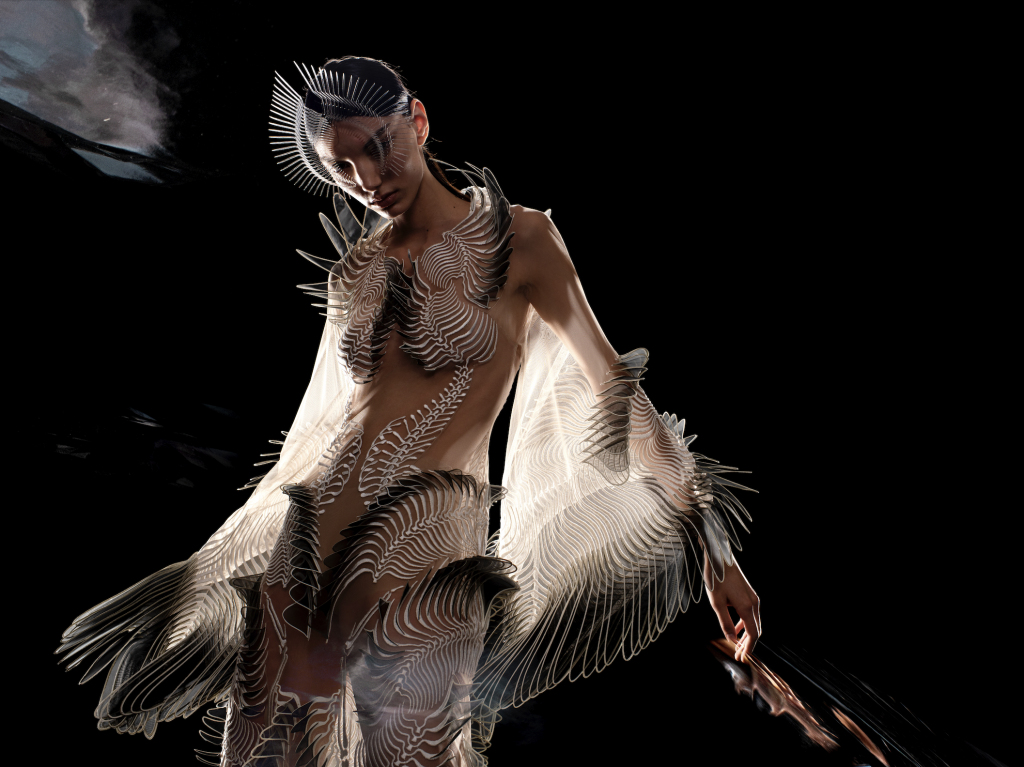
Iris van Herpen, Labyrinthine Kimono Dress, from the Sensory Seas collection (2020) Photo: David Uzochukwu courtesy of the Brooklyn Museum
This exhibition has traveled from France to Australia, Singapore, and the Netherlands since 2023. What better place for it to land in America than at the Brooklyn Museum, which has demonstrated time and again a distinct capacity for staging bang-up fashion shows? Indeed, the institution has chosen a truly exciting candidate for its latest sartorial extravaganza—the 41-year-old Dutch talent Iris van Herpen, who the museum will honor at its annual Brooklyn artists ball the same day this show opens.
Van Herpen has dressed stars like Beyoncé and Rosalía in her signature sculptural silhouettes. These are sometimes flowing, sometimes spiny, but always dramatic—informed by the designer’s foundational years as a dancer. Van Herpen’s clothes draw from nature, too, while also pioneering fashion’s use of high-tech synthetic materials like 3D-printed polyamide, laser cut acrylic, and molded silicone, all of which contribute to her dynamic, futuristic designs.
Some 140 compelling, one-of-a-kind haute couture ensembles anchor this exhibition. Contemporary artworks, high design, and scientific specimens accompany them. The ,useum will contribute fresh pieces from its collection for this engagement, by artists like Japanese ceramicist Fujikasa Satoko and American sculptor Tara Donovan, two of van Herpen’s creative contemporaries. —V.B.
11. “Yves Saint Laurent and Photography” at the International Center of Photography
June 11–September 28
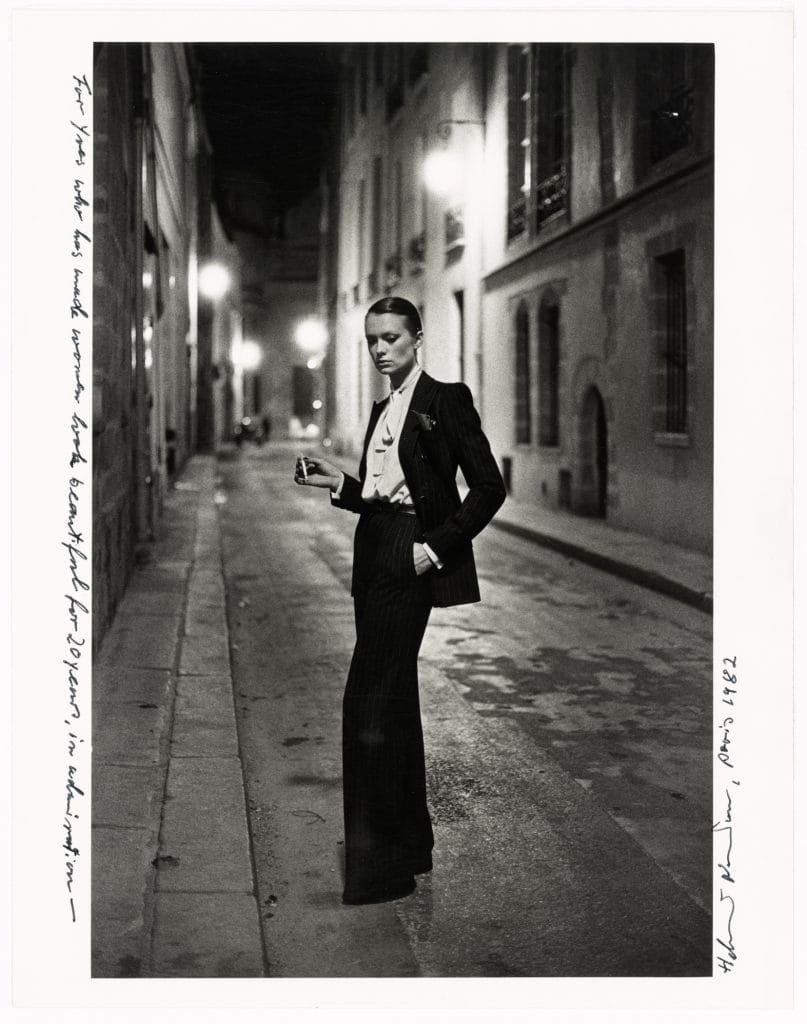
Helmut Newton, Rue Aubriot. Pantsuit worn by Vibeke Knudsen, Fall/Winter 1975 haute couture collection. Published in Vogue Paris, September 1975 © Helmut Newton Foundation, courtesy Helmut Newton Foundation and Fondation Pierre Bergé – Yves Saint Laurent.
Much of how we see the house of Yves Saint Laurent today is down to the designer’s modern imagination—as much as the photographers who immortalized that vision. This show, making its New York debut after opening at the Musée Yves Saint Laurent Paris last year, surveys how photography became central to forging the French label’s image and identity. More than 300 objects created by celebrated photographers are on view, bearing out Saint Laurent’s long and rich relationship with the medium.
The exhibition’s first section brings together a host of fashion photographs by the likes of Guy Bourdin, Cecil Beaton, Richard Avedon, Annie Leibovitz, Helmut Newton, and Andy Warhol, led by a portrait of the designer lensed by Irving Penn in 1957. Some of these images are experimental, others documentary, but all are bold in pushing the bounds of the medium. The second chapter unearths a hoard of archival material from the Musée Yves Saint Laurent Paris, including notebooks, magazines, press clippings, and personal snapshots, that underscore how Saint Laurent used photography to fix even the most ephemeral. —M.C.
12. “Greater New York 2026” at MoMA PS1
Through August 17
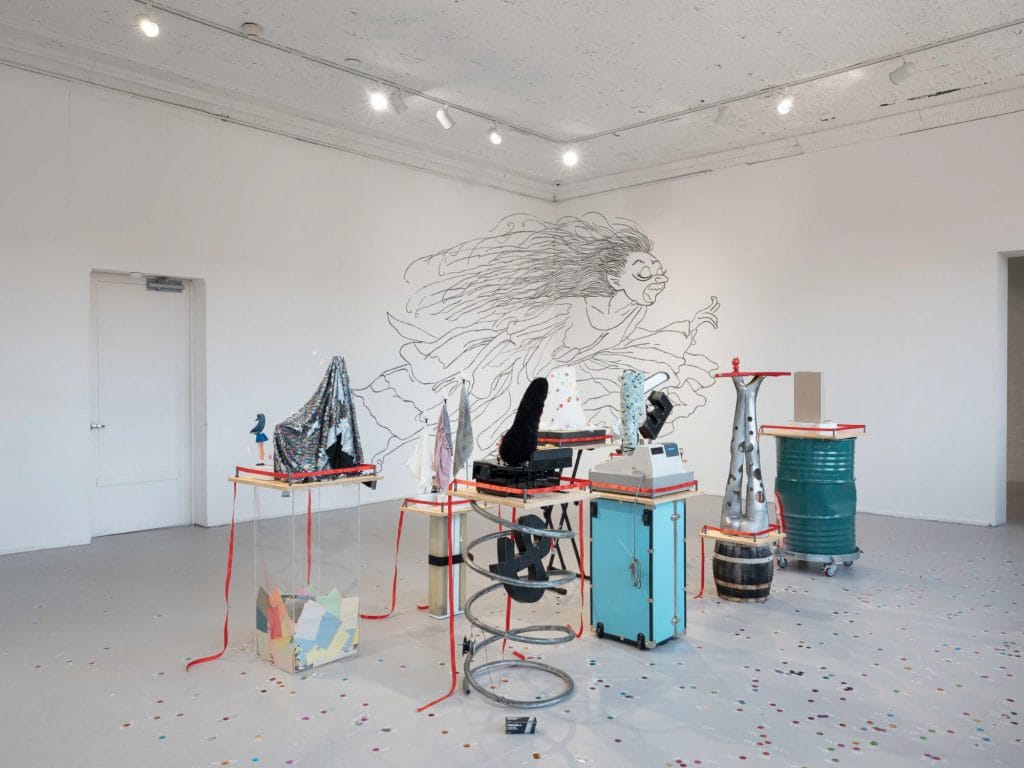
Installation view of Louis Osmosis and Taína Cruz in “Greater New York”. Photo by Kris Graves, courtesy of MoMA PS1
American artist Josh Kline’s recent plea to diversify America’s art scene beyond New York inadvertently placed an increased emphasis on the sixth edition of the recently opened quinquennial, presenting the work of 53 New York area-based artists in Queens.
At last week’s opening, thrumming with artists, I got the sense that Greater New York offers what the Whitney Biennial promises. Perhaps this has something to do with the show’s unique site—an original 1892 Romanesque Revival building that housed the First Ward School before becoming a warehouse. I believe art and education go together—check out the School, or, even better, the Campus, both in upstate New York, for further evidence. At MoMA PS1, Greater New York populates small classrooms and huge halls alike, underscoring each portion uniquely, from intimate nooks foregrounding Louis Osmosis’s collaged sculptures before a looming Taína Cruz drawing to more traditional “ennial” rooms alive with large paintings, sculptures, and more.
Art isn’t entirely mired in an identity crisis. There’s plenty of artists, like the emerging ones here, who live the spirit of their work by embracing community, exploring boldly, and engaging devotedly with sensuality. After all, if you can make it here, you’ll make it anywhere. —V.B.
13. “Self-Made: A Century of Inventing Artists” at the American Folk Art Museum
Through September 13
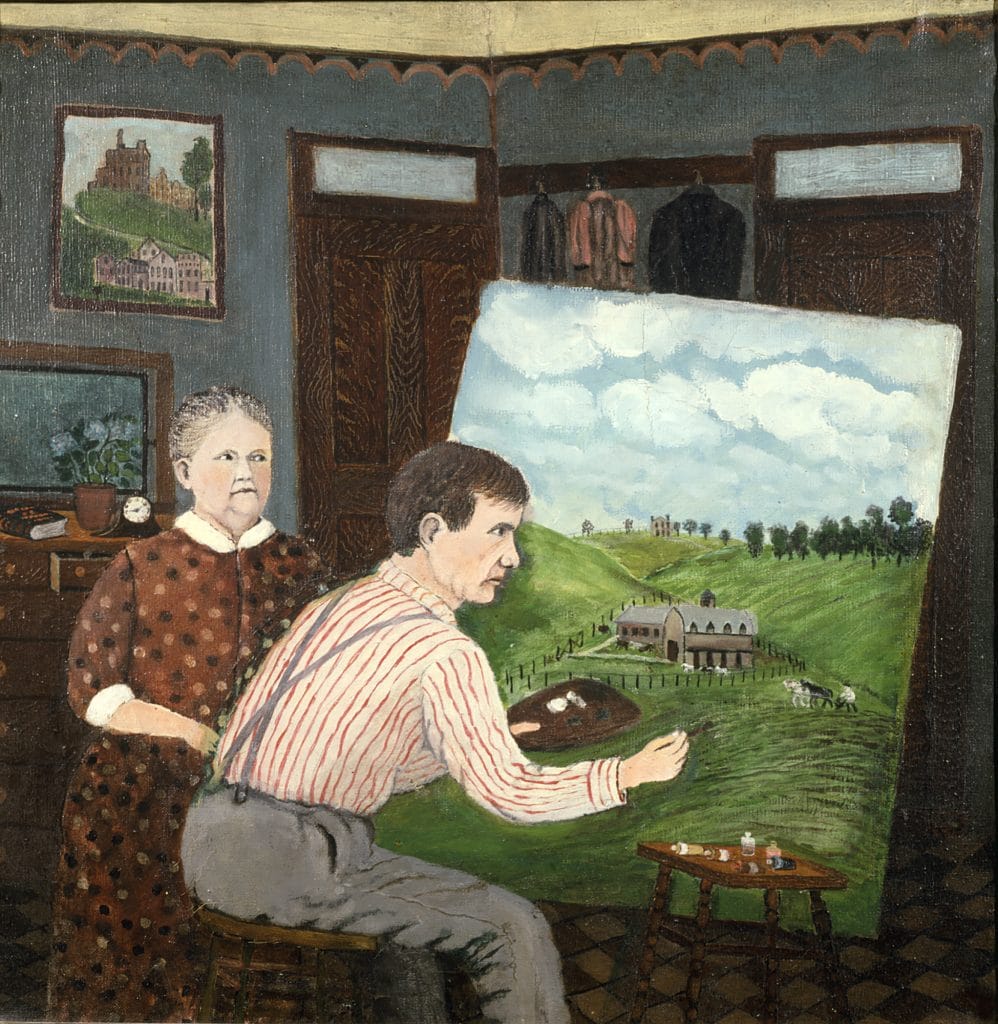
John Kane, John Kane and His Wife (c. 1928). Photo courtesy Kallir Research Institute, New York.
The notion of the “self-taught artist” tends to conjure images of amateurs working in isolation, cut off from tradition, context, or creative exchange. Not so, according to the American Folk Art Museum’s new exhibition. “Self-Made” aims to explode long-held, reductive narratives around self-taught art-makers by tracing how they have authored their own identities and trajectories.
The works featured here are gathered from the museum’s collection and highlight 60 artists from the 20th century to today, including Gaston Chaissac, Madge Gill, Henry Darger, Horace Pippin, and Janet Sobel. They’re spotlit in the exhibition’s three discrete sections, highlighting self-portraits, alter-egos, and autobiographies, which ground the artists’ perspectives and intentions. Each piece, the exhibition announcement noted, urges a viewing on its own terms, as if asking “look at me, in this way, that I have chosen.” —M.C.
14. “Carol Bove” at the Guggenheim
Through August 2
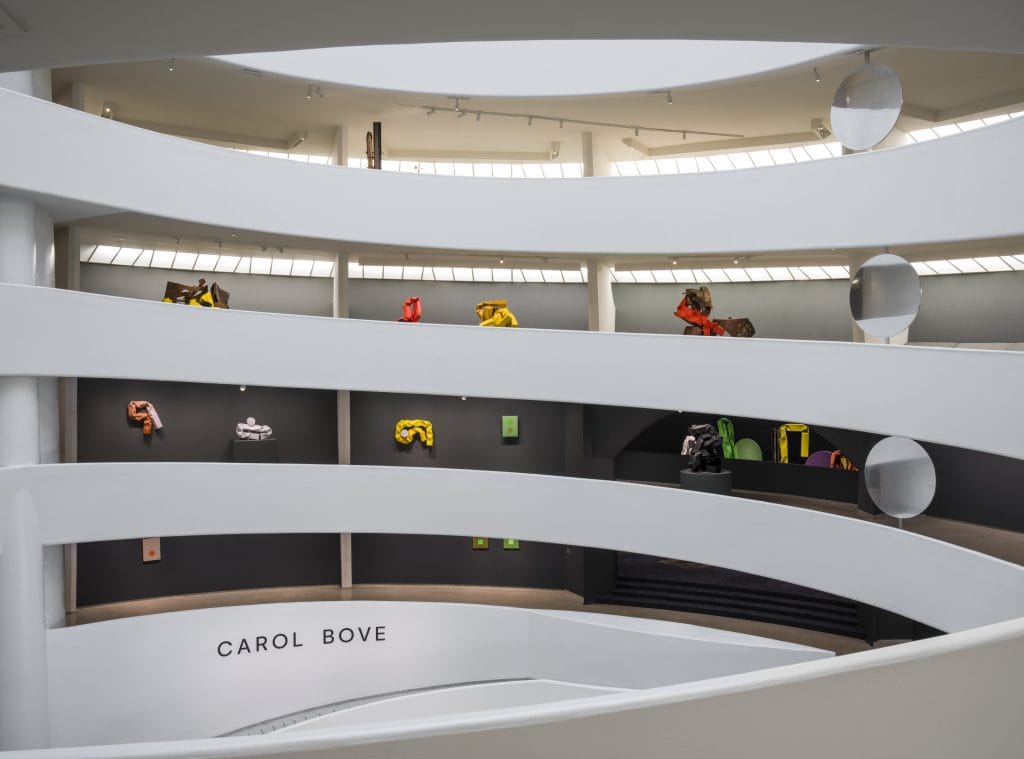
Installation view, “Carol Bove” at the Solomon R. Guggenheim Museum, New York. Photo: David Heald © Solomon R. Guggenheim Foundation, New York.
In her first museum survey, Carol Bove has filled the winding Guggenheim rotunda with her signature bent, twisted, and color-saturated steel sculptures. The massive works have a lightness to them, more reminiscent of inflatable dancing tubes than John Chamberlain‘s crushed automobiles that are oft cited as forebears of Bove’s work. In addition to the sculptures, the artist has made some interventions to the museum space for visitors to get involved. There are lounges for weary museum goers to rest on, objects from the artist’s studio that are meant to be handled, and coffee tables with chess sets the artist designed. —C.G.