
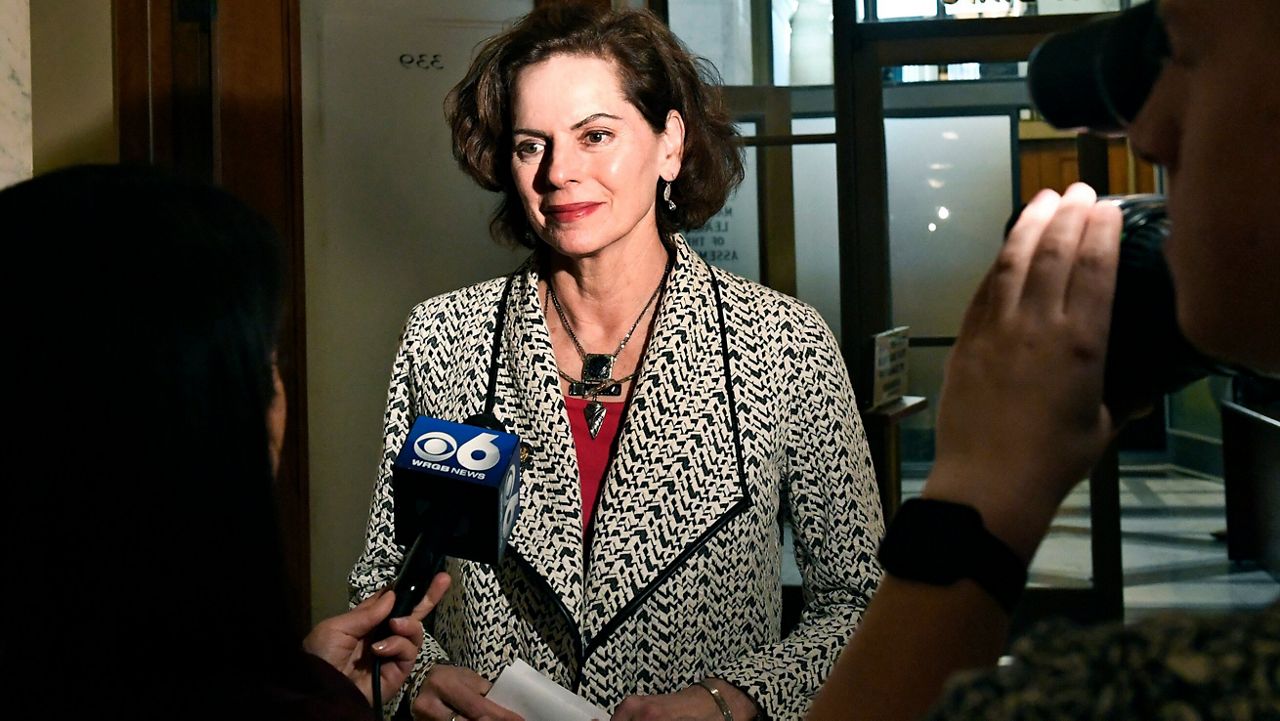
State Sen. Pat Fahy is formally pushing for an expansion of Gov. Kathy Hochul’s pied-à-terre tax upstate and on Long Island.
The Albany-area senator is aiming to include an opt-in version of the governor’s proposal to tax luxury non-primary residences valued at $5 million or more in areas outside the five boroughs, with half of the money going to the municipality that chooses to opt in and half going to the state’s Aid and Incentives for Municipalities, or AIM, fund.
She said the money would therefore benefit likely well-to-do communities like Saratoga Springs, Lake George and Skaneateles, which host these homes directly, while also benefiting cities large and small, from Amsterdam to Rochester, that may have significant struggles but not have as many pricey properties which qualify.
“Virtually every town, municipality and small city upstate is really struggling,” she said of the need for more funds outside New York City. “No one is immune to the increased health costs, the huge increase in transportation costs given the war in Iran, the increase in utilities that we are hearing about.”
AIM funding is a primary source of revenue for upstate municipalities and a constant funding battle as many local governments struggle, and this would provide a dedicated stream, though Fahy acknowledged it is not clear how much.
While data is scarce, Fahy estimated that a $25,000 tax on 24 properties valued between $5 million and $10 million in a lakefront town or village upstate would result in about $1 million total and $500,000 for that municipality.
“In Lake George, a half million dollars can go a long way for these local governments,” she said.
Sources say the idea has gained a deal of traction in both houses of the state Legislature in recent days as lawmakers search for ways to ensure that struggling upstate cities like Albany and Buffalo are taken care of amid New York City’s more high-profile crises, but Fahy and others conceded that discussions are still in the early stages.
A primary bump in the road is that Hochul is not on board — no surprise given that Hochul told reporters this week that she will not support any additional tax increases in the budget.
“Not from me,” she said on Tuesday.
Sources told Spectrum News 1 that applies to this proposal.
Republican Assembly Minority Leader Ed Ra criticized the plan as an example of Democrats in the Legislature wanting to tax the rich for the sake of it, given the state’s relatively sound fiscal condition and that the tax is only expected to net $500 million annually in New York City — and therefore likely less outside the city, where such homes are fewer and farther between.
“Our tax revenues have come in very strong. We’re over $11 billion over the projected amount from the enacted budget last year, so we really don’t have a revenue problem,” he said.
Others have raised concerns over whether disincentivizing wealthy people from coming in and out of upstate towns could negatively impact municipalities that rely financially on tourism, short-term rentals and part-time residency.
Fahy hopes it will help those communities by either encouraging people to stick around or putting more money in the pot.
“If it’s owned by people who are out of state, that means they are not paying taxes here, they are here for a limited time and we know the workers and the middle class in Saratoga, Lake Placid, even Lake George, it has been extremely difficult for workers to live in their communities,” she said. “I’m hoping an opt-in pied-à-terre tax will help to slow that down and ease up on some of these investor properties, and if not, at least there is a fund to help all municipalities upstate.”
Fahy cited the small village of Scotia in her district as an example of a community that could benefit after recently approving a 6% tax hike with paid garbage pickup to much outrage from residents.