
Sunday is the 40th anniversary of the Chernobyl disaster. A nuclear power plant in Ukraine in the former Soviet Union exploded, causing 31 direct deaths and nearly 100,000 more as a result of radiation.
Nuclear energy, whether used for power or as a weapon, is a reason so many communities built fallout shelters.
While those buildings are no longer used in that capacity, they are still standing.
What You Need To Know
Fallout shelters were created in local communities as a response to local concerns over a nuclear attack
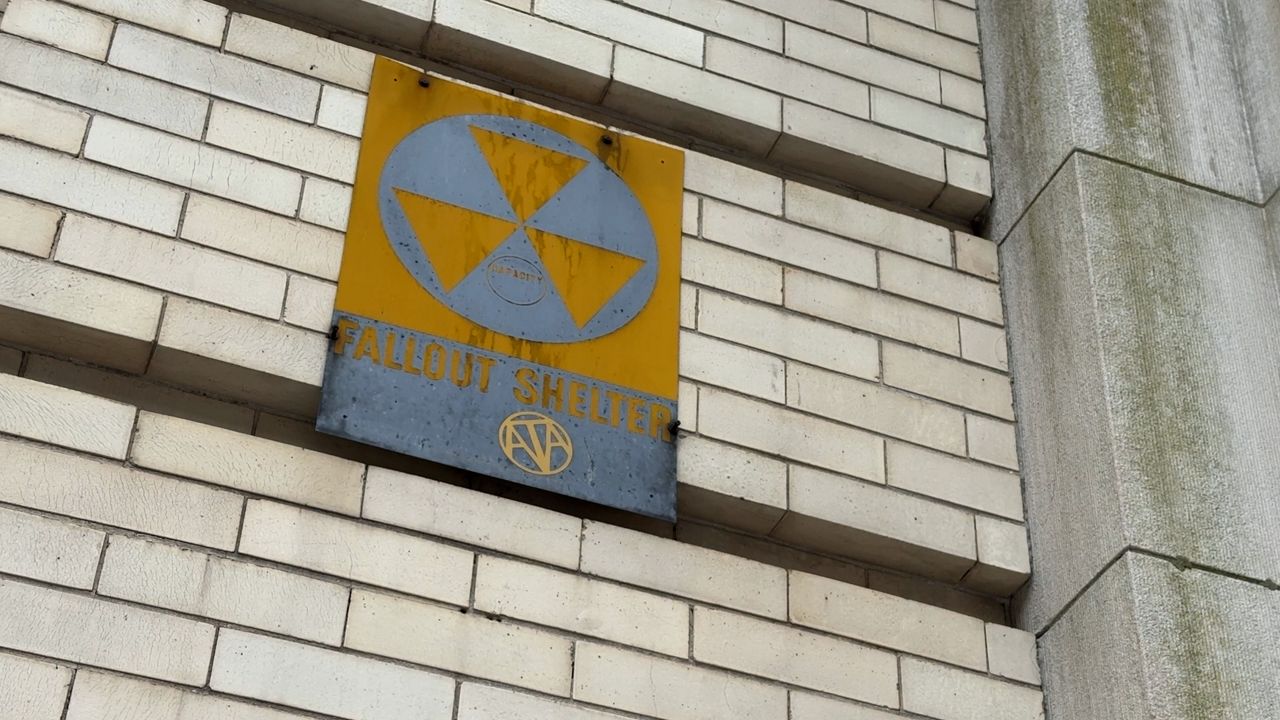
While almost never serving that purpose anymore, you can often find them today, with a sign on the building showing what it once was
The Onondaga Historical Association building is a former fallout shelter, and hasn’t been modified in a way that would disqualify it from being so in the future
“Entering of the atomic age in August of 1945 is a revolution that we are still grappling with,” Onondaga Historical Association Curator of History Robert Searing said. “It was a period of immense fear, immense anxiety. Political leaders had to figure out a way to, protect the citizens.”
“Duck and cover underneath a table or desk or anything else close by,” a government video narrator said.
By the 1950s, the Soviets announced hydrogen bomb testing and ducking cover wasn’t going to cut it.
“You get waves of construction and policies around fallout shelters,” Searing added.
The museum he helps run was converted from an old 1950s fallout shelter.
“Had a nuclear weapon been dropped anywhere, you know, within a certain radius, the buildings would have been obliterated. But if you were underground, at least the idea was that you would hopefully have survived,” Searing said.
The self-contained shelter is one of a handful in Syracuse and one of hundreds throughout upstate New York, because back then, the belief was the threat here was real.
“There were people that legitimately thought that there would be a nuclear strike. It would come somewhere in this vicinity because the fallout would take out New York, Toronto, Philadelphia, Boston,” he said.
While those threats were just that, in upstate New York, there are three active nuclear power plants.
They are all along the shoreline of Lake Ontario.
While generally considered very safe, this weekend serves as a harsh reminder. It’s the 40th anniversary of Chernobyl, a Russian plant which exploded, impacting the environment to this day. It’s considered the worst nuclear disaster in history.
“The paranoia, the preparation for what you hope is never going to happen, but the necessity of preparing people, I think, is a really good analog,” Searing said,
And that is what Searing and all historians hope to do: educate.
“History offers perspective. That’s why I say it all the time, and if it’s not a one to one analog, it’s still it offers us a way to learn about ourselves as a society,” he said.
While the historical association hasn’t been thought of as a fallout shelter in many decades, Searing says the building remains the same and if ever needed, could with a little work, possibly serve as one to this day.