
If “Rocky” was being filmed today in Jersey City, maybe Sylvester Stallone would have sprinted up the 100 Steps.
The outdoor staircase in Hudson County linking the Heights neighborhood atop the Palisades to Hoboken down below is a convenient connector to a light-rail train station, restaurants, parks, shopping and the Hudson River waterfront.
It also offers a stair climbing workout with stellar views — similar to the setting of the iconic 1976 movie scene in which Rocky runs up the 72 steps of the Philadelphia Museum of Art.
One thing, though. The 100 Steps isn’t actually 100 steps. More like 95.
The steel stairway that debuted in 2013 was a restoration of the original, cast iron 100 Steps staircase in the same spot. The original stairs lasted for around a century before they were demolished in the early 1990s.
“For many years it was in really bad shape. It was rusted out and actually dangerous,” said Bob Foster, executive director of the Hoboken Historical Museum.
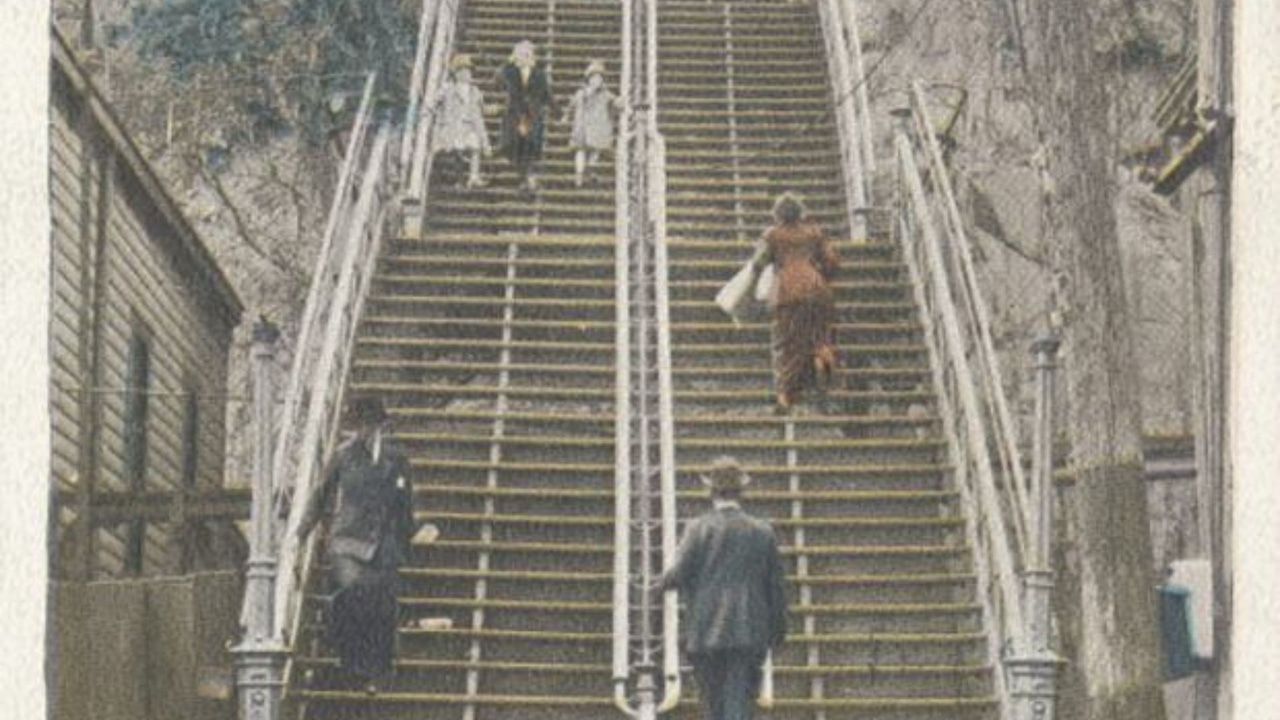 An image from a postcard from 1915 that shows the original version of the 100 Steps linking Hoboken and the Jersey City Heights.Hoboken Historical Museum
Foster said he does not know if the first version had precisely 100 steps.
“That was the lore,” he said.
There is no monument at the 100 Steps detailing its late 19th century origins. Foster said it opened in the 1890s.
A plaque just outside the top entrance honors Bill Gaughan, the late councilman who represented the Heights from 1993 to 2013 and pushed for reviving the stairway.
Gaughan cited safety concerns in pushing to close the original version and helped secure funding for its replacement.
The present-day 100 Steps is a sleek version of its predecessor. It cost nearly $1 million and was funded in part by the developer of the Cliffs Lofts, a former factory near the bottom of the staircase near the Hoboken border that was turned into an apartment building.
The Jersey City staircase is sometimes confused with the “100 Steps” in the city of Passaic. That steep set of hillside steps was rebuilt in 2021 after nearly a century in use. It was expanded from 103 to 113 steps.
Both entrances to Jersey City’s stairway are on Mountain Road. The street follows a switchback route from the intersection of Franklin Street and Ogden Avenue at the top to Paterson Plank Road at the bottom.
“I’ve done runs up and down those steps. It’s always cool to see people go past me doing their exercises,” said Jersey City Ward D Councilman Jake Ephros, whose district includes the Heights.
While the earlier version of the staircase went straight up the cliff, the current version of the 100 Steps makes two 90-degree turns, potentially easing the qualms of those climbing or descending with a fear of heights. A divider runs along the center of the stairway, facilitating the flow of pedestrians heading up or down.
From the bottom, it is 20 steps to the first landing and another 20 steps to the second landing. Then the staircase turns to the right for the third and fourth landings before a final left turn to the finish.
James Cospito of Jersey City was using the 100 Steps on a recent Tuesday afternoon to return to his Heights residence after meeting a friend for lunch at the W Hoboken by the waterfront.
It was sunny and unseasonably warm, above 80 degrees, so Cospito opted to carry his 6-year-old dog, Cosmo, up the stairway.
“If we were in the shade, he would do it,” Cospito said.
Outdoor public staircases are relatively common in the U.S., particularly in urban areas. Pittsburgh’s Rising Main is among the longest at 371 steps.
In Warren County, the Bullman Street Stairway has 149 steps. It was built in the early 1900s in Phillipsburg and reconstructed in 2002.
The 143-step Port Imperial Stairway in Weehawken is around three miles from the 100 Steps and also links a residential area atop the Palisades with a nearby light-rail station.
Former Jersey City Mayor Steve Fulop did a campaign video during his unsuccessful 2025 campaign for governor showing him running up the Weehawken steps.
Fulop was on the Jersey City council when funding for the new 100 Steps was approved and he became mayor several months before it opened.
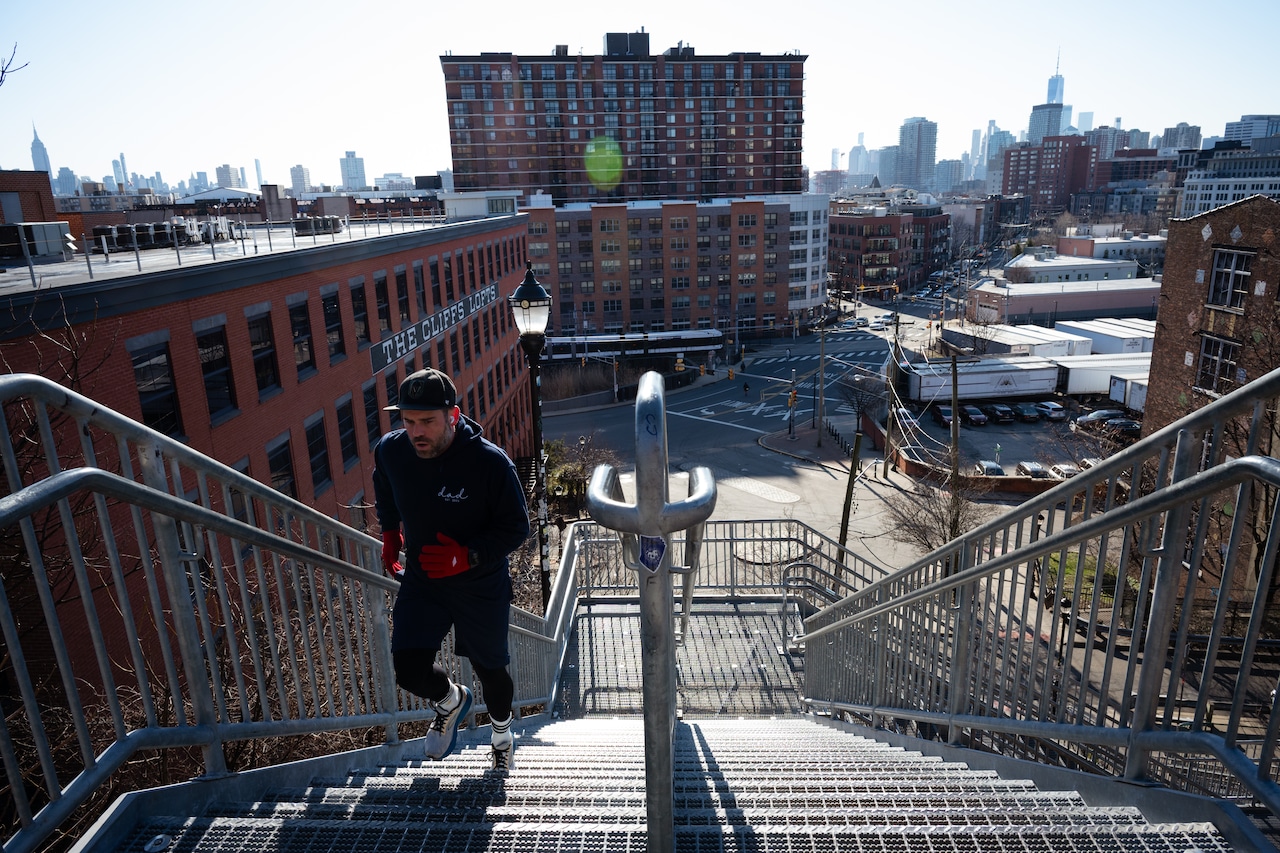 The 100 Steps, a staircase rebuilt in 2013 that offers a pedestrian link between the Heights in Jersey City and Hoboken, on Tuesday, March 24, 2026.Reena Rose Sibayan | For NJ.com
The prior version of the 100 Steps was “deteriorated, poorly lit, and largely overlooked,” Fulop said.
“Now it’s a commuting artery between the Heights and Hoboken, for exercise, and because they offer one of the best views of the skyline anywhere in the region. It turned something forgotten into something that residents value and take pride in,” said Fulop, who left office in January and is president and CEO of the nonprofit Partnership for New York City.
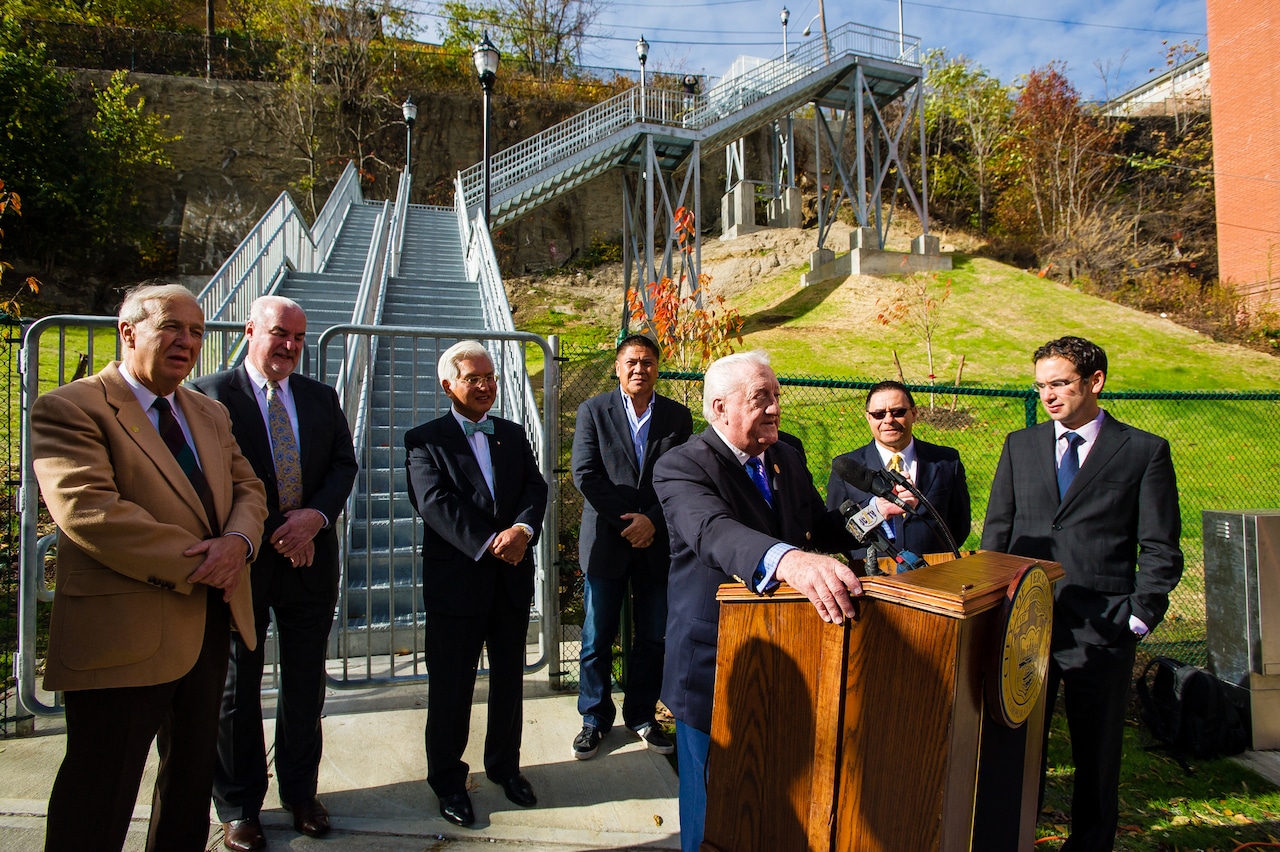 Then-Jersey City Mayor Steve Fulop, on right, as former Councilman Bill Gaughan speaks during the opening ceremony for the 100 Steps in 2013.EJA
Jersey City’s staircase is open 24 hours per day, though a sign at the top warns it can get slippery and should not be used in snowy or icy conditions.
For pedestrians preferring alternatives to climbing stairs, an elevator several blocks away operated by NJ Transit connects Congress Street with the light rail station on 9th Street, which is just over the border in Hoboken.
The other option involves taking Mountain Road, but that’s a much longer walk and less picturesque than taking the 100 Steps.
While the focus is often on how the stairway connects with Hoboken, Cospito said he prefers to think of it as a way to introduce others to the Heights in Jersey City. The neighborhood covers more than a square mile and is home to around one-fifth of Jersey City’s population.
“There’s a lot of things up here that are worth discovering,” Cospito said.
Ephros described the 100 Steps as among the defining features of his Ward D district.
“It’s a unique little spot,” Ephros said.
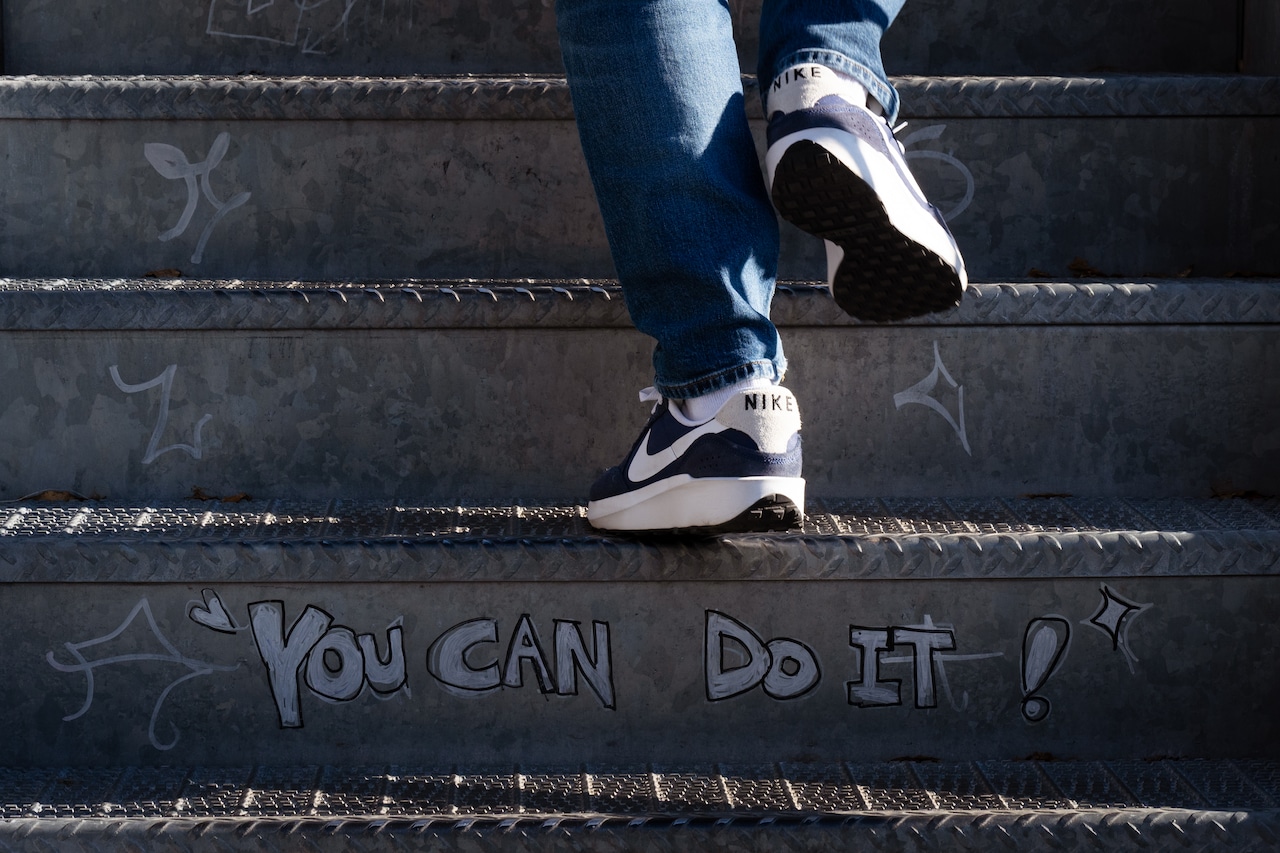 The 100 Steps, a staircase rebuilt in 2013 that offers a pedestrian link between the Heights in Jersey City and Hoboken, on Tuesday, March 24, 2026.Reena Rose Sibayan | For NJ.com