
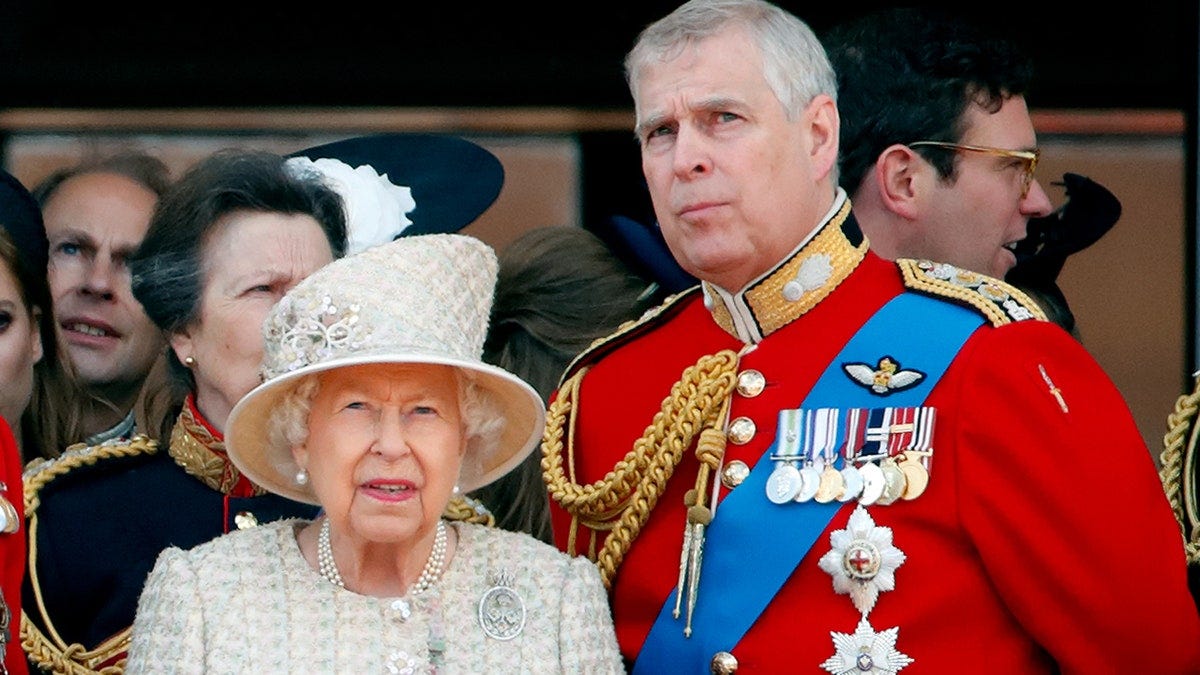
April 21st, 2026, would have been the late Queen Elizabeth II’s 100th birthday. King Charles marked it with a televised statement that was, in its way, a masterclass in the kind of language the monarchy has always done best: elegant, sentimental, and carefully bound in restraint.
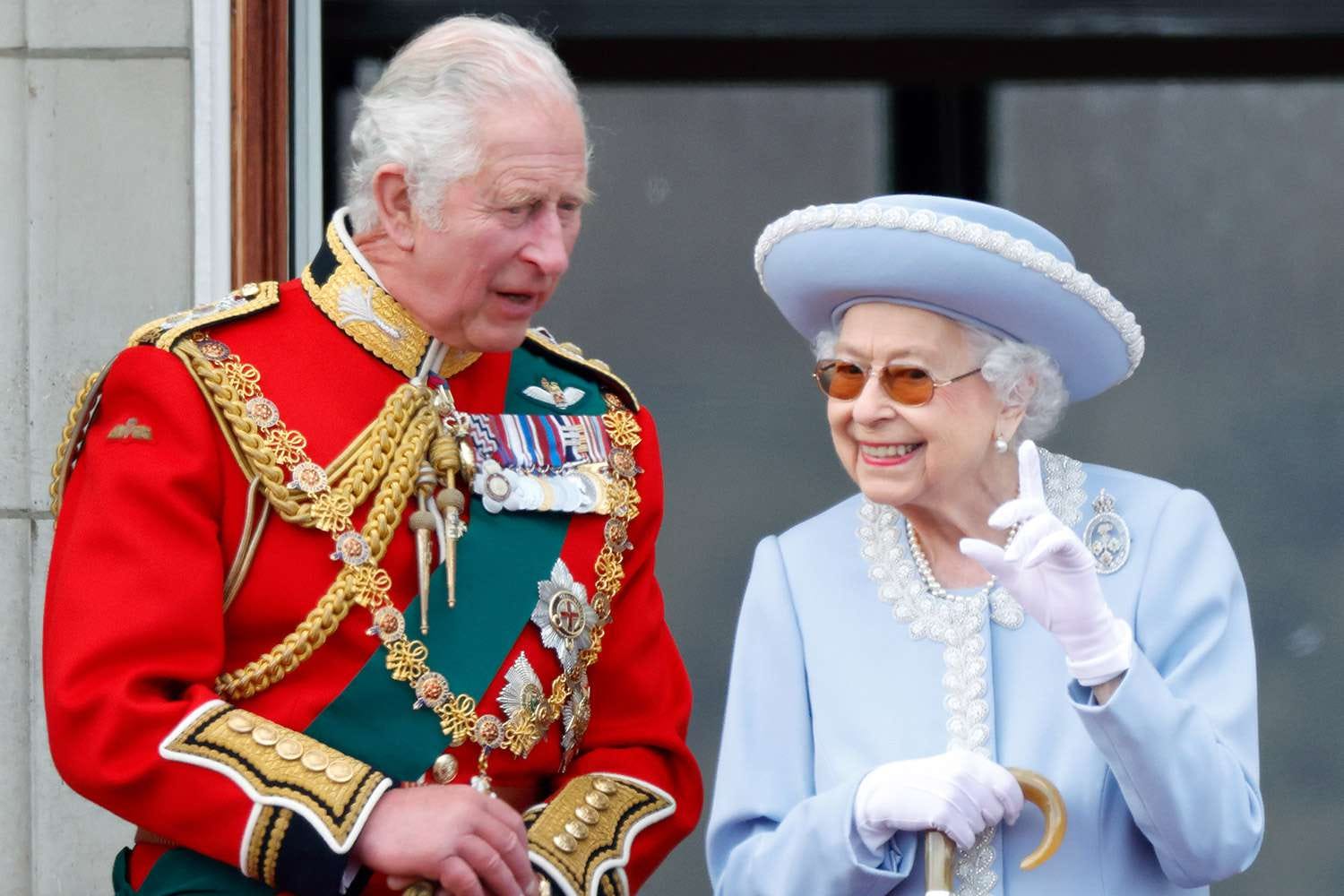 King Charles III and the late Queen Elizabeth II at Trooping the Colour on June 2nd, 2022.
Charles praised his mother’s constancy through “every transformation.” He invoked a 1940 broadcast in which a fourteen-year-old princess told a world at war that “we can each play our part ‘to make the world of tomorrow a better and happier place.” He closed with a renewal of his own pledge of duty and service.
It was a beautiful tribute. And it was also, almost inevitably, somewhat incomplete.
That isn’t a failing on the King’s part. He is the sovereign, not a chronicler, and a centenary is hardly the occasion for an institutional audit. But the gap between the palace tributes to Elizabeth’s legacy and the full picture is exactly where the most important conversations are happening right now. In many spheres, the world is still sorting out what she left behind.
As someone who thinks about the monarchy as a living institution rather than a ceremonial backdrop, I think that conversation is worth having directly. So let’s have it.
Before we dive in, a moment to recognize A. Shaub, The Fascinator’s newest Founding Member. 👑✨
In the tradition of monarchies everywhere, we mark the occasion properly: A has taken their seat in the Royal Court, joined the inner circle, and earned the eternal gratitude of this correspondent. Their support keeps the tea hot, the analysis sharp, and the newsletter firmly in session.
If you’ve ever wanted to join the Court (all the perks of a paid subscription, plus a shoutout and personal thank you of your very own) consider this your official invite.
Now, back to the matter at hand…
There is a version of Elizabeth’s legacy that is largely unchallenged—the version Charles reached for in his statement. She reigned for seventy years, more than any other British monarch to date. (She was not, however, the world’s longest-reigning monarch…as a Palace social media post claimed last week. Oops.)
Elizabeth II did witness the dissolution of the British Empire and the construction of the Commonwealth. She presided over fifteen prime ministers, from Churchill to Truss. She was, as one of her former press secretaries put it, “the glue that kept us all together” through moments of anguish, stress, and crisis.
That record, not to mention the stability she offered (or at least suggested), was very real. Elizabeth’s capacity to endure—to adapt in manner while remaining fixed in purpose—is genuinely remarkable by any historical standard.
But institutions are not only defined by what they accomplish publicly. They are also built on what they allow, protect, and fail to correct privately. And on that count, Elizabeth II’s record is considerably more complicated.
The sharpest edge of that complication is the former Prince Andrew, now Andrew Mountbatten-Windsor, who was stripped of his titles in late 2025 and arrested in February 2026 on suspicion of misconduct in public office—accused of passing sensitive state information to Jeffrey Epstein while serving as the UK’s trade envoy.
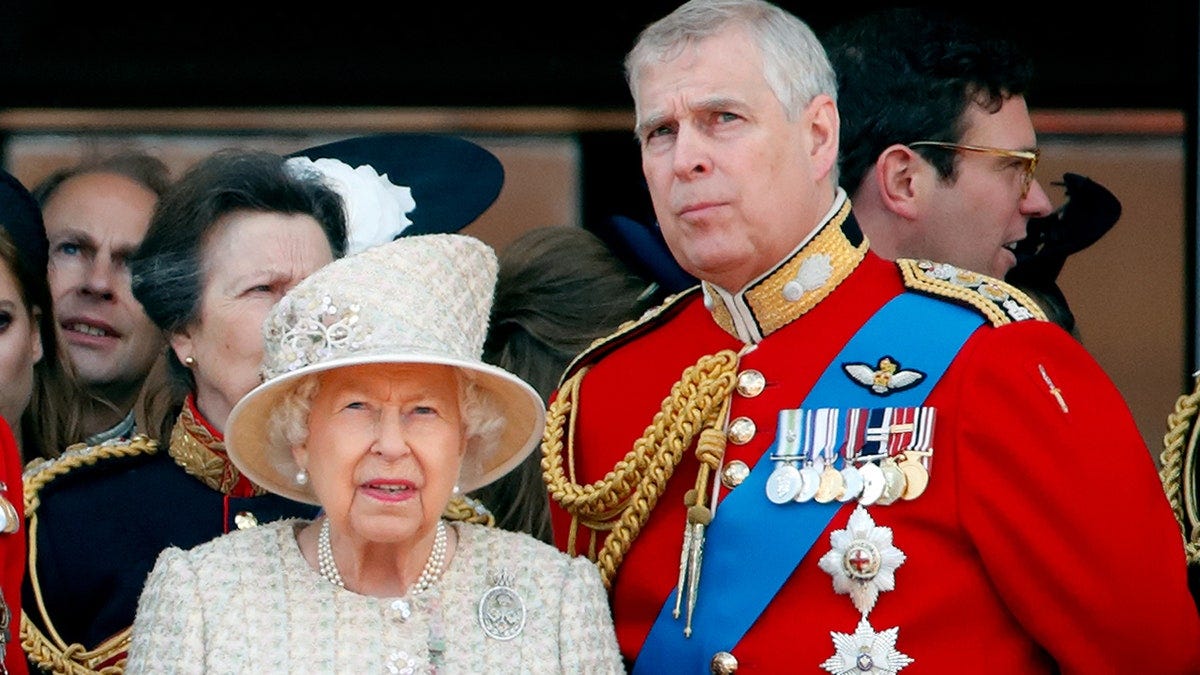 Queen Elizabeth II and Andrew Mountbatten Windsor at Trooping The Colour on June 8th, 2019.
In the weeks around the centenary, royal biographer Robert Hardman has been making the case, in his forthcoming book Elizabeth II: In Private, In Public, that the late Queen’s decision to help fund Andrew’s civil settlement with Virginia Giuffre “will go down as a mistake, and one that has outlasted her.” That is a careful formulation, and a significant one coming from Hardman, who is not usually in the business of sensationalism.
What has emerged through reporting in recent months goes further. Hardman recounts a particularly telling incident: Andrew physically struck the Master of the Royal Household over a room booking dispute, and when it was raised all the way up the chain of command to his mother and father, Prince Philip, the Queen was “not remotely surprised.” Not long afterward, the Master of the Household received a knighthood.