
Budget woes and prediction markets are the latest factors that could impact New York casino hopefuls.
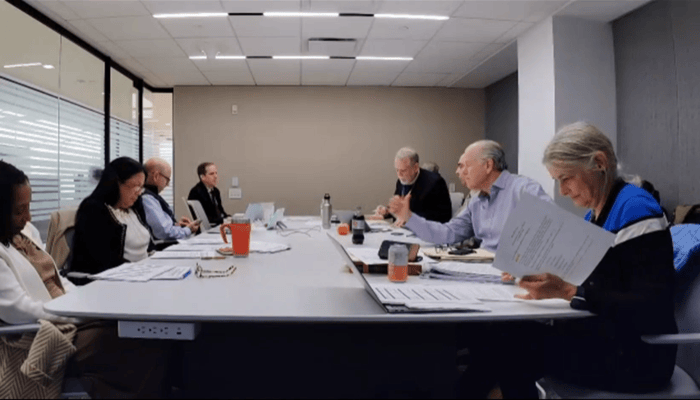
The Gaming Facility Location Board (GFLB), the five-member body tasked with reviewing the three applications still in contention for three available downstate New York casino licences, will convene again Wednesday night for its final October meeting.
After months of breakneck pace and a flurry of news from applicants, the process has largely ground to a standstill, at least in public view. Bidders have made their final offers and the many hours of public input from previous rounds have been replaced by closed-door meetings of the GFLB.
The GFLB’s first meeting 8 October was just 15 minutes and was largely organisational. But the rest have run for multiple hours, and although the virtual meetings are open to the public, the audio and video are disabled when the board is in session. Only the opening and closing of the meetings are viewable.
None of the five board members has experience in or connection to gaming, to help ensure neutrality. Four of the five were appointed just this year, the most recent on 30 September.
The board is working toward a 1 December deadline to submit licensure recommendations to the New York State Gaming Commission (NYSGC). So far, a weekly cadence has been established for its meetings. That would indicate that there is a maximum of five more meeting opportunities before the deadline, including Wednesday.
What criteria is NYC casino board considering?
Once its recommendations are submitted, the commission will have final say on the licensing outcome. Regulators could issue all three, less than three or award some at a later date. When the upstate New York casino process was conducted in 2014-15, four casinos were recommended by the GFLB but only three were licensed initially. The fourth licence, which went to Tioga Downs Casino Resort, was issued a year later.
Following a surprise exit by MGM Resorts earlier this month, three applicants remain for the three downstate licences:
The bidders submitted their final, amended applications to the GFLB 14 October. Each project is being reviewed based on four weighted criteria:
Economic activity and business development (70%)
Local impact siting (10%)
Workforce enhancement (10%)
Diversity framework (10%)
Bally’s busy across the country
All three bidders have been active as the process unfolds. Bally’s in particular is stretched coast to coast, with ongoing projects in Chicago and Las Vegas in addition to its $4 billion Bronx proposal.
Its Chicago project has seen multiple roadblocks, including recent pushback from lenders financing the project. Bally’s is obligated to open the $1.7 billion casino by 9 September 2026 under its host city agreement but is currently projecting a fourth-quarter opening. The company did not respond to a request for clarification on this point.
On the Las Vegas Strip, Bally’s unveiled new renderings and broad construction timelines this month for its 26-acre plot next to the under-construction A’s MLB stadium. Preliminary plans include four construction phases that would begin as early as April 2026 and finish by March 2029.
The spacing is somewhat condensed, as Phase 1 is slated to open alongside the stadium in spring 2028. That timeline would leave just one year to complete the remaining amenities. Phase 1 only includes infrastructure, dining and retail spaces. The casino, two hotel towers totaling 3,000 rooms, and a theatre would come in Phases 2-4.
Bally’s has faced immense scrutiny for its highly leveraged business model and consistent debt maneuvering. Much of its funding has come through Gaming and Leisure Properties, which has not ruled out the possibility of investing in a New York project. Bally’s has said its reverse-merger with Intralot reset its balance sheet with “more than $1 billion of cash and available credit facilities”.
Unlike other New York casino bidders, however, Bally’s would owe an additional $115 million to the Trump Organization if awarded a licence. That controversial kicker was included in the sale agreement from 2023.
Resorts World, Hard Rock all-in as well
Resorts World is also doing some shuffling as it angles for a New York casino licence. Parent company Genting Berhad is attempting to buy out its Genting Malaysia subsidiary for $1.6 billion, to help consolidate its capital structure. A previously announced sale of its Resorts World Catskills property to Sullivan County in upstate New York is on hold until the merger is completed.
With regard to the downstate process, Resorts World remains the most committed bidder in the field. It is proposing the highest licence fee ($600 million), the highest tax rate (56% for slots, 30% for tables) and the fastest speed to market (July 2026). The project received unanimous approval from both the public and its appointed community board. In addition to $5.5 billion in capital investment, Resorts World is pledging $2 billion worth of community benefits.
Metropolitan Park’s casino partner, Hard Rock International, has been the quietest of the three finalists by comparison, though it has several ongoing projects of its own, including a Las Vegas Strip resort. Its finances are perhaps most secure for a New York casino, given the project’s connection to Steve Cohen. Cohen is the owner of the New York Mets and is listed as the 101st-richest man in the world by Forbes.
The company made headlines last week for its donation to a $300 million ballroom project at the White House. No comment was given and no amount was disclosed, but Hard Rock Chairman Jim Allen was previously an executive for the Trump Organization.
MTA counting on a lot of New York casino money
There are two factors at the state level that might complicate the licensing process. The first is the fact that New York’s Metropolitan Transportation Authority (MTA) has long earmarked licence and tax revenue for future budgets. Its projections indicate an expectation that all three licences will be awarded, and quickly.
According to an MTA financial outlook from the state published this month, the agency is depending on “$500 million annually during 2026 and 2027, $600 million in 2028 and $200 million in 2029” from casino licensing and tax revenue. That totals $1.8 billion, and the exact figure that will come from licence fees is still unknown.
Resorts World and Hard Rock are pitching a combined $1.1 billion in licence fees, while Bally’s did not indicate a fee preference. The $500 million minimum indicates the total would be at least $1.6 billion, but there is no guarantee that all three bidders will remain in consideration following several withdrawals. Time is also of the essence for the GFLB and the NYSGC to make their decisions by year’s end.
“Any delay in the approval would lead to a delay in the MTA receiving license fee revenue and then recurring gaming tax revenue — opening potential budget gaps,” the report said.
New York state already faces a $34 billion cumulative budget gap over the next three fiscal years.
Kalshi lawsuit now top-of-mind
Adding to the New York casino intrigue is a new lawsuit between the state and the prediction market Kalshi. The NYSGC last week became the eighth state regulator to send a cease-to-desist letter to the controversial platform, and Kalshi sued in response. The company is now involved in lawsuits with a total of six states: New York, Massachusetts, Ohio, Nevada, Maryland and New Jersey.
Tribal groups in California and Wisconsin have also filed suit, and several other states have sent warnings or notices to sports betting licensees.
New York has substantial turf to defend as prediction markets expand in scope and prevalence. The Empire State boasts the biggest online sports betting market by revenue and tax generation in the US. Its running total of both retail and online handle is nearing $75 billion, with almost $3.5 billion in tax revenue.
Sports event contracts on prediction markets, including parlay-type offerings, could affect New York more than any other wagering market based on revenue and taxes. This significance has fast-tracked these lawsuits in other markets, meaning there is no time to waste for state officials in the wake of the licensing saga. It remains to be seen what kind of strain this added pressure might have on the downstate process.