
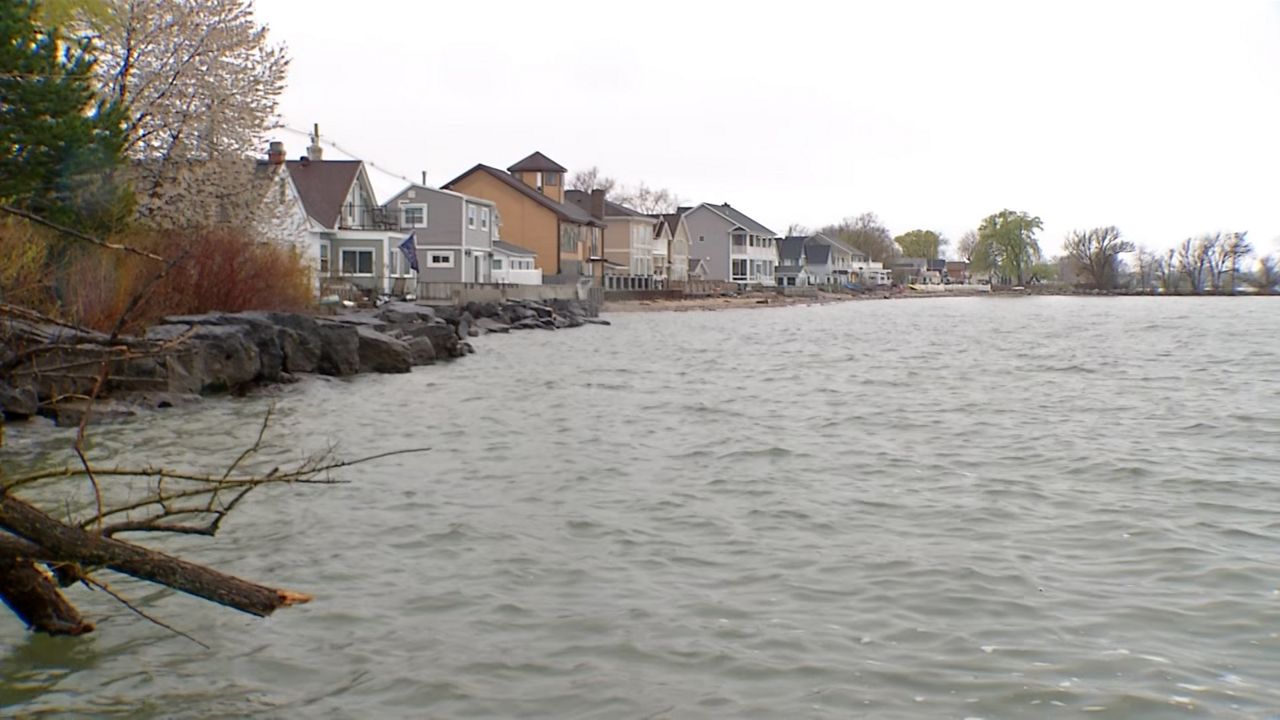
Right now, water levels along Lake Ontario are at about 247 feet, according to the International Joint Commission.
To put that into perspective, according to the IJC, the last time the Edgemere Drive neighborhood of Greece saw serious flooding levels was around 250 feet.
With just three feet separating them from higher waters, shoreline communities are making sure they’re ready.
Doug Dobson is no stranger to changing lake levels. After living along Lake Ontario for 50 years, he’s seen just how bad it can get.
“The last month, the last four or five weeks, we’ve seen a steep increase in the rise of Lake Ontario,” said Dobson.
Dobson helped found the Lake Ontario St. Lawrence River Alliance. It’s a group that monitors water levels, sending newsletters out to homeowners from the Niagara to the St. Lawrence River.
“We’re watching and reading the IJC reports and the Army Corps of Engineers reports,” Dobson said. “We’ve gone up about two feet in the last four weeks.”
“It looked like we were going to be out of the woods with flooding, but had an incredibly wet March and April,” Greece Town Supervisor Jeff McCann said. “As a result, we’re nearing flood stages.”
McCann says preparations are in place if water levels continue to rise. Crews placed pumps out along the lakeshore and offered sandbags to residents.
“Crews are ready if it happens,” McCann said. “Fingers crossed it won’t, but if it does, we’re able to move quickly.”
Higher water levels could trigger further action by the International Joint Commission, which controls water levels on Lake Ontario and the St. Lawrence Seaway. The group modifies operations based on lake conditions as outlined in regulations known as Plan 2014.
“It has to do with how much water is coming in from upper Great Lakes, into Lake Ontario,” Dobson said. “No control on what comes into Lake Ontario. Only a control at the St. Lawrence River on what you can let out of Lake Ontario.”
There are steps homeowners can take ahead of time to protect their homes against flooding. They include checking that sump pumps are working, elevating items in basements, clearing shorelines in case sandbagging becomes necessary and inspecting breakwalls.