
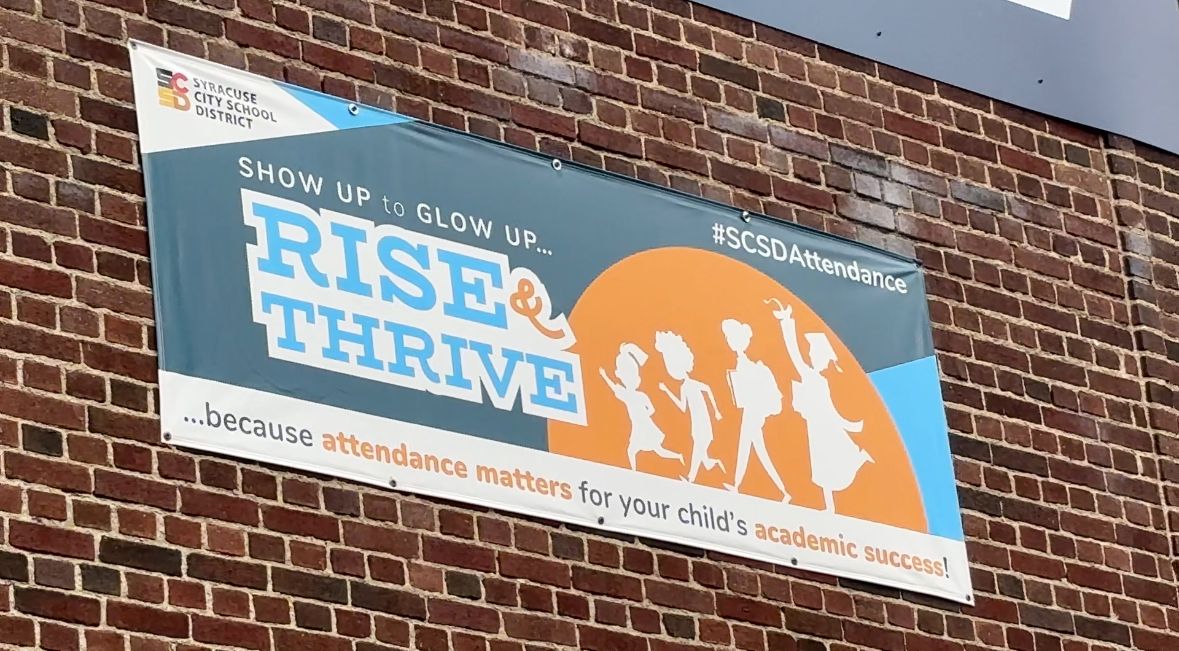

In 2025, the Syracuse City School District reported that nearly 43% of students were chronically absent, nearly double the national average. Chronic absenteeism is defined by the Department of Education as missing 10% or more of school days, which adds up to roughly one month of school.
“We know that this is working,” said SCSD Communications Director Brad Vivacqua. “Throughout all of our schools: elementary, middle, pre-K through eight, and high school, we’re seeing an increase in attendance.”
What is working, Vivacqua says, is the district’s new initiative, Rise and Thrive. The $2 million program creates attendance teams at every school in the district to promote attendance through home visits, phone calls, and parent meetings. The program also reviews student absences and provides incentives to promote regular attendance. The SCSD reports that 83% of schools in the district have seen an increase.
“The numbers are progressing, they’re getting better. There is more work to do. Ninety percent is not 100%,” Vivacqua said.
The district emphasizes that there are a number of factors that impact attendance, not one singular issue. This is echoed by Briana O’Brien, the executive principal of Liverpool High School. The Liverpool Central School District is facing similar challenges in getting students into the classroom.
“School is maybe not the priority for them because they have to provide for themselves or their family or they’re a member of the contribution of the family,” O’Brien said.
In the fall 2025 semester, Liverpool High School reported a 29% chronic absenteeism rate. This is 8% higher than the previous semester, spring 2025. And while members of the school’s attendance task force cite school safety and at-home factors, the rate is still above what the school is aiming for.
“We have about 2,000 students at Liverpool High School,” O’Brien said. “So we are talking about more than a grade level of students who are considered chronically absent at this time.”
But as the problems vary, so do the solutions. After-school groups like the Boys & Girls Club fill a vital role in providing places for students to go after the bell rings. They also allow a space for staff to address the issues that prevent students from consistently getting to school.
“I miss like one day a week or two times,” said 12-year-old Cornelius.
“I missed my bus before and my dad said that nobody can pick me up,” said 9-year-old Shanai. “So I missed school.”
Jenni Gratien and Natlya Narine are staff at the Boys & Girls Club. The two use the few hours they get after school to empower after-school learning and foster social growth.
“Empowering them to do the best that they can do, I think, helps to increase their attendance,” Gratien said.
“They would be excited when they go to school and they see, ‘Hey I got 100% on my quiz, I got 100% on my spelling bee,’” Narine added. “They would literally come to the front desk to show off.”
While chronic absenteeism is slowly declining, the work is far from done. Getting schools more consistently filled is necessary to ensure that, despite challenges, kids are able to find their place in the classroom and find joy in coming to school.
It’s a joy that 7-year-old Angelina has found. Even after facing hardships at school, she continues to go every day, with one simple goal in mind.
“I want to learn,” says Angelina.