
In Brazil, a Manhattan-sized carpet of basalt is turning farmland into a living lab for carbon removal.
Here, rain, soil, and rock are working together to pull carbon from the air—a natural process, accelerated by science.
The project, led by carbon removal company Terradot in collaboration with Microsoft, is testing how Enhanced Rock Weathering (ERW) can remove CO₂ from the atmosphere while benefiting farmers.
For billions of years, silicate rocks have helped regulate Earth’s climate by capturing CO₂ and locking it away in soils and oceans.
Terradot speeds up that geologic process by spreading finely milled basalt on farmland, where it reacts with rain and soil to form bicarbonate, storing carbon in dissolved form.
Brazil offers ideal conditions for ERW: a favorable climate, abundant renewable energy, and accessible basalt from extensive quarry networks.
Over the past year, Terradot has scaled deployment, applying more than 100,000 tonnes of basalt across 4,500 hectares, which is about the size of Manhattan.
The company says its goal is “not only to deliver carbon removal, but also to integrate seamlessly with farm operations and provide tangible agronomic benefits to farmers.”
Microsoft’s support extends beyond a standard offtake deal. The company is backing Terradot’s “measurement-first approach” and funding the field trials, lab work, and data infrastructure that power its verification platform.
“By bringing not just capital but also technical expertise, Microsoft is helping move ERW from promise to practice while ensuring scientific integrity,” Terradot said.
Soil to stream science
At the heart of this work is Sentinel, a soil-to-stream research site built within a commercial-scale deployment in São Paulo state.
“Sentinel shows that ERW can deliver today while generating data that powers the Terradot platform, ensuring rigorous science is embedded into every commercial project,” the company said.
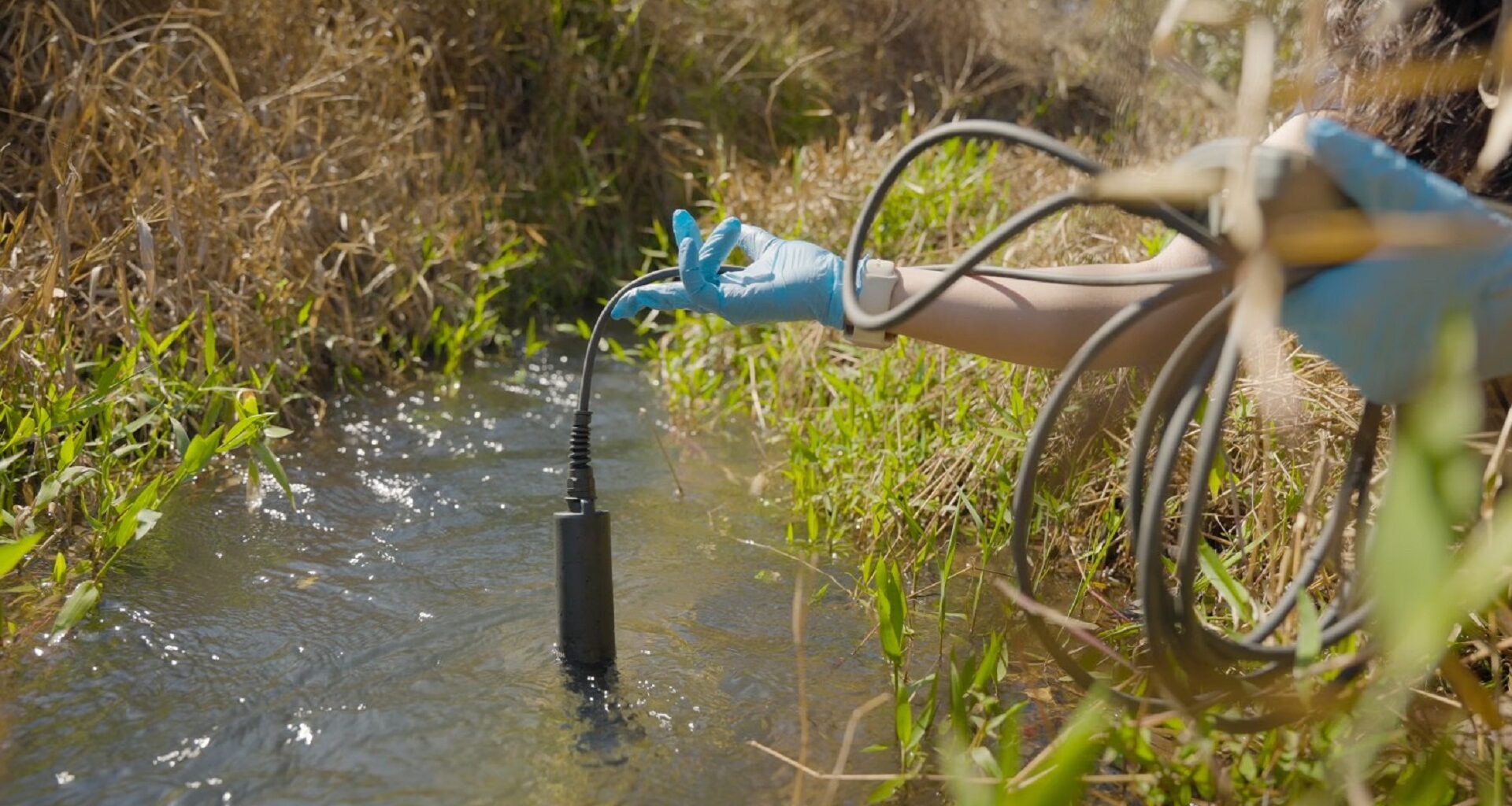
Located on farmland within a single watershed, Sentinel tracks carbon’s full journey: from basalt applied to fields through soils and aquifers to the streams where groundwater resurfaces.
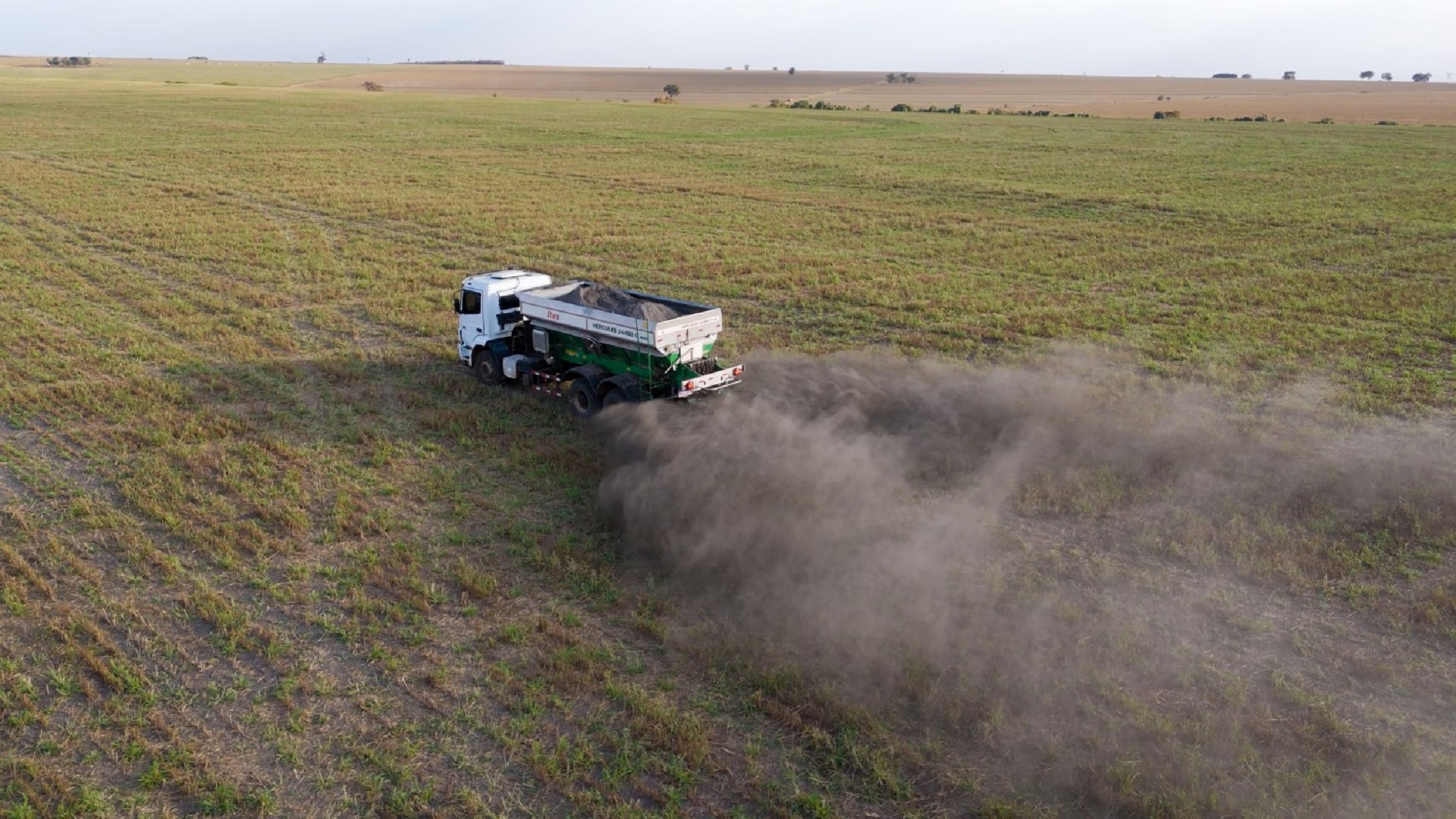 A Terradot spreader distributes basalt rock powder to farmland. Credit: Bryan Stefano Leite
The site features deep groundwater wells, in-situ soil sensors, and surface-water stations to close the loop on how carbon moves through the environment.
With Microsoft’s support, Terradot has drilled soil and sediment cores to bedrock to analyze mineral and chemical profiles.
The research focuses on three areas: how agricultural practices like tillage and fertilizer use affect ERW; how dissolved inorganic carbon travels below the root zone; and what happens when carbon-enriched groundwater resurfaces.
“Together, these efforts move us beyond shallow soil measurements toward a fuller picture of the carbon balance,” Terradot said.
“That deeper perspective allows Sentinel to transform open questions into evidence that strengthens and scales ERW.”
From pilot to proof
Terradot’s next project, Carcará, in Paraná state, has been validated under Isometric’s Enhanced Weathering in Agriculture protocol, with first verified credits expected in Q4 2025.
As the company expands, it is working toward “infrastructure-grade carbon removal”, with plans afoot for large-scale, rigorously monitored projects that connect with existing agricultural and infrastructure networks.