
The Metropolitan Museum of Art is growing without getting any bigger. Its future Tang Wing will poke not an inch farther into Central Park than the old modern-art galleries did (or that’s the promise, anyway). Ever since Kevin Roche megasized the complex in the 1970s, the Met has stuck to a policy of rearranging itself within that footprint. Gradually, a succession of architects has eked out some fresh square footage here and there, discovering unused bits of space but never building up or down or out. Its most recent excavation, designed by Peterson Rich Office, is the 12,000-square-foot new home of the Costume Institute, which has graduated from its old basement and taken up a privileged position just off the Great Hall.
The new Condé M. Nast galleries represent the first of two moves that PRO (led by the married couple Miriam Peterson and Nathan Rich) is making on the museum’s grand entrance lobby, Richard Morris Hunt’s 1902 megafoyer add-on to a museum that had previously sat well back in the park. The Great Hall itself is a designated interior landmark and so more or less untouchable, so it has been getting spiffed up around the edges or, rather, in the corners. PRO has inserted the first of its new designs with forensic care. The new galleries replace the shop, which will move to a new entrance linking the hall to 83rd Street — finally, direct access for those who can’t climb the stairs. Both insertions — one for art, the other for movement — negotiate with the museum’s history of accretion.
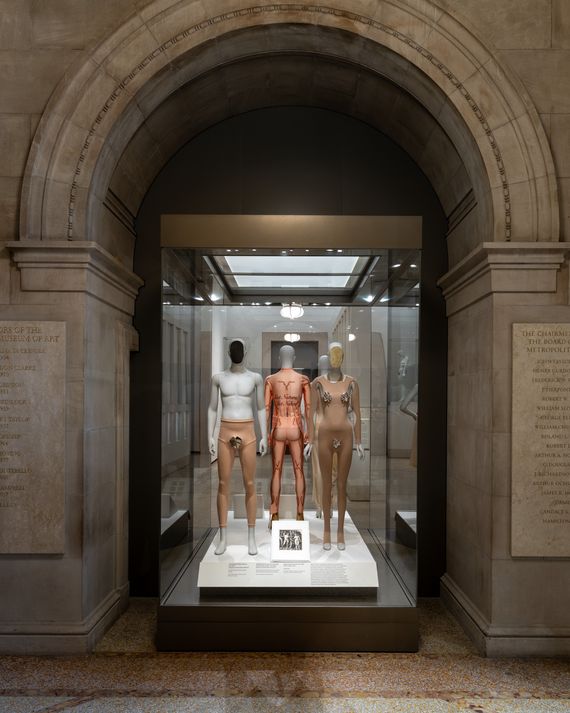
Photo: © Anna-Marie Kellen/The Metropolitan Museum of Art
The Costume Institute was once secreted below stairs, beneath the Egyptian galleries, like a lair only Indiana Jones would know about. Now, you get to the upgraded version by walking up the grand Fifth Avenue staircase, bearing right at the giant floral arrangement above the information desk, and making an immediate turn into the galleries, where clothing has the elevated status of Rembrandts, Chinese landscape scrolls, and ancient statuary. Just past the double-height opening in the limestone wall, the architects have carved out a foyer, an air lock of sorts between old and new with massive wooden doors that will swing shut whenever a show’s being installed. An immense display case sits in the arched niche at one end of the vestibule, so that a pair of costumed mannequins can face in toward the galleries and out to the hall’s milling crowds. It’s a subliminal suggestion for where visitors may want to start their tours: Clothes make the museum.
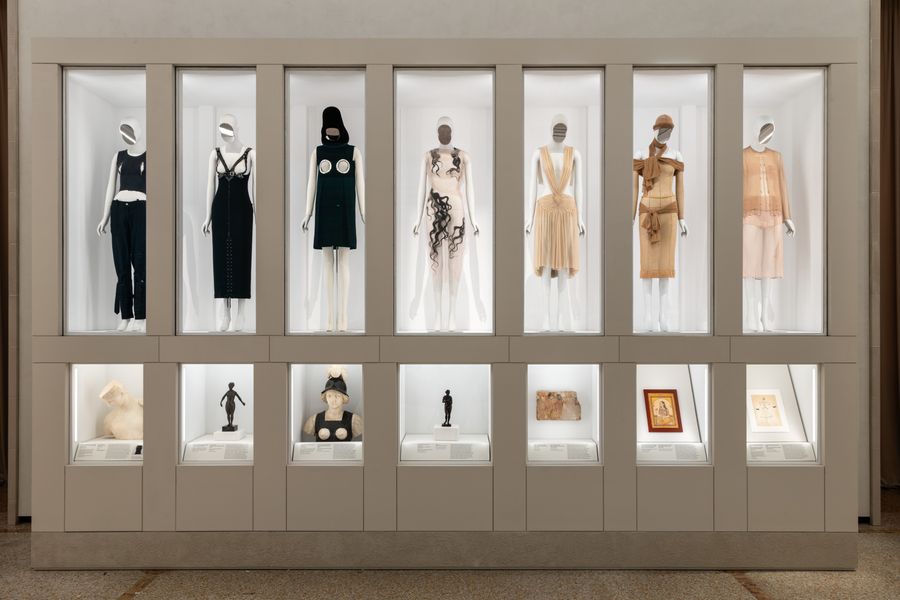
Photo: © Anna-Marie Kellen/The Metropolitan Museum of Art
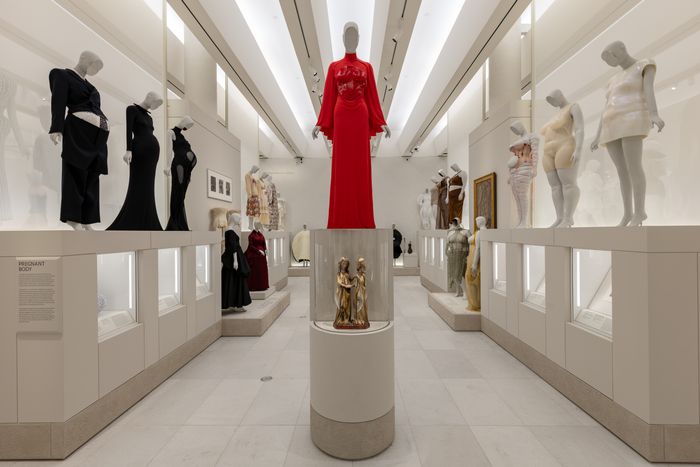
Photo: © Anna-Marie Kellen/The Metropolitan Museum of Art
From left: Photo: © Anna-Marie Kellen/The Metropolitan Museum of ArtPhoto: © Anna-Marie Kellen/The Metropolitan Museum of Art
From top: Photo: © Anna-Marie Kellen/The Metropolitan Museum of ArtPhoto: © Anna-Marie Kellen/The Metropolitan Museum of Art
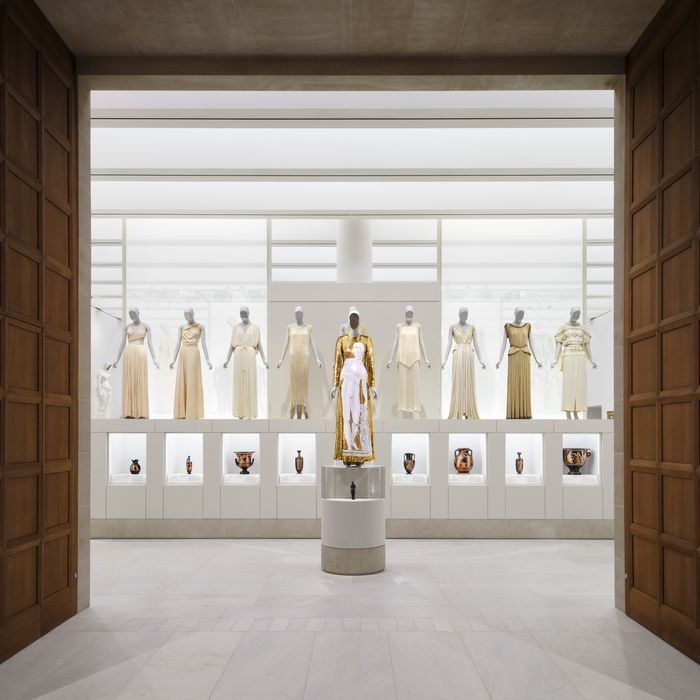
Each renovation represents a recalibration of the Met’s priorities, and now, costume exhibitions have leapt to the front of the house, the better to lure visitors into its blockbuster fashion exhibits. The bigger of the two new galleries is a vast, high room, made loftier by removing the store’s mezzanine level. A row of false beams across the ceiling, each one packed with air-conditioning ducts, cables, and wires for track lighting, keeps the space from feeling hangarlike. For the inaugural show, sheer screens hang from certain beams, dividing the room into bays. The ceiling in the second room is so low by comparison that, walking in, I had the urge to duck. (But what you lose in grandeur, you gain in up-close access to the seams and squiggles of the clothing and art, close enough to touch.)
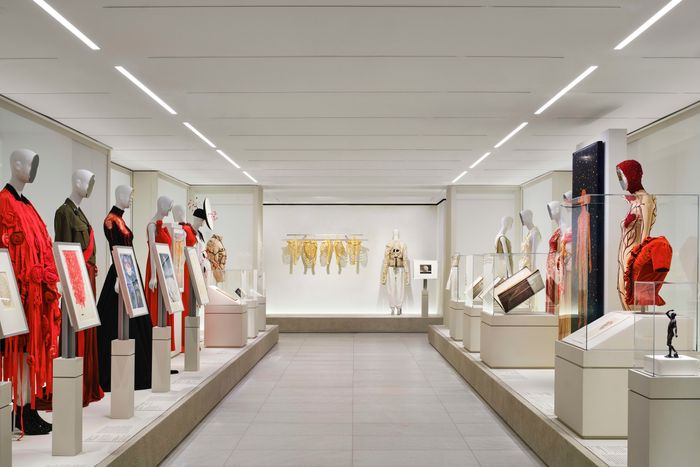
Photo: Nicholas Calcott
You could be in any high-end art gallery — until, that is, you get to the back, where several archeological layers meet, recapitulating the Met’s architectural history. There, a red-brick wall from the original kernel (designed by Calvert Vaux and Jacob Wrey Mould in 1880) abuts another formerly exterior façade (added eight years later by Thomas Weston), passes a plain concrete column (left there in the 1970s by Kevin Roche), and points to the 1909 northern extension (by McKim, Mead & White). This is one of those moments where the flaps of time peel back and you can touch the city’s history and listen in on architects talking to (and dissing) each other across generations. The Met came together piecemeal, with buildings in different styles smashed together, boxed in, and covered over; the newest galleries sit in what was once a courtyard. Peterson and Rich are sensitive to their place in that narrative: They’ve designed a set of sutures and connections, the kind of architecture that effectively disappears when visitors walk in and through, hardly noticing the periods they’ve traversed.
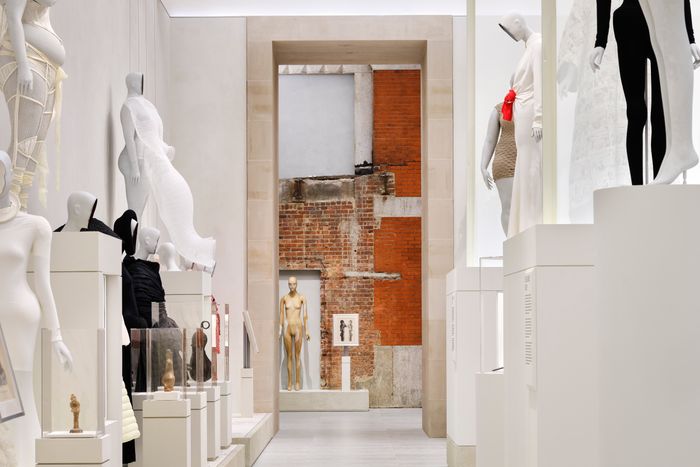
Photo: Nicholas Calcott
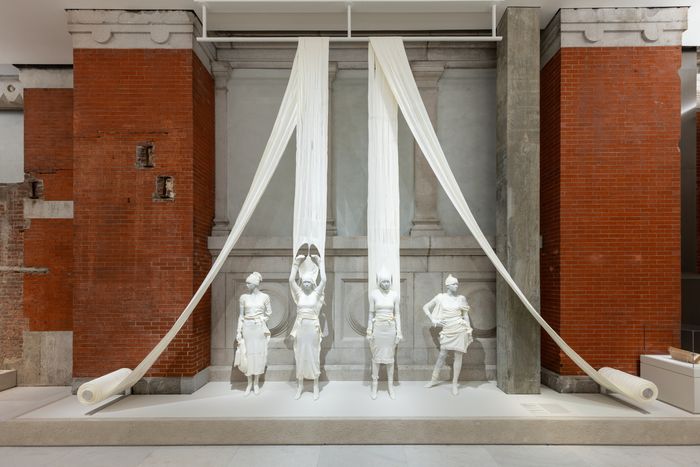
Photo: © Anna-Marie Kellen/The Metropolitan Museum of Art
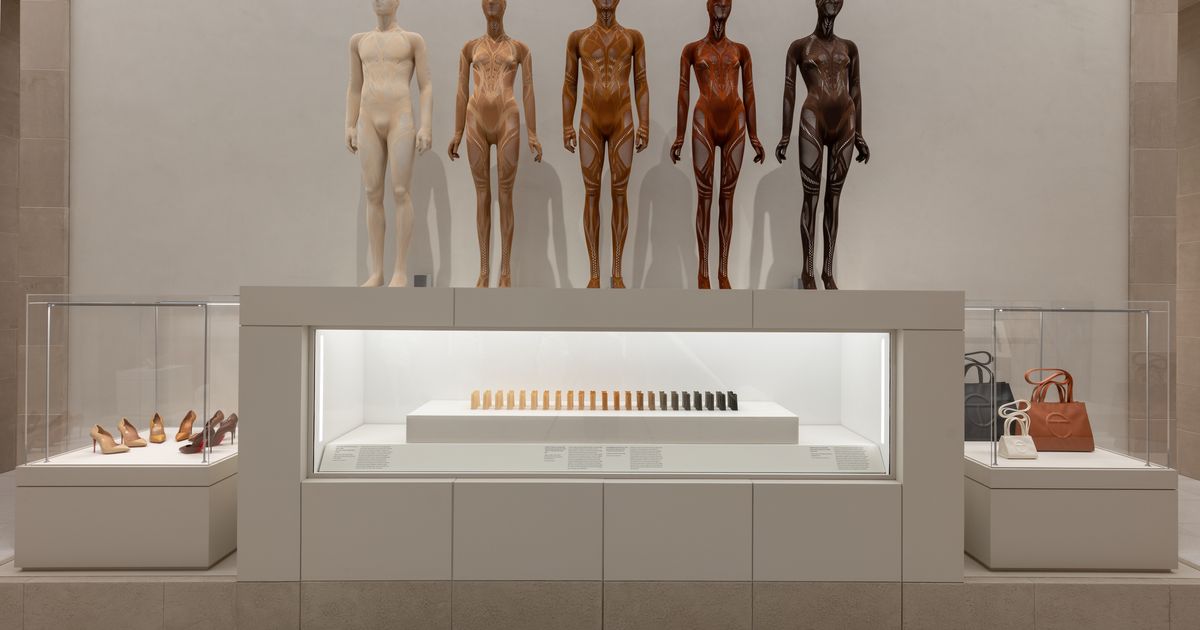
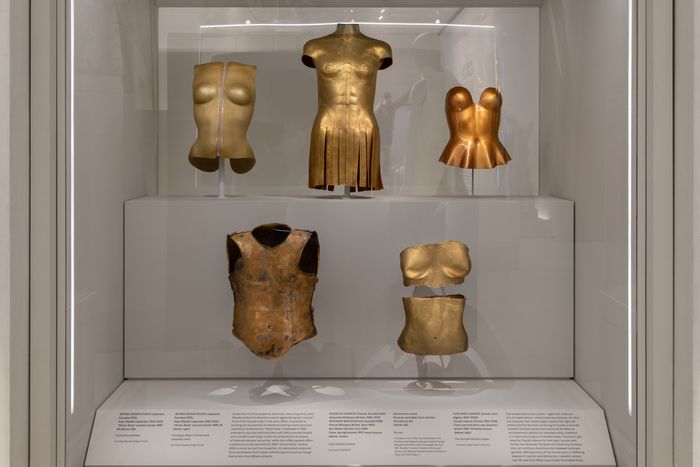
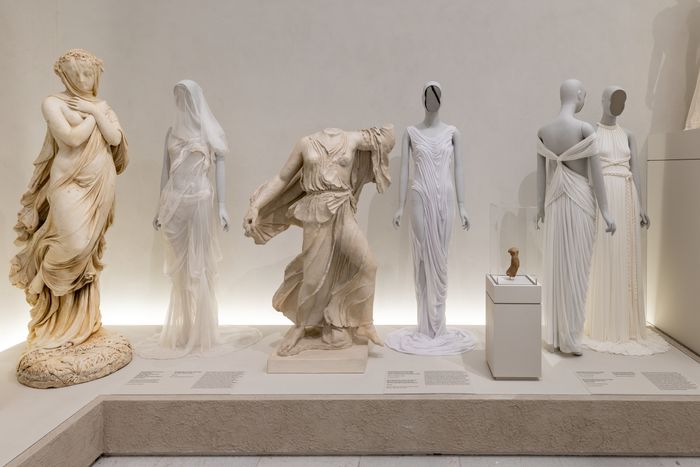
PRO also designed the institute’s first exhibition, “Costume Art,” which pairs contemporary and antique outfits with artworks from the Met’s collection. Sometimes, to take advantage of the ceiling height and densify the show, the juxtaposition goes vertical: a print or a painting at eye level in a lit custom case, with a mannequin perched on top like a super-chic subway surfer. Here, it seems, the point being made is more about the bodies on display — the mannequins are grouped in types (the pregnant body, the disabled body, the corpulent body) and the clothes are not necessarily the point. You might have to step back and crane to see the garment properly, and if you want to get a close-up look at the weave or the stitching, you’re out of luck. This is costume world in Gotham, after all, and it demands a little drama, along with the intimation of a ledge on a high-rise.
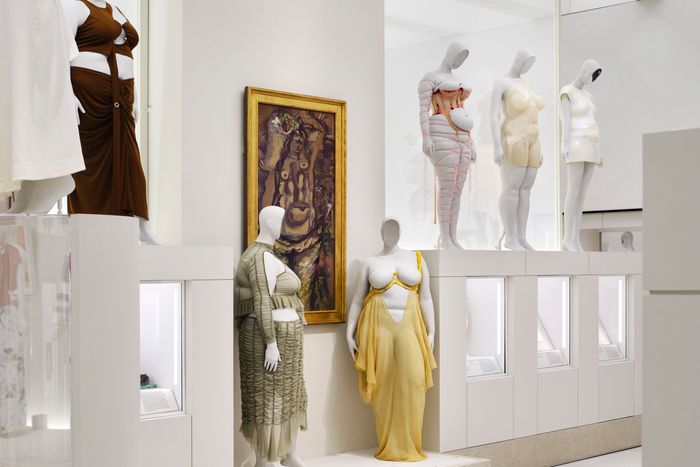
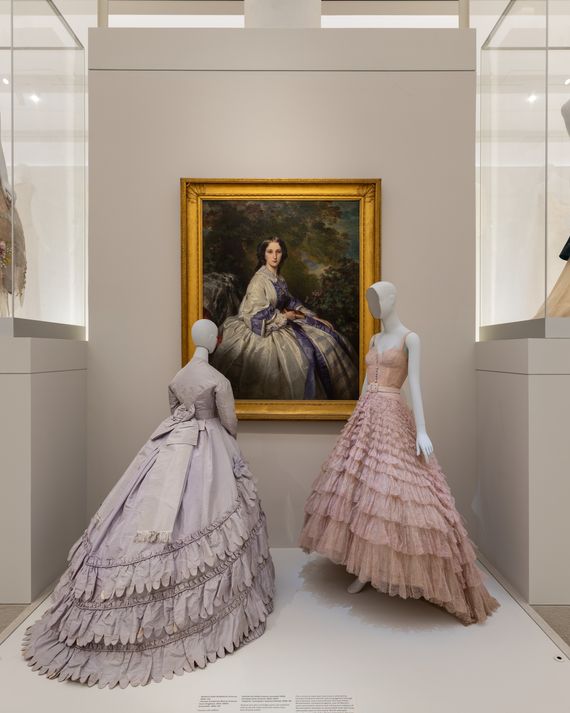
From left: The Corpulent Body Photo: Nicholas CalcottThe Abstract Body Photo: © Anna-Marie Kellen/The Metropolitan Museum of Art
From top: The Corpulent Body Photo: Nicholas CalcottThe Abstract Body Photo: © Anna-Marie Kellen/The Metropolitan Museum of Art
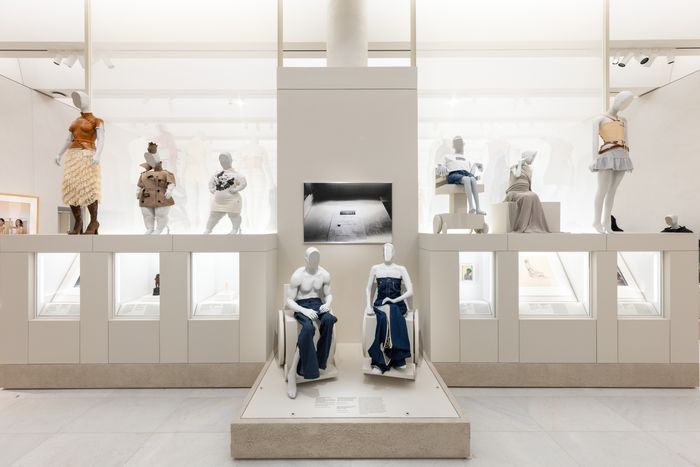
The Disabled Body
Photo: © Anna-Marie Kellen/The Metropolitan Museum of Art
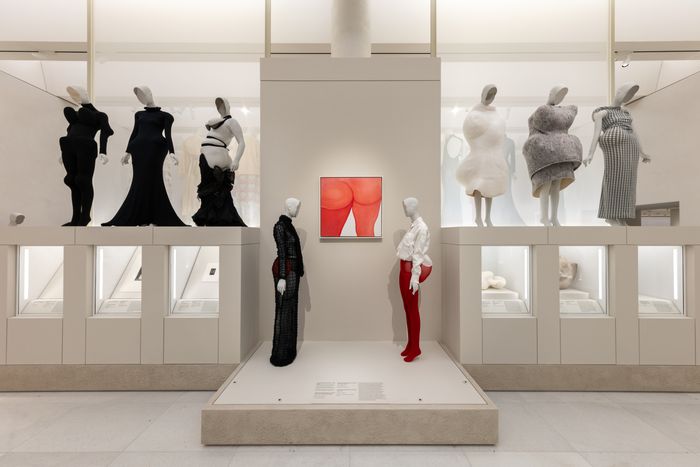
The Pregnant Body
Photo: © Anna-Marie Kellen/The Metropolitan Museum of Art
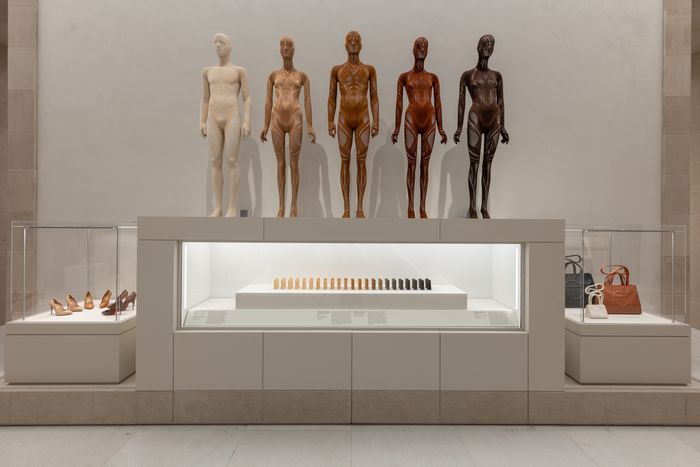
The Epidermal Body
Photo: © Anna-Marie Kellen/The Metropolitan Museum of Art
Related