
More than 10 years ago, a precedent was set as Oak Ridge, Hanford, Washington, and Los Alamos, New Mexico, united to form the 409th national park.
On April 30, local, state and national officials and other well wishers gathered at the Oak Ridge Conference Center to celebrate the 10th anniversary of the creation of the Manhattan Project National Historical Park, which includes the three cities that were instrumental in making and developing the two atomic bombs that ended World War II.
“The last 10 years have been so much fun,” said Niki Nicholas, the park’s site manager. She later added, “I can’t wait to start working on the next 10 years.”
The National Park Service rangers and volunteers work to ensure people visit all areas of Oak Ridge through “walks” with the rangers to learn historical information in places such as the Historic Jackson Square and the Wheat community, Junior Ranger programs, tennis court dances, and virtual tours for people of Oak Ridge’s public places or places still “behind the fence” because of national security purposes. New this summer, she said, will be “fishing with the ranger.”
“We call the ‘park’ the entire city of Oak Ridge. Hopefully, Warren (Gooch) won’t mind,” she said jokingly.
Mayor Warren Gooch welcomed everyone to the 10th anniversary celebration on behalf of the 34,000 citizens of Oak Ridge, remarking on the special partnerships that led to the creation and continued operation of the park. He thanked many people and departments of government for adopting the legislation that led to the creation of the park.
Known for being the “secret city” during World War II, Gooch said Oak Ridge is now the “epicenter of the nuclear renaissance.” Several nuclear energy companies and the Tennessee Valley Authority are planning to build reactors and plants to produce nuclear energy for the nation from Oak Ridge sites.
Erik Olds, manager of the U.S. Department of Energy’s Oak Ridge Office of Environmental Management, said it’s the dawn of a nuclear era enabled by the work of another era, alluding to the work in Oak Ridge during the Manhattan Project, the Cold War era and now.
The efforts being undertaken now to produce nuclear energy have been called the “nuclear renaissance” and the “Manhattan Project 2.0.” Olds remarked that it’s interesting to note that efforts to do monumental and innovative work speedily is now referred to as a “Manhattan Project” effort.
He said he’d been reading many early Oak Ridge-related books, “(but) there is so much more to learn than you will read in those books,” he said. Much of that information can be gleaned through visits to Oak Ridge, Hanford and Los Alamos in person or virtually on the National Park Service website. He and Nicholas talked about ways the historical information is being shared with younger people.
Mary Helen Hitson, who manages the Y-12 Field Office for the National Nuclear Security Administration, said when she drives onto the Y-12 National Security Complex she thinks about how unique and historical it is.
She encouraged the audience to learn the rich history of Building 9731, built in 1943, which was the first building constructed at Y-12. Still in existence, it’s “where operations workers and cubicle operators trained to perform uranium separation” for the first atomic bomb, the park’s website explains.
Those cubical operators were the called the “Calutron Girls” and they’ve been written about a great deal in historical and fictional books during the last couple of decades.
“These patriots trained to to help end the war,” Hitson said.
Several speakers talked about the tourists visiting the Oak Ridge national park. Amy Cole, the Manhattan Project park’s superintendent, said she’d spent the day at the “flattop house” at the Children’s Museum of Oak Ridge and talking with four visitors from Scotland who are visiting all of the national parks in the Southeast. The flattop house is one of the thousands of prefabricated houses the government brought to or built in Oak Ridge to accomodate the Mahattan Project workers during the war.
As part of the 10th anniversary, the history museums in Oak Ridge – the American Museum of Science and Energy (AMSE), Children’s Museum, K-25 Atomic History Center, New Hope Center, and the Oak Ridge History Museum – were offering free admission April 30. Olds said some of the museums had lines of people awaiting their openings that morning. Also, AMSE offered a free screening that night of the Oscar-winning film “Oppenheimer,” about J. Robert Oppenheimer and the Manhattan Project.
Cole said the movie has brought more tourists to Los Alamos, where Oppenheimer worked from mainly in the creation of the bombs.
The Oak Ridger’s News Editor Donna Smith covers Oak Ridge area news. Email her at dsmith@oakridger.com.
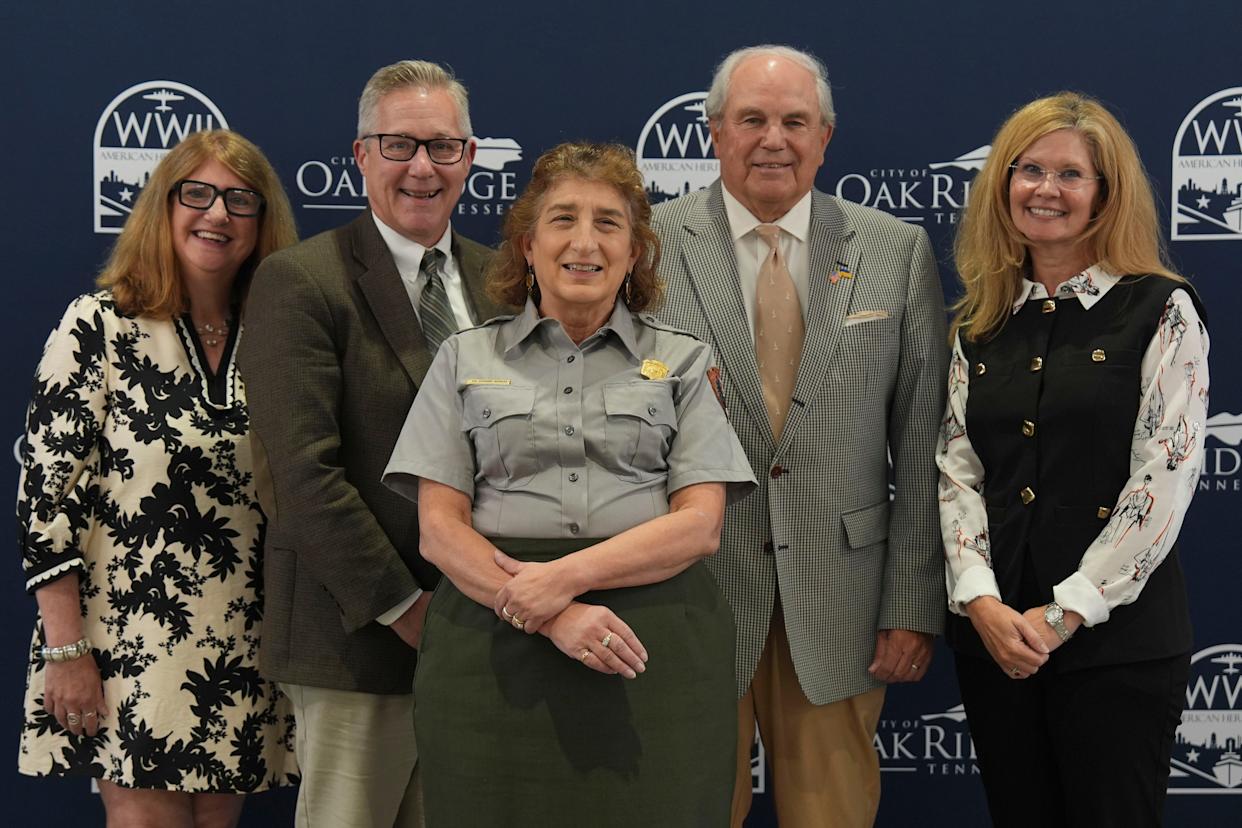
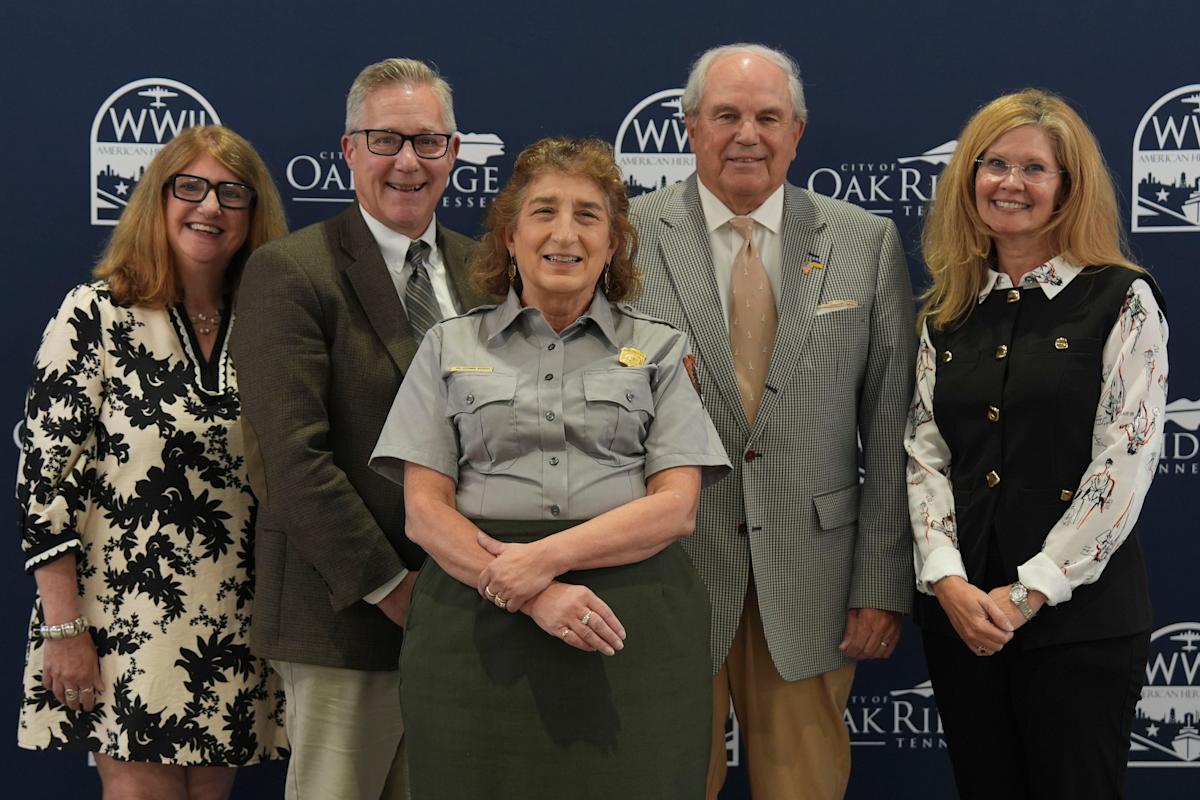
From left to right: Amy Cole, superintendent of the Manhattan Project National Historic Park; Erik Olds, manager of the US Department of Energy’s Oak Ridge Office of Environmental Management; Niki Nicholas, site manager of the Manhattan Project National Historic Park; Oak Ridge Mayor Warren Gooch; and Mary Helen Hitson, manager of Y-12 Field Office, pose for a picture during the 10th anniversary ceremony of the Manhattan Project National Historical Park at the Oak Ridge Conference Center April 30, 2026.
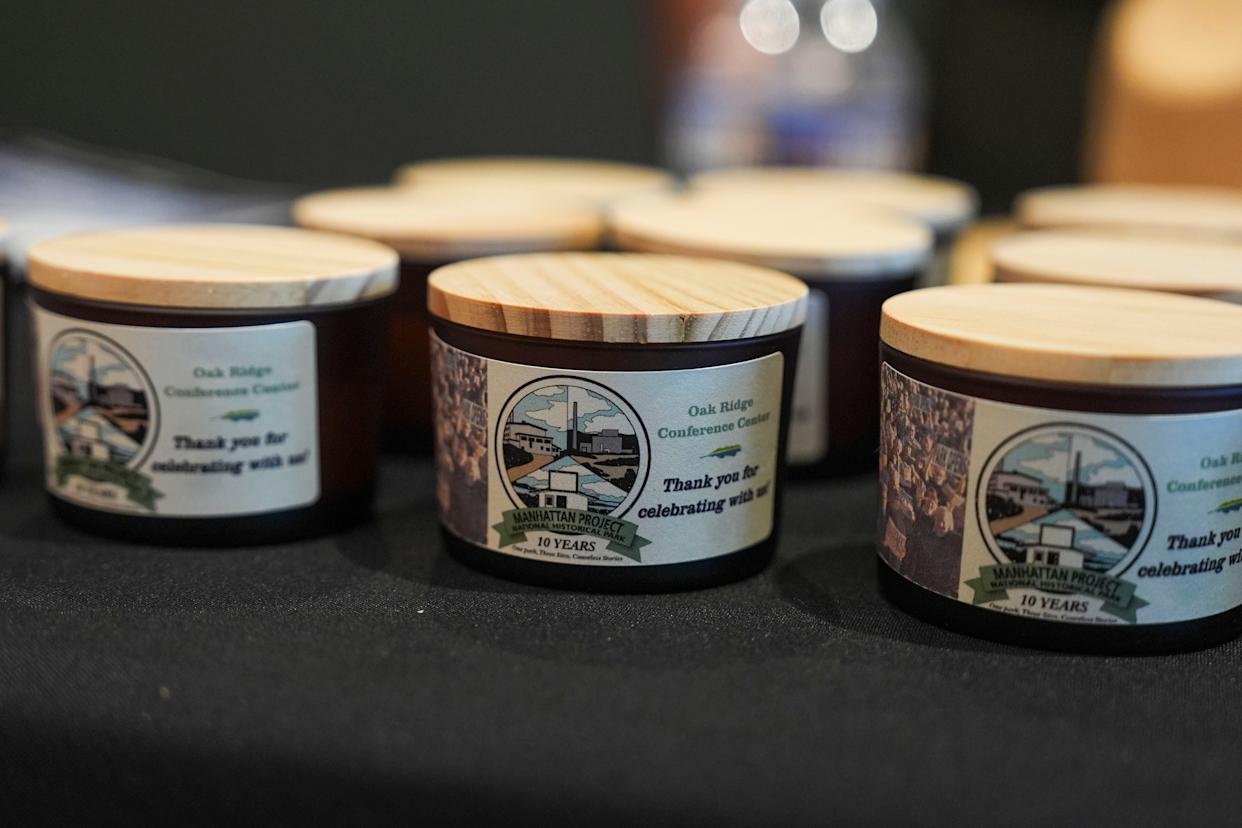
Candles made by the Oak Ridge High School business marketing and management students for guests during the 10th anniversary ceremony of the Manhattan Project National Historical Park at the Oak Ridge Conference Center on April 30, 2026.
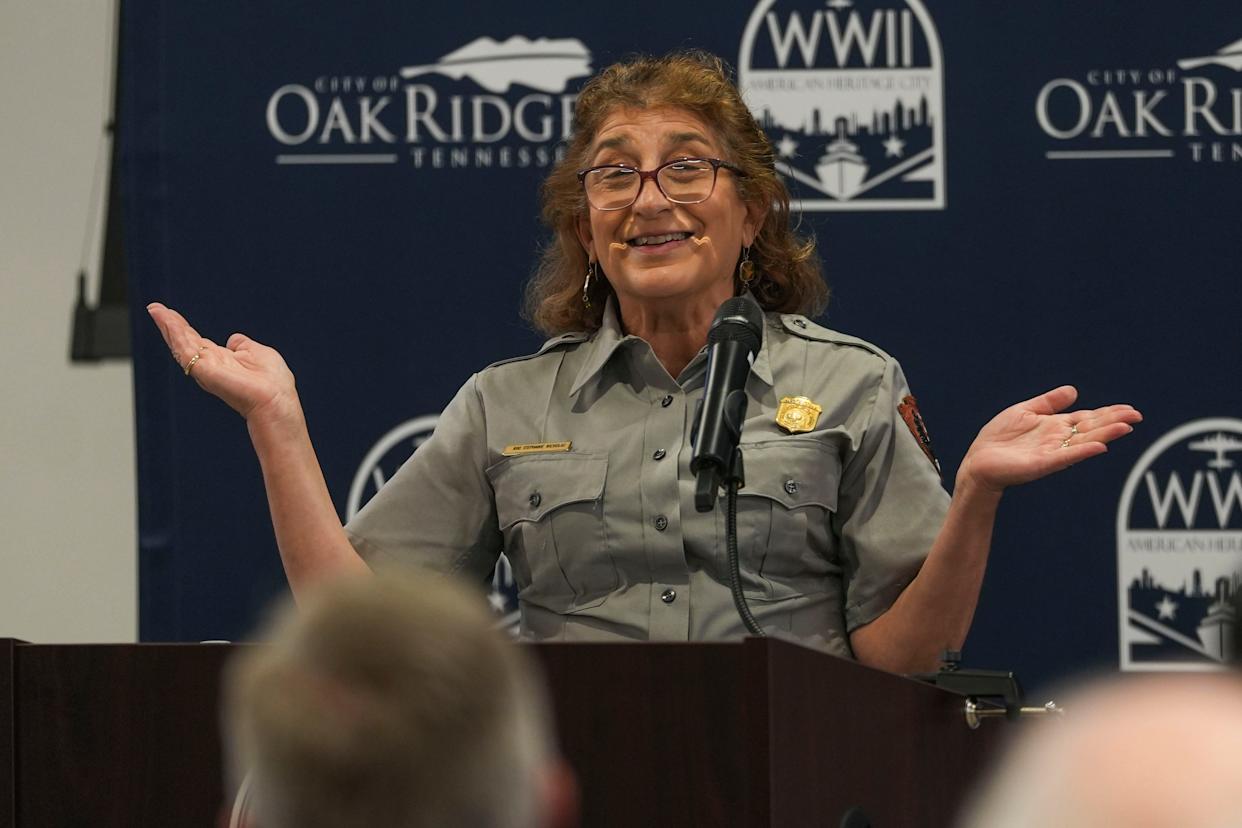
Manhattan Project National Historical Park rangers meet visitors “where they are” to explore Oak Ridge, whether in-person or virtuallly, said Niki Nicholas, the park’s site manager, during the 10th anniversary celebration.
This article originally appeared on Oakridger: Oak Ridge marks 10 years as Manhattan Project park