
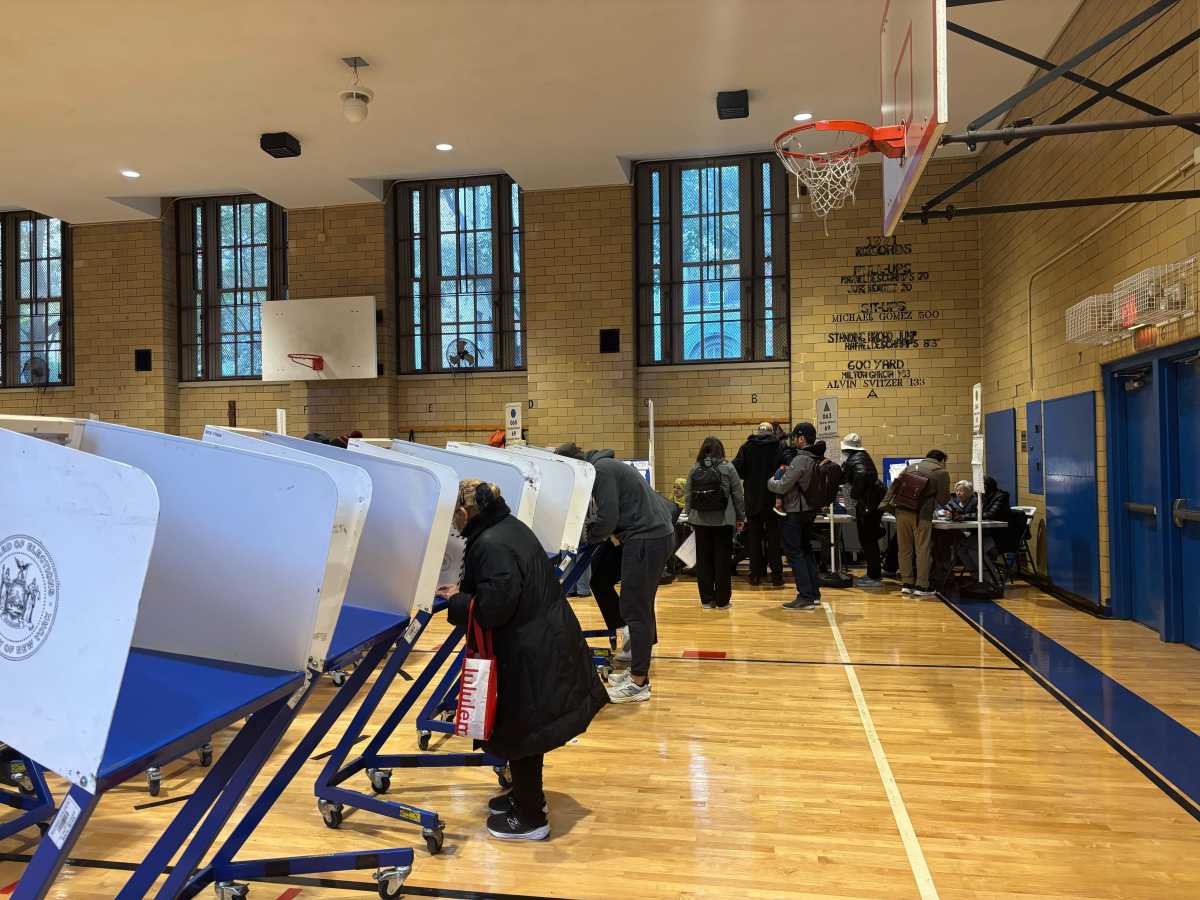
Following a controversial Supreme Court decision about a Louisiana case over the Federal Voting Rights Act, several Republican-controlled states, including Alabama, Louisiana and Tennessee, moved to redraw their state’s maps ahead of the 2026 midterm elections.
But experts told amNewYork not to expect New York Democrats to immedaitely wade into the redistricting wars before the midterms in November, due in part to a SCOTUS decision in March that paused efforts to redraw NYC’s 11th Congressional District — the only Republican-held seat in the city delegation — and also because of the stringent requirements to make constitutional amendments to the New York State Voting Rights Act, signed into law in 2022.
Gov. Kathy Hochul said on social media following the decision that she would encourage the state legislature to change its redistricting rules, a process that would take multiple years to pass the constitutional amendment needed to add democratic seats.
“The Supreme Court has been chipping away at our elections for years. It is clearly carrying out Donald Trump’s will with this decision,” Hochul said in a social media post following the SCOTUS decision. “New York has always led the fight for voting rights and we’ll lead again. I’m working with the Legislature to change New York’s redistricting process so we can fight back against Washington’s attempts to rig our democracy.”
The recent SCOTUS decision in Louisiana v. Callais raised concerns among voting rights advocates. The court struck down Louisiana’s proposed redistricting map that would create an additional majority Black voting district, meaning two out of the state’s six House seats would presumably give Democrats an advantage. It prompted Louisiana’s Republican governor, Jeff Landry, to postpone elections so that new maps can be drawn—potentially eliminating one or both majority Black voting districts.
SCOTUS ruling on Malliotakis district ‘canary in the coal mine’
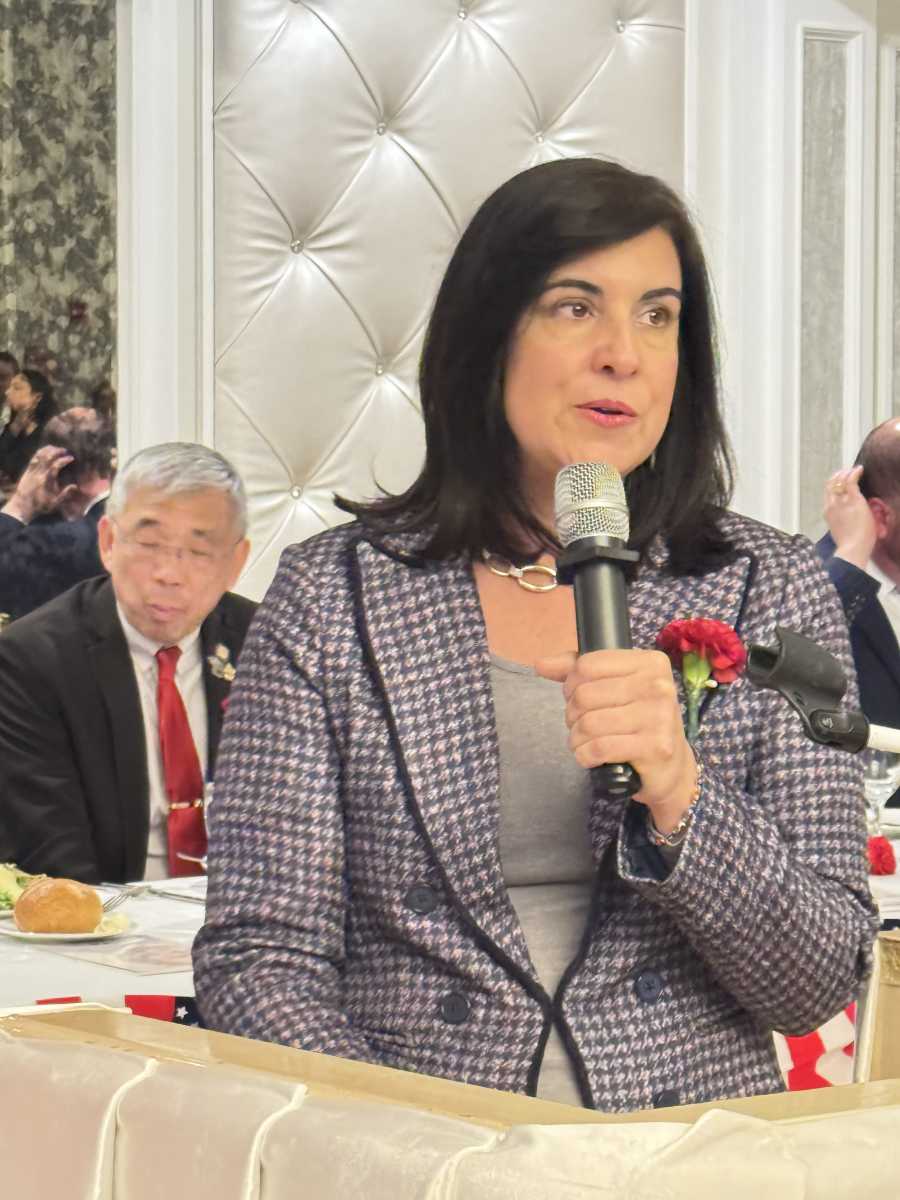 U.S. Representative Nicole Malliotakis (R-NY) speaks during a Lincoln Day celebration.Photo by Arthur De Gaeta
Peter Miller, a senior research fellow covering redistricting and voting rights at the Brennan Center for Justice at NYU Law, who holds a PhD in Political Science, told amNewYork that the Supreme Court’s decision in March about New York’s 11th Congressional District was the canary in the coal mine for what was to come with last week’s decision about the Louisiana case.
U.S. Rep. Nicole Malliotakis, who represents the 11th congressional district covering parts of Staten Island and Brooklyn brought an emergency appeal to the Supreme Court in Malliotakis v. Williams for a stay of a state court’s ruling to redraw her district, aiming to preserve the voting rights of minority voters.
Earlier this year, SCOTUS handed Malliotakis a big win, ordering that the lower court’s decision be paused and the district’s map remain unchanged. Justice Samuel Alito called the map “unadorned racial discrimination” in his concurring opinion.
“If you go back and read Alito’s statement in the New York case when the Supreme Court was debating what to do with the 11th district in Staten Island, he foreshadowed what was coming in Callais in the sense that he made a reference to an equal protection claim as well as drawing districts on the basis of race,” Miller said.
Now, the Supreme Court has dealt another blow to democrats in its decision in the Callais case, which similarly ruled against drawing voting districts on the basis of race. The ruling marked a new interpretation of tenants of the federal Voting Rights Act, which was originally enacted in 1965 by President Lyndon B. Johnson to protect the rights of Black voters who faced unfair barriers to voting, especially in the South, like poll taxes, literacy tests and other attempts to intimidate and prevent Black voters from casting a ballot.
Other Democratic states like California and Virginia have responded in kind, changing their maps to favor democrats in the upcoming election.
But New York appears hamstrung by its own state-level voting act and the multi-year process required for constitutional amendments. Despite last week’s SCOTUS decision, the state legislative process is not flexible enough to respond in time for the 2026 midterms.
‘We will sue, we will redraw and we will win’
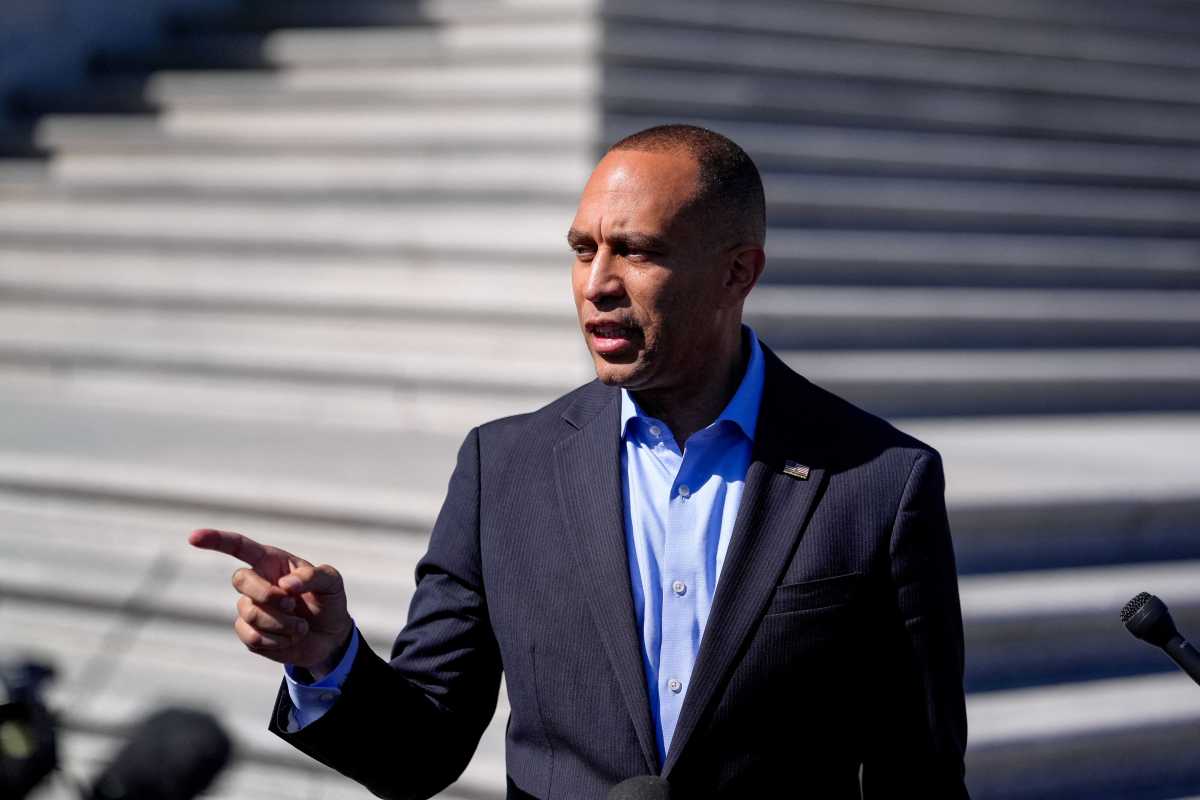 U.S. House Minority Leader Hakeem Jeffries (D-NY) holds a press conference on the ninth day of a partial shutdown of the federal government at the U.S. Capitol in Washington, DC, Oct. 9, 2025.REUTERS/Kent Nishimura
The decision renewed tensions over partisan gerrymandering, with both Democratic and Republican lawmakers firing shots at one another. House Democratic Leader Hakeem Jeffries, who represents the 8th Congressional District in Brooklyn, railed against the GOP in a statement Monday.
“House Republicans have failed, and the American people know it,” said Jeffries. “That is why GOP extremists have concluded the only way to win in November is to rig the national congressional map.”
Jeffries vowed to combat what he said was a Republican power grab.
“This is just the beginning,” Jeffries said. “Across the nation, we will sue, we will redraw and we will win. House Democrats will not allow a MAGA majority to be built on rigged maps and the dilution of Black voting strength. Ultimately, this will end poorly for Republican extremists. It’s the American people who get to decide who wins the majority in Congress, not Donald Trump.”
To that end, Jeffries announced on Monday the formation of the “New York Democracy Project” along with state Assembly Member Joe Morelle, who said that he and Jeffries would “work with partners in New York to explore every option to protect voters in 2026, 2028 and beyond.”
“We will not allow these efforts to silence communities or undermine fair representation,” Morelle said. “We will fight, we will win, and we will protect the voters’ voice.”
But so far, Republican states are leading the way on partisan gerrymandering ahead of the 2026 midterms, with President Donald Trump egging them on.
“We cannot allow there to be an Election that is conducted unconstitutionally simply for the “convenience” of State Legislatures,” Trump said on Truth Social Sunday. “If they have to vote twice, so be it. We should demand that State Legislatures do what the Supreme Court says must be done. That is more important than administrative convenience.”