
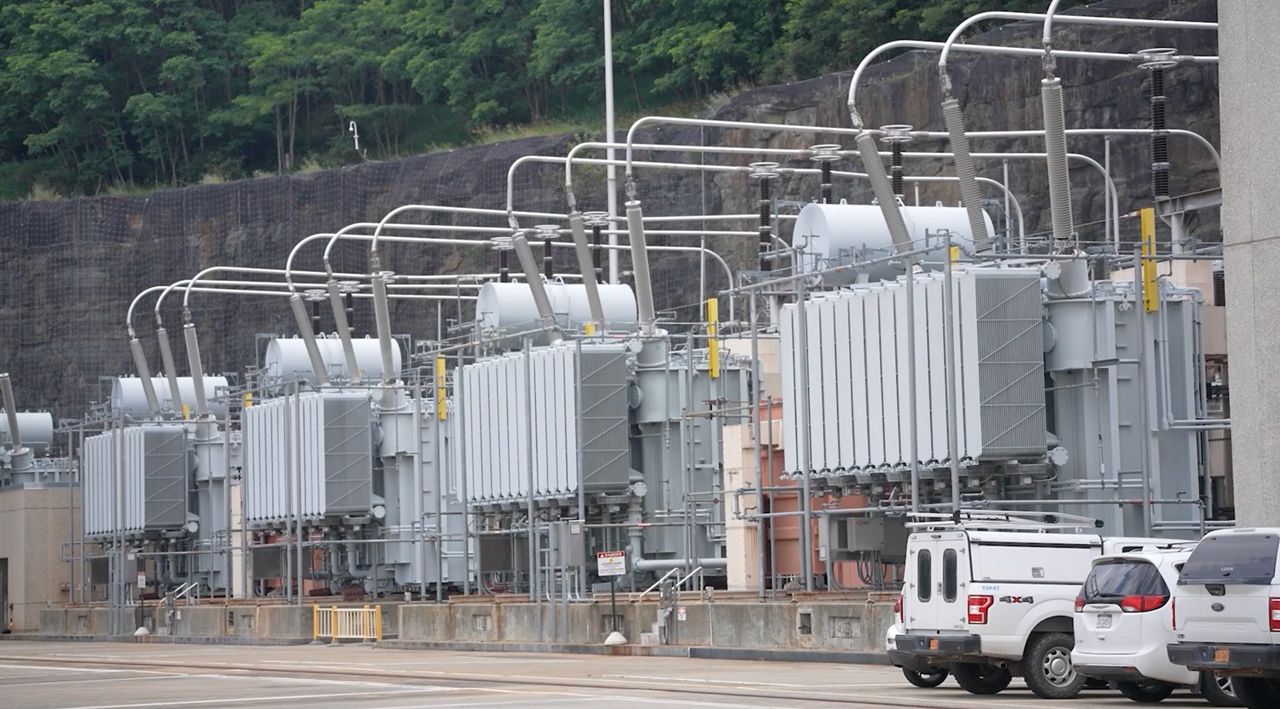
New York’s power grid will operate on its smallest-ever surplus capacity this summer, raising concerns about potential blackouts if the state experiences an extended heat wave, according to a new report from the New York State Independent System Operator.
NYISO President and CEO Rich Dewey said the state is anticipating an unprecedented shortfall in reserve power.
“We are anticipating the smallest surplus that we’ve ever had,” Dewey said.
A serious heat wave could push demand beyond what the grid can reliably handle, Dewey warned. Temperatures in the high 90s sustained over two or three days would drive electricity demand “significantly in excess of what we consider normal weather,” he said.
Spectrum News 1 meteorologists reported four separate heat waves lasting more than three days in New York last year. During one stretch last June, several aging power plants failed to come online, forcing NYISO to purchase power from Canada and the Midwest to avert a crisis.
Dewey attributed the reliability failures to the age of the state’s generation fleet.
“These facilities, it’s really an aging generation fleet and they’re just not operating at the level back when these plants were in their prime,” he said.
Some generating units across the state are between 50 and 70 years old, among the oldest in the country. Industry leaders say the state’s regulatory environment has made the problem worse.
Gavin Donohue, president and CEO of the Independent Power Producers of New York, said restrictions on repowering existing plants are compounding the grid’s vulnerabilities.
“The state’s failure to allow those units to repower is jeopardizing the reliability numbers that we have in the state,” Donohue said.
Compounding the supply problem is surging electricity demand. Increased manufacturing activity and growing household energy consumption are straining a grid that has not kept pace with new generation.
“The demand for power has gone up and the availability of that power is lagging a little bit behind that,” said Patrick Stella, a National Grid spokesperson.
National Grid noted that outages today are less frequent and shorter in duration than they were 20 years ago, and that customer payments are being directed toward grid upgrades. Following last year’s difficulties, the state has pursued system upgrades and rescheduled maintenance outside of peak demand periods.
Dewey said NYISO has contingency plans in place and strong interstate partnerships, but acknowledged vulnerabilities remain.
“We’re confident we’ve got a good, responsible plan and we’re going to meet demand this summer, but it’s those extreme situations, whether it’s a mechanical equipment failure nobody anticipated, or a once-in-100-year heat wave, that’s when folks have to be pretty vigilant,” he said.
Looking ahead, Dewey, Donohue and Stella all said new energy sources must be built to keep pace with the state’s growing demand. However, they cautioned that even if a new project were approved today, New Yorkers would not see its impact for several years.