
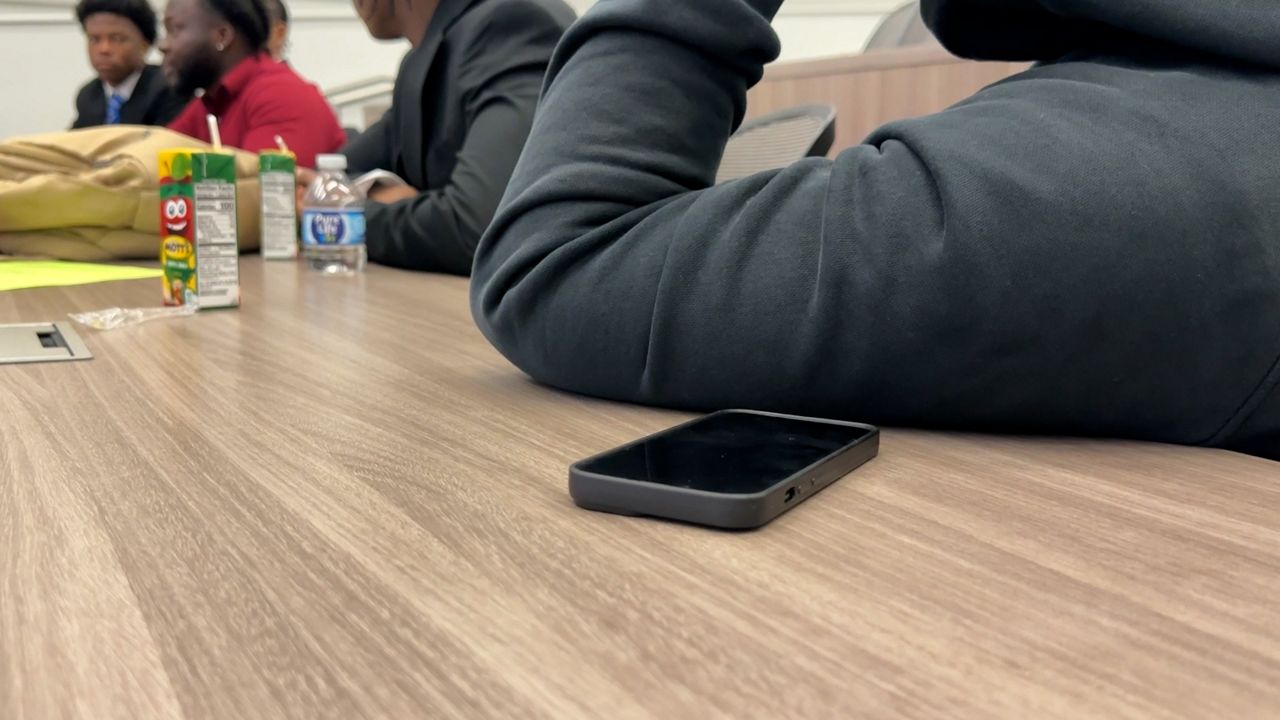
The end of the school year is coming up for many districts, and it’s been a year of change for some.
This was the first school year that the New York State Phone-Free Schools Law went into effect. The law requires no unsanctioned use of smartphones and other internet-enabled personal devices on school grounds in K-12 schools for the entire school day.
The National Bureau of Economic Research just released a study looking at the effects of cellphone bans in schools, specifically looking at the use of lockable phone pouches that prevent students from using the devices.
The study found issues in the short-term, such as disciplinary incidents, increasing, but in the long-term, well-being becomes positive and disciplinary effects fade.
What You Need To Know
This was the first school year that the New York State Phone-Free Schools Law went into effect
The National Bureau of Economic Research just released a study looking at the effects of cellphone bans in schools
Researchers said the average effects on test scores are consistently close to zero, but high schools see modest positive effects in math
A teacher at Schoharie CSD said they have seen grades and student engagement improve
Education leaders across New York state said the school climate has changed since the cellphone ban was implemented.
“The lunchroom, which usually had been silent with the kids on their cellphones, now had conversations coming out of it. The hallways became loud again,” said Natalie McKay, a sixth-grade teacher at Schoharie Middle School and president of the Schoharie Teachers Association.
About two hours away, the Central Square Central School District also acted on cellphones ahead of the state requirement, in their case, approving a policy beforehand.
Central Square opted for a policy in which students can keep their phones in their backpacks if they are kept in an approved pouch – in line with a state law promoted by Gov. Kathy Hochul.
“She said if they were in these neoprene pouches, then they’d be able to put the phone in the pouch, put the pouch in the backpack so then students didn’t have to run to their lockers after their last period to get on the bus, or if they were going to BOCES and whatnot. So, it’s been working,” said Tom Colabufo, Central Square Central School District Superintendent of Schools.
Some kids do still take their phones out, but education leaders said overwhelmingly the policy is being followed, and there’s a shift in the school atmosphere.
“Students are more connected in their classroom to class discussions, to group work, to what’s going on. They’re more present,” said Colabufo.
“They’ve reset the roles and expectations of the classroom in such a positive way,” McKay said.
“We’re also seeing more learning happening in the classrooms. We’re seeing more connection in the classrooms,” said Kyle Belokopitsky, New York State Parent Teacher Association executive director.
The National Bureau of Economic Research’s study said the average effects on test scores are consistently close to zero, but high schools see modest positive effects in math.
But at Schoharie, which had a cellphone policy a year before the state implemented it: “We have seen an uptick in our students, not only the attendance, but we’ve seen an uptick in their grades,” McKay said.
“It was fantastic to hear about their performance. And interestingly enough, some of the mental health statistics that were improving, some of the discipline statistics that were improving from cellphones out of the school building,” said Belokopitsky.
She added that it is important for parents to remember the behavior they’re modeling for their kids and how much of that involves staring at a phone.