
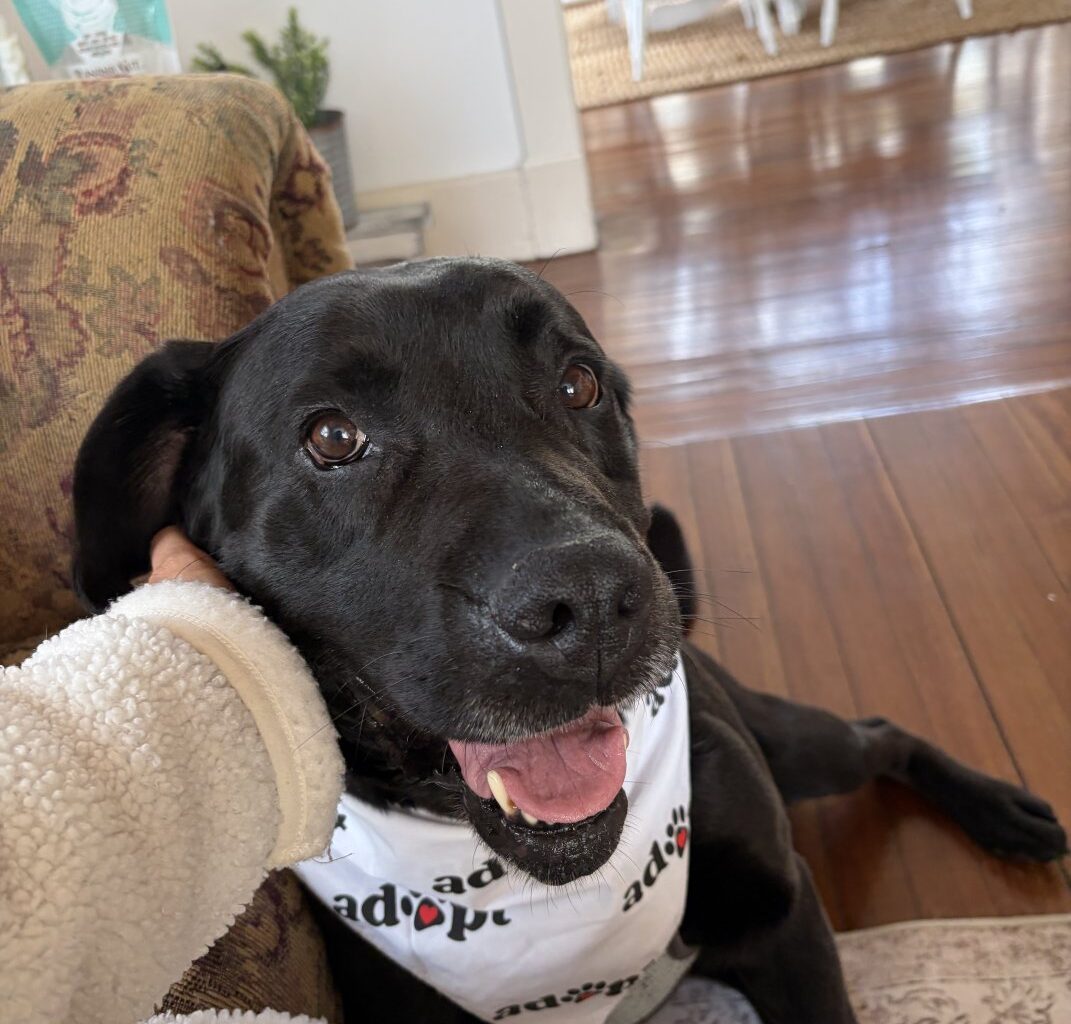
GLOVERSVILLE — Marley arrived at the Fulton County Regional American Society for the Prevention of Cruelty to Animals on April 17 after an encounter with a porcupine.
“She’s just happy-go-lucky. Loves to be with her people, loves food, of course, likes playing with her toys,” SPCA board president Jennifer Lacosse said of the 70-pound Labrador retriever believed to be 5 years old.
The porcupine quills were removed, but solving one problem revealed another, far graver one. Veterinarians noticed there was a mass in her mouth. Lacosse and her organization hoped the quills were the cause and gave the dog antibiotics for a week following the discovery.
But the treatment had no effect, and the results of a biopsy received Friday showed that Marley has a tumor in her mouth, a squamous cell carcinoma. Surgery to remove Marley’s tumor is not a good option. Its removal would lead to further complications and a poor quality of life, Lacosse said. Marley is estimated to have between months and a year to live.
“She really hasn’t had a great start to this new chapter of her life, unfortunately,” Lacosse said of the dog that was found as a stray.
In a Monday social media post, the shelter detailed its search to find a home where Marley could live in comfort while the cancer takes its course. Lacosse said the kennels, concrete floors and noises of shelter life are not how Marley should spend her last days.
The shelter has been on a quest to find someone willing to administer Marley’s medicine, take her to the veterinarian, monitor her appetite and any changes in her comfort level. Marley “is not going to want to live with another dog,” Lacosse said.
In an interview Tuesday, Lacosse said it is important for Marley to find a home as the shelter is a high-stress environment unfit for a dog with a cancer diagnosis. The president said she did not want Marley to die in a kennel.
Hours after the Times Union reported on the search on Tuesday, Lacosse said she received a couple of “really good applications for Marley” and anticipates her being in a foster home within a week.
For now, the tumor is not bothering Marley or impacting her ability to “be a dog,” but Lacosse said prospective fosters will want to look out for difficulties with bad breath, drooling, and appetite.
The shelter is prepared to support the foster who takes Marley in by supplying specialized diets, treats, a dog bed, a crate, and toys. Lacosse said shelter volunteers could even bring Marley to medical appointments if the foster is unable to.
“We hook our fosters up with everything,” she said.