
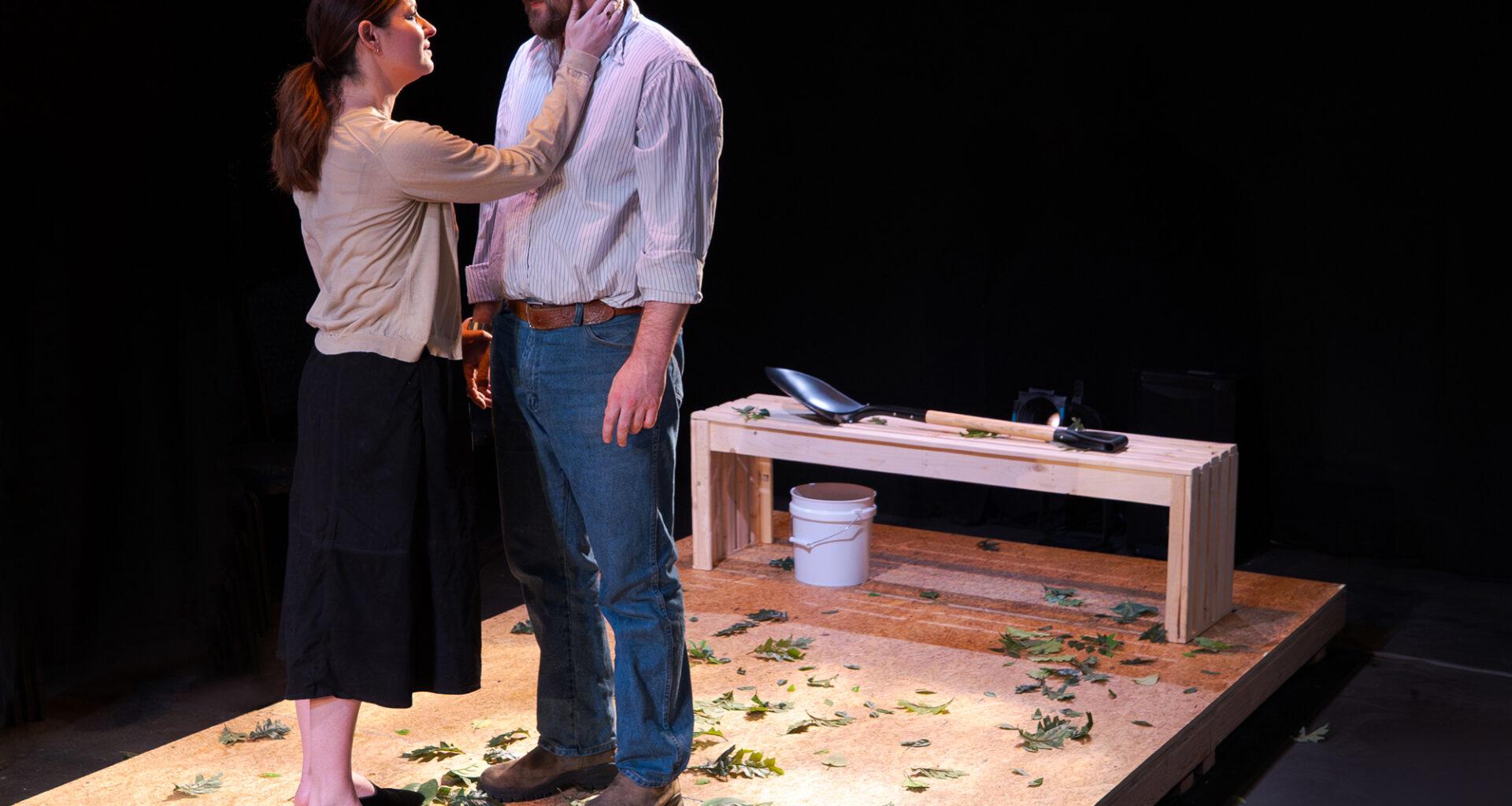
The Bad Daters
Derek Murphy
Paradise Factory
April 23–May 17, 2026
New York
Two strangers meet for a first date. They’re mismatched and apprehensive but something keeps pulling them in. Could it be…?
The Irish playwright Derek Murphy isn’t looking to reinvent the wheel with The Bad Daters, which is having its US premiere at Paradise Factory, but the energy he saves from not overhauling the romantic two-hander genre, he splurges on genuine heart. Still, clocking in around 75 minutes, under Colm Summers’s graceful direction, the play shifts quietly from rom-com into a delicate dual character study.
As it opens, Wendy (Kate Arrington) makes it immediately clear that her jump from app to IRL dating is all at her sister’s insistence. Liam (Shane McNaughton) is incredibly amiable but stops short of eager. He’s along for the ride, letting Wendy get her borderline-rude jabs in, but he won’t be a doormat. What’s more is he matches her quips with whip-smart wit—an invitation for her to realize you can be clever without being cutting.
Their shaky first encounter ends with a demand: Liam is to send her a hand-written letter (and find her address on his own), if he’d like a second date. There’s an appealing mystery to Murphy’s characterizations, unpinnable while recognizable. It’s too easy to write off Wendy’s ask as a dismissal, a ridiculous request she knows he won’t match, nor is it a supplication for true love to prove itself through hard work. We know they’ll have to meet again—lest the remaining hour be spent in silence—and Murphy utilizes that knowledge to his advantage, making us lean into each line of dialogue without turning their motivations needlessly obtuse. It all feels very real.
And reality, insofar as addressing post-2020 life, does seep into the play, in the form of Wendy’s obsessive use of hand sanitizer. It is, of course, a quick visual metaphor for her aversion to intimacy (and quite funny, too), but Murphy also makes it a lingering COVID-19 phantom. When Liam calls her out on the habit, she says she can’t believe anyone else stopped washing their hands the way we all were a few years back. Whether it’s an excuse, genuine hypochondria, something more psychosomatic, or just another one of her evasions is left thoughtfully unexplored—a grounding in the present that neither ignores nor exploits that global kink in our collective conscience. What matters here is that the habit is part of her.