
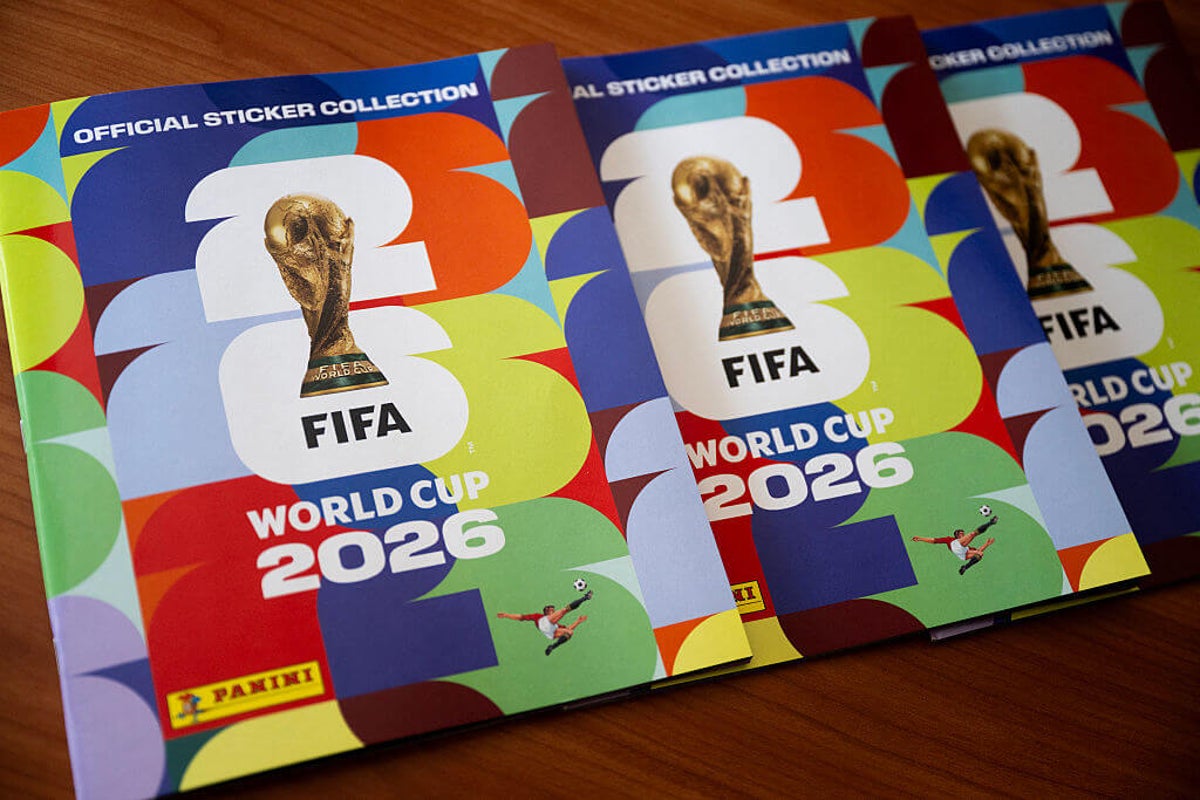
In one of the more monumental shifts in the collectibles world, FIFA and Fanatics have inked a long-term, exclusive licensing deal that will allow Topps — owned by Fanatics — to produce soccer cards, stickers and trading card games for the World Cup and other FIFA events starting in 2031. This will end FIFA and Panini’s long-standing partnership in the space.
Panini will have served as the key licensee for FIFA World Cup cards and sticker books for nearly 60 years, starting in 1970 and running through the 2030 tournament, with the exception of the 1994 event.
“With Fanatics, we see that they are driving massive innovation in sports collectibles that does provide fans with a new, meaningful way to engage with their favorite teams and with their favorite players,” FIFA president Gianni Infantino told The Athletic in a statement. “So, from FIFA’s point of view, we can globalize that fan engagement precisely thanks to our global tournament portfolio. And this provides another important commercial revenue stream that we channel back, as always, into the game, into football.”
Fanatics will give away more than $150 million in collectibles to kids globally across the lifetime of the partnership as part of the contract with FIFA.
Fanatics CEO Michael Rubin said this deal is about growing the company’s reach beyond the U.S.
“Our collectibles business this year is probably 85 percent in the U.S. So as we think about how to expand globally, which is how we turn this into a much bigger business, there’s nothing more important than FIFA,” Rubin told The Athletic. “So for us, we’re thinking about global (growth). Our big growth initiative and partnering with FIFA to do the World Cup, there’s no bigger event in the world than the World Cup every four years.”
Rubin added: “We think long term, global football should be our biggest business. Our job is to make sure that we keep raising the bar and innovating in a way that nobody else can do.”
One such innovation will come in the form of Topps introducing its Debut Patch autographed cards within World Cup related sets, as well as other patch card insert sets building off the success of the award winner gold league logo patch cards for individual award winners in the NFL, NBA and MLB. A player would wear a Debut Patch on their jersey during their first World Cup match with that patch then being removed, authenticated and placed within a trading card signed by the player. Infantino said match-used patch programs will begin as early as this year’s World Cup, even though the licensing deal doesn’t start for several years.
“For the previous three years (before Fanatics could use the license), the NFL put debut patches on rookies when they played their first game and then they saved those relics until the rights kicked in,” Rubin said. “I think we do that across every sport. There’s a multi-year cycle when you launch together. … We did the NFL, the NBA and MLB and they were all basically five years in advance. So I think this is the right time to announce it and start to build the initiatives.”
Signs pointed to the FIFA/Fanatics trading card and collectibles union recently. Fanatics gained future exclusive licensing rights to produce trading cards and sticker books for the men’s and women’s national teams of England, Brazil, Germany and Italy, multiple sources told The Athletic last month.
Topps has also gained the future rights for the United States national teams, according to a source familiar with the deal who was not authorized to speak publicly on the matter. The company announced earlier this week it had secured the rights for Argentina beginning immediately.
This licensing deal is the latest development in the rapidly deepening ties between Fanatics and FIFA. This year’s Fanatics Fest, the company’s Comic Con for sports fans and collectors, also shifted from its typical June timeframe in New York City to coincide with the World Cup final. This year’s event is being held July 16 through July 19, with the tournament’s final match being played July 19 in MetLife Stadium. The World Cup final’s pre-match press conferences will take place at the Fest on July 17. In December, FIFA selected Fanatics as the exclusive operator of all 2026 World Cup stadium and fan festival retail locations.
“This (collectibles) deal reflects FIFA’s strategy to learn from North America, where the commercialization of sport is really reaching different levels,” Infantino said. “I’ve seen that for myself at Formula 1, at NFL, at UFC, at NBA — you name them — and now we can move that into the football arena with Fanatics, who are the leaders in this particular space. So this deal enhances fan engagement and storytelling by creating deeper emotional connections between fans and players via collectibles, or via, for example, game-used memorabilia and other events.”
Meanwhile, losing the FIFA license in 2031 adds further questions about Panini’s future.
Panini originally entertained selling the company in 2025, which The Athletic chronicled in December. According to the company’s sales pitch documents obtained by The Athletic, Panini claims it made nearly $720 million in net sales (613 million euros) from its 2022 World Cup products, setting a company record for a single Panini event collection. Panini also estimates net sales of $1.48 billion in 2026 (1.26 billion euros) and $1.5 billion in 2030 (1.3 billion euros) off World Cup licensed products. Panini’s net sales projections for the entire company are listed with estimates of around $2.47 billion (2.1 billion euros) in 2026 and $2.78 billion (2.37 billion euros) in 2030.
As a reference point, Fanatics expects to generate more $4 billion in revenue from collectibles in 2026, according to a source familiar with the projections who was not authorized to share them publicly.
Sources involved in sales pitch discussions told The Athletic that Panini pulled back attempts to sell the company late last year with the hopes that revenue from the 2026 World Cup would improve the company’s valuation.
Following reports last month about Panini looking to sell the company by the end of this year, Panini released a statement saying that shareholders have engaged Citigroup to assist in identifying and evaluating the company’s future strategic options with an analysis by the end of this year.
“The options currently under consideration include maintaining the current structure of Panini’s ownership without change, pursuing public listing and opening the capital structure to a large strategic partner capable of contributing, in particular, valuable relationships to further support the company’s growth,” the statement said. “A sale, however, to any competitor will not be pursued, as the objective is to expand the company, not to eliminate it.”
Panini did not immediately respond to a request for comment on losing the FIFA license.
All of this is occurring with Panini in an ongoing court battle with Fanatics, which it has accused of anticompetitive behavior and monopolization of the sports card industry after Fanatics acquired exclusive, long-term licensing rights from the NBA and NFL previously held by Panini to pair with its exclusive licenses for MLB, the Premier League, F1, Bundesliga, WWE and others.
Fanatics has denied the claims in Panini’s suit and alleged in an ongoing countersuit that Panini embarked on a “protracted, unlawful, and deceitful campaign of unfair trade practices, strong-arm tactics, and tortious misconduct” in an attempt to force Fanatics to pay an extortionate amount for Panini to terminate its licenses early in 2022.
The Athletic maintains full editorial independence in all our coverage. When you click or make purchases through our links, we may earn a commission.