
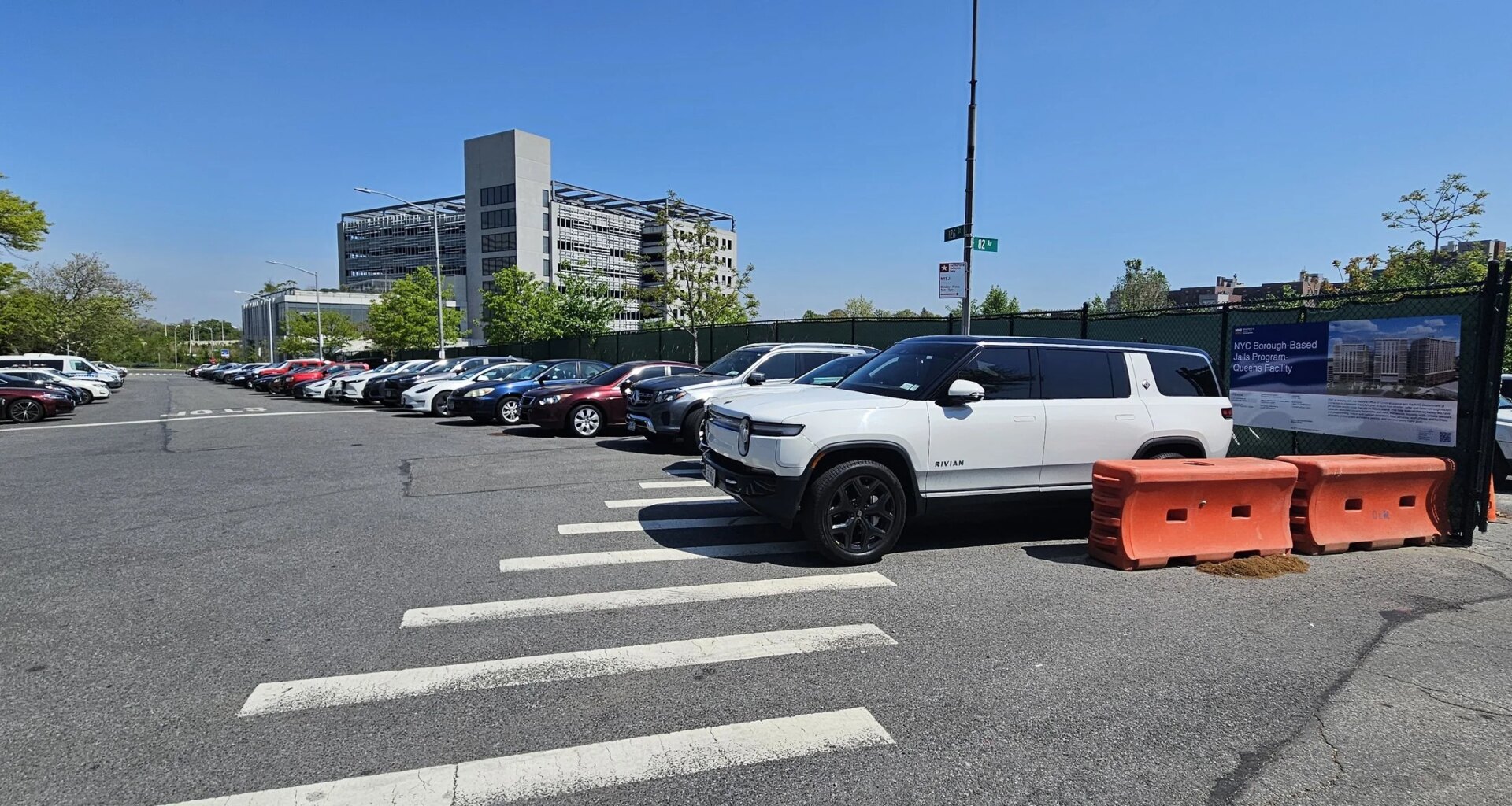
A DDC spokesperson also said that the city had “kept courts and other stakeholders aware of this through multiple meetings and advisories in the past few months, and we will provide a reminder to the community one week before implementing these parking restrictions.”
“We understand the impacts this necessary construction can have in regards to parking availability for workers and the public in the area,” they added.
While the area around the Queens Criminal Courthouse is a major transit hub with an E, F subway station, a Long Island Railroad station and several bus lines making regular stops nearby, for many court staff, a car is the only option to keep the commute time down, court staff told the Eagle.
Court officers in particular, many of whom live in neighboring boroughs or on Long Island, rely on their cars or carpooling to get to work on time, they said.
But with the closure of the municipal lot and future closures of nearby street parking, staff are already having to account for upward of an hour-long delay to get into work while they fight for parking alongside the hundreds of other New Yorkers who come to the courthouse every day.
Sources in the courthouse said staff who have been arriving at 7 a.m. for work now plan to arrive as early as 6 a.m. or 5:30 a.m. just to guarantee themselves a spot.
Parking has always been a premium in the Kew Gardens area, which houses both Queens Criminal Court and Queens Borough Hall, but the problem was only exacerbated after the nearby municipal lot was shut down in December 2024.
A secretary who works in Queens Supreme Court, Criminal Term, granted anonymity told the Eagle it regularly takes them 45 minutes to find a parking spot. She said that even though she has a handicapped placard, there are no nearby designated handicapped spots.
When the lot was first closed, it drew immediate pushback from judges, court staff and other organizations, including the New York State Supreme Court Officers Association.
“All of our members assigned to the adjacent courthouse are affected by these changes,” Patrick Cullen, president of NYS SCOA, told the Eagle at the time. “We are less than satisfied to this point with the new design as dozens of our members have had to make new parking plans causing an already stressful situation to worsen.”
A Queens judge given anonymity by the Eagle said that he regularly gives carpool rides to his court staff since the lot’s closure. The judge said that while his staff were relieved the parking closures were delayed for now, he hopes the city and the courts can make reliable long-term parking accommodations as the jail’s construction progresses.
“This is going to affect the wider Briarwood and Kew Gardens areas,” the judge told the Eagle.
Beyond trying to compete for parking spots in nearby residential areas, there are several private parking garages in the immediate vicinity of the courthouse.
The closest option is a municipal garage on 132nd Street which borders Queens’ borough-based jail. The garage was built as part of the borough-based jails program – the jail itself will also have 100 underground parking spots for Department of Correction vehicles, which may relieve some of the stress.
“The multi-level building includes space for 600 vehicles, 63 bike rack spots, a community area and sustainability features, including electric vehicle chargers and solar panels,” the DDC spokesperson said.
Despite this, court staff members rarely use it.
On late Tuesday morning, while the streets outside the parking lot were packed with parked cars, the municipal parking garage’s sign indicated there were over 400 empty parking spaces available.
The Queens judge told the Eagle the reason for the lack of use was simple: a 10-hour pass for the day in the municipal garage costs $20, and a monthly permit costs $330.
“Most people are willing to pay five dollars a day to park here, meanwhile they have empty spaces making nothing,” the Queens judge said. “To me, it’s a very easily solvable problem.”