
Address: 222 Broadway, New York City, NY
Status: Completed
Residential Units: 798
Year Built: 1960
The office-to-residential conversion boom has often been framed as a rescue mission for struggling downtown office towers. But at 222 Broadway in Lower Manhattan, the strategy looks less like a bailout and more like a reinvention of what luxury urban living can command in a post-office era.
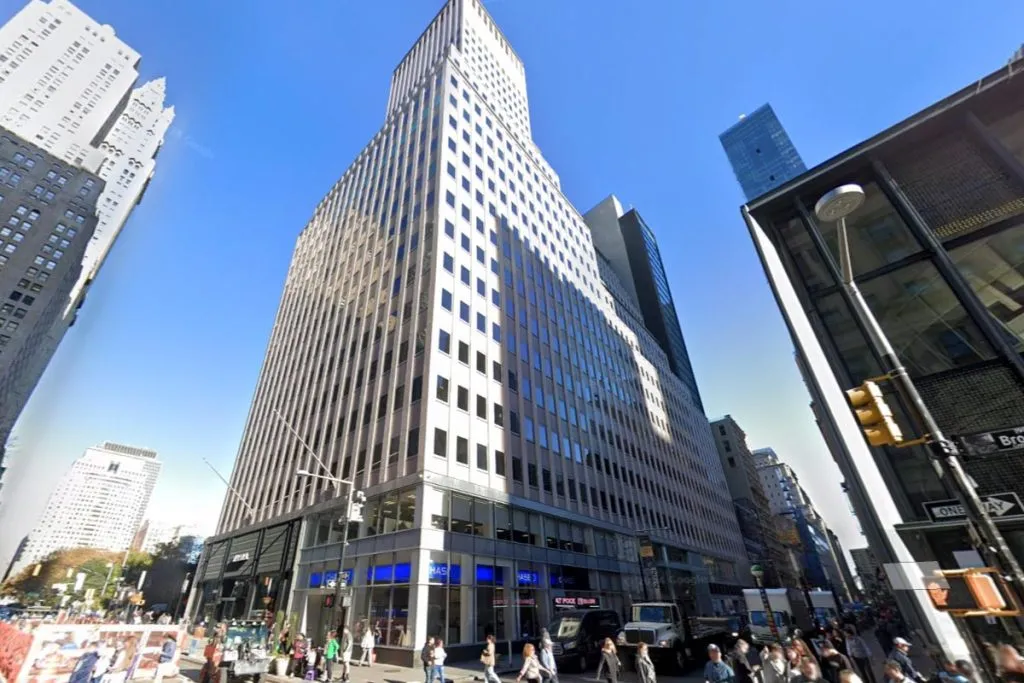
The 31-story former office tower, now rebranded as Wrey, has reopened as a 788-unit luxury rental building in Manhattan’s Financial District. Developed by GFP Real Estate and TPG Real Estate and designed by CetraRuddy, the project adds another major entry to Lower Manhattan’s rapidly expanding conversion pipeline, joining projects like One Wall Street, SoMA at 25 Water Street, 50 Broad Street and Pearl House at 160 Water Street.
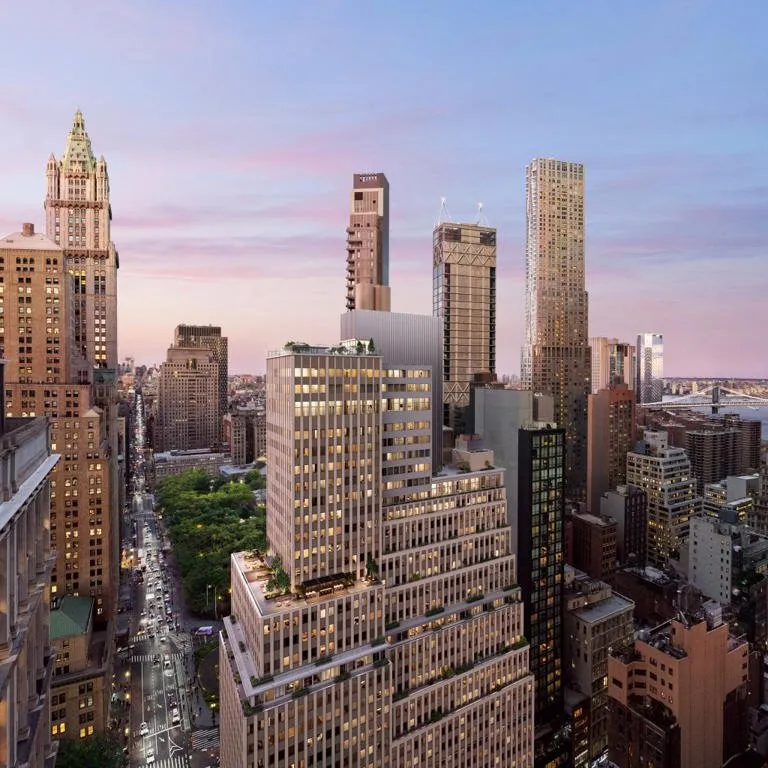 Image © GFP Real Estate
What makes Wrey notable is not simply the scale of the conversion, but the pricing strategy attached to it. Leasing launched this week with asking rents starting around $4,500 for studios, roughly $7,600 for one-bedrooms and climbing above $11,000 for larger layouts. The positioning reflects a broader shift underway in Manhattan, where luxury rentals are increasingly capturing demand that might once have flowed into the condo market.
The economics behind the deal help explain why these conversions continue to move forward despite enormous redevelopment costs. GFP and TPG acquired the property in 2024 for approximately $150 million, a dramatic collapse from the more than $500 million Deutsche Bank paid for the tower in 2014. At the time of the sale, the building was reportedly only about 31 percent occupied, making a residential conversion increasingly attractive compared to trying to refill aging office space in a struggling leasing market.
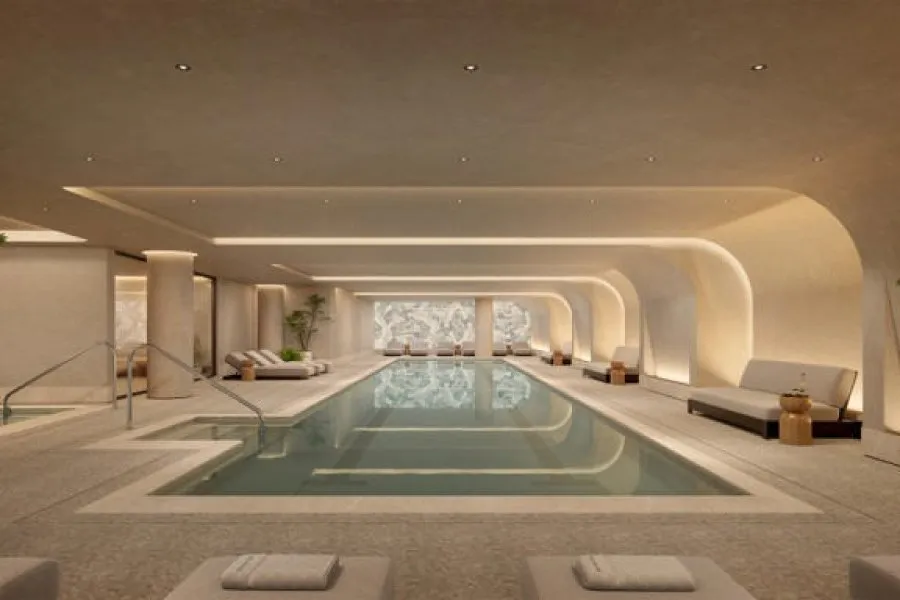 Image © GFP Real Estate
The developers later secured $288 million in construction financing from BDT & MSD Partners to fund the redevelopment. While early Department of Buildings filings listed alteration costs around $43.6 million, the all-in economics of a project this large are believed to exceed $400 million once acquisition, financing and construction are fully accounted for.
What once operated as a traditional office tower has now been rebuilt around residential demand. The conversion included a partial recladding of the midcentury façade, the addition of new windows and a rooftop extension that expanded the building’s height to roughly 430 feet. Developers also reworked floor plates to maximize natural light and create apartment layouts flexible enough to compete with new construction luxury rentals.
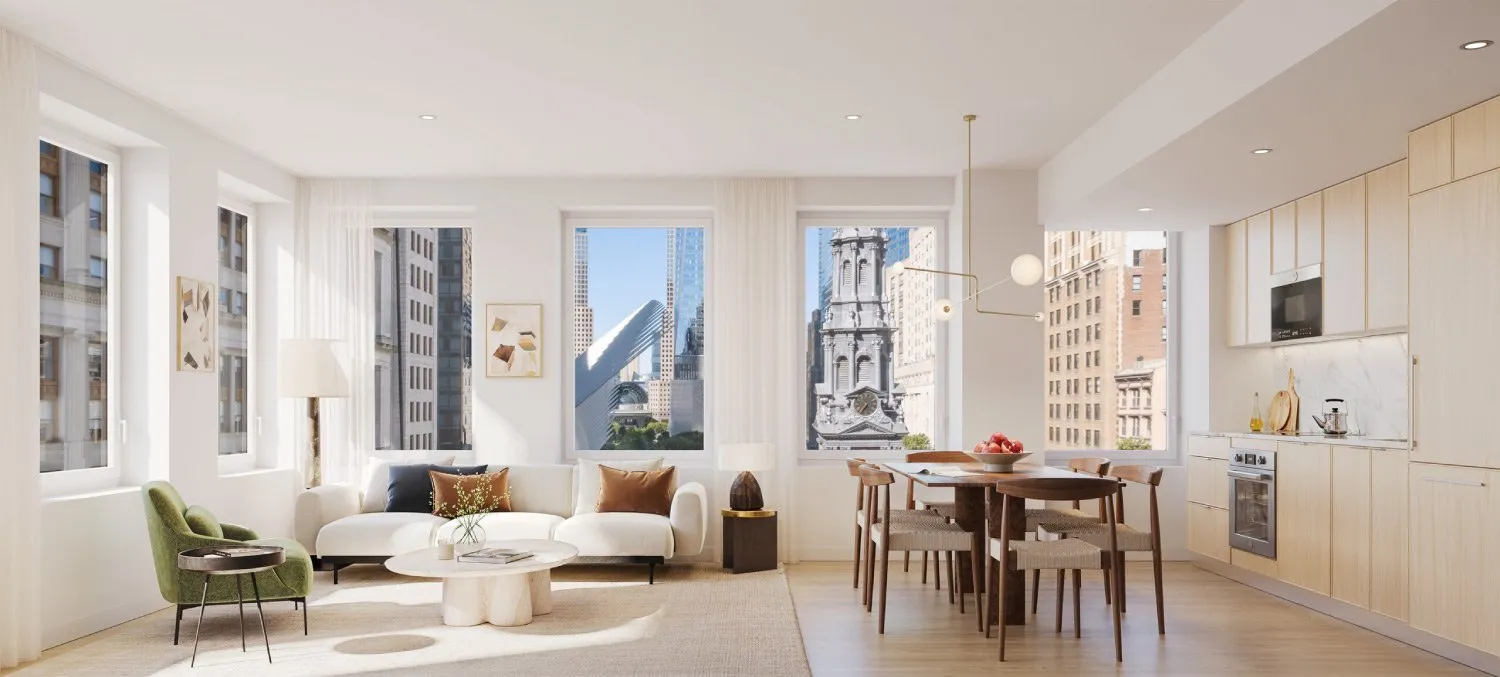 Image © GFP Real Estate
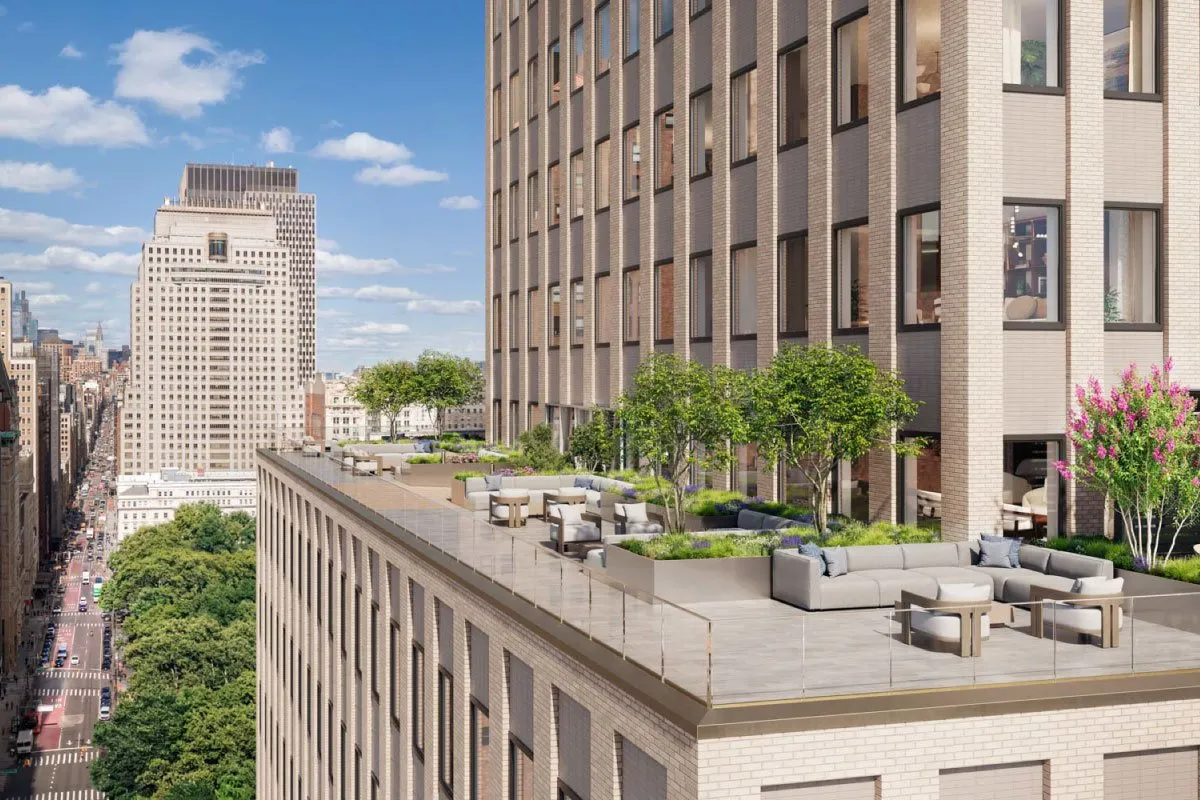
The amenity package reveals how aggressively developers are repositioning converted office buildings to compete with ground-up residential towers. Wrey now includes five floors of amenities featuring a rooftop pool overlooking the Manhattan skyline, a 75-foot indoor lap pool, spa facilities, coworking lounges, screening rooms, fitness spaces and private entertaining areas. The overall design language leans heavily into the aesthetic of a private members’ club rather than a traditional apartment building.
Inside the apartments, the finishes are similarly calibrated toward high-end renters. Units include white oak flooring, ceilings approaching 10 feet, quartz countertops, custom cabinetry and Bertazzoni appliance packages. Smart-home features include integrated blackout shades, keyless entry systems, temperature controls and in-unit washers and dryers.
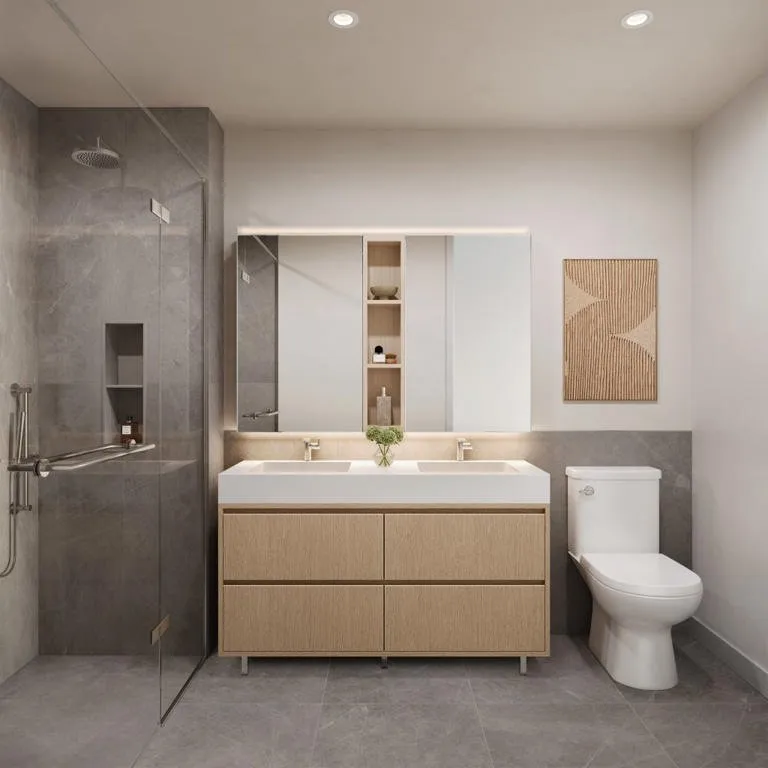 Image © GFP Real Estate
Few neighborhoods illustrate the changing economics of office conversions more clearly than the Financial District. Long dominated by office workers who disappeared after business hours, FiDi has steadily evolved into a full-time residential district over the past two decades. The latest conversion wave is accelerating that transformation by adding thousands of apartments, expanding retail demand and creating a more permanent residential population base.
Location still plays a major role in making these projects viable. Wrey sits directly adjacent to the Fulton Street transit hub with access to the A, C, J, Z, 2, 3, 4 and 5 subway lines, along with underground connections to the Oculus, PATH trains and additional downtown transit infrastructure. For renters seeking luxury amenities without Midtown pricing, the combination of connectivity, skyline views and newly activated residential density has become increasingly attractive.
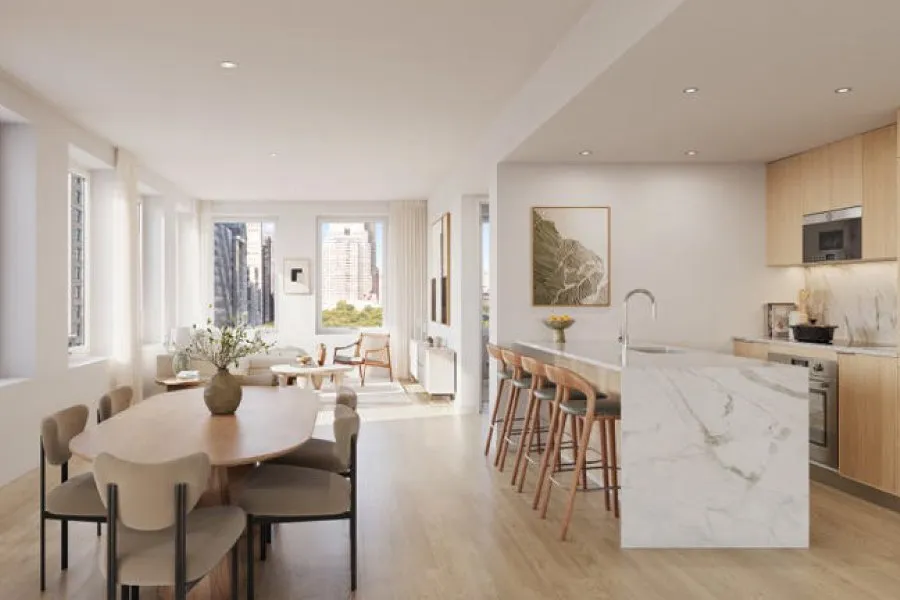 Image © GFP Real Estate
The project also highlights how dramatically office values have reset since the pandemic. Buildings once viewed as stable institutional office assets are now trading at distressed pricing levels that make residential repositioning financially possible. In many cases, the destruction of office value has become the catalyst for creating entirely new residential value.
GFP already has experience testing that formula. The developer’s conversion of 25 Water Street into the 1,320-unit SoMA project became the largest office-to-residential conversion in the country, and executives have pointed to strong leasing performance there as evidence that demand for highly amenitized downtown rentals remains deep.
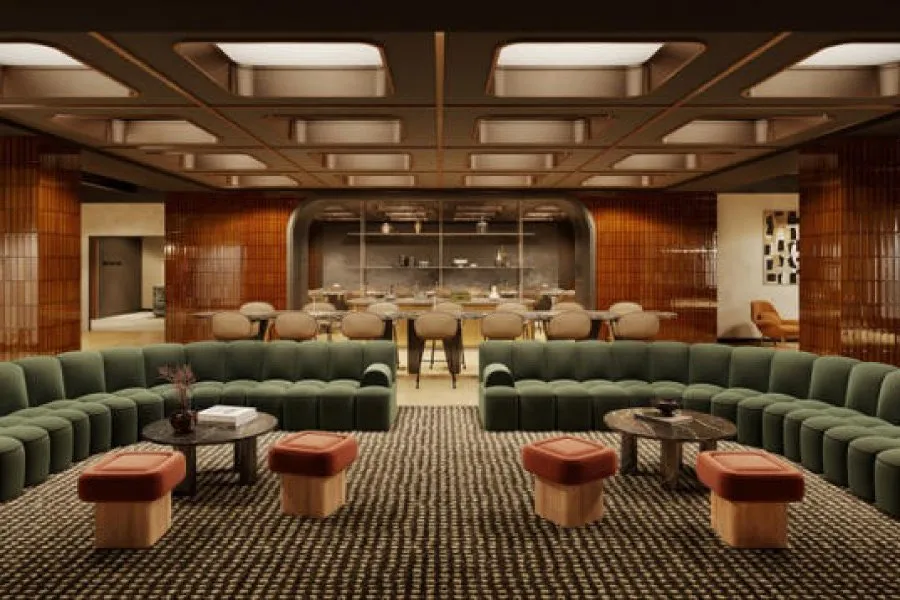 Image © GFP Real Estate
The broader implication is that office conversions are beginning to reshape not just individual towers, but the identity of entire downtown districts. As more obsolete office inventory comes offline, cities may see fewer daily office commuters but larger full-time residential populations supporting restaurants, retail and entertainment throughout the day and night.
For decades, office towers were designed to maximize desk density and daytime occupancy. Projects like Wrey suggest the next generation of downtown buildings may instead be optimized around pools, lounges, coworking floors and skyline terraces. The office district is slowly becoming a residential neighborhood with office infrastructure still attached.