
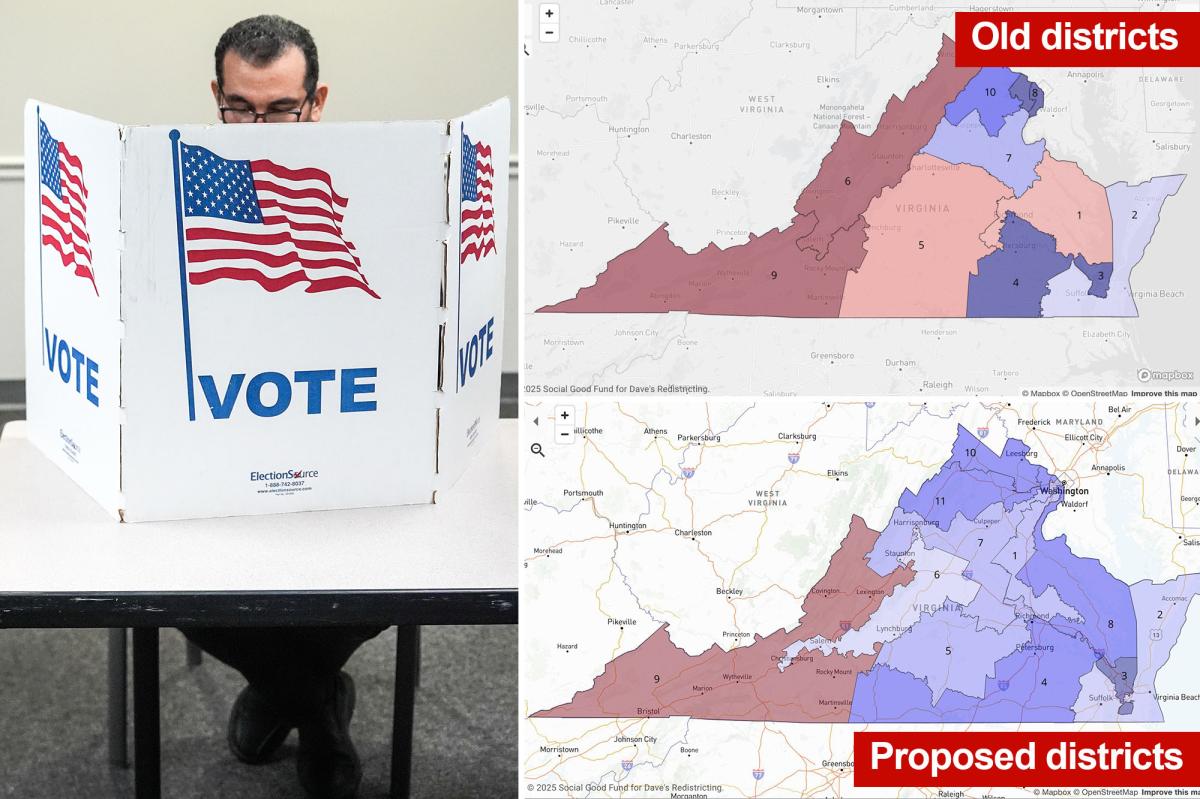
A divided Virginia Supreme Court ruled Friday that commonwealth Democrats unlawfully engineered a referendum on new congressional maps, declaring House districts approved by voters last month to be “null and void.”
The 4-3 decision restores the old district lines put in place after the 2020 census, giving a major boost to Republicans as they try to defy the historical odds and keep their House majority while the GOP also controls the White House.
Virginia is currently represented by six Democrats and five Republicans in the House of Representatives.
Analysts said the map pushed by state Democrats and narrowly approved by voters in the April 21 referendum would have given the party 10 of the commonwealth’s 11 House seats, bolstering Democratic odds of retaking the chamber in November.
Writing for the majority, Justice D. Arthur Kelsey wrote that the legislature submitted the proposed constitutional amendment to voters “in an unprecedented manner.”
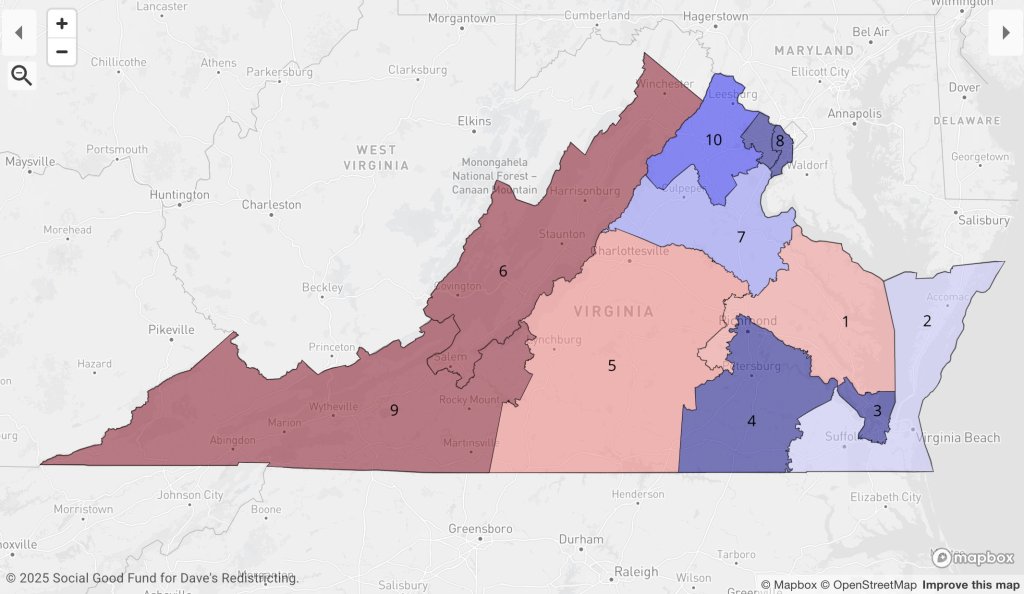 A map of Virginia’s current congressional districts, put in place after the 2020 census. Social Good Fund for Dave’s Redistricting
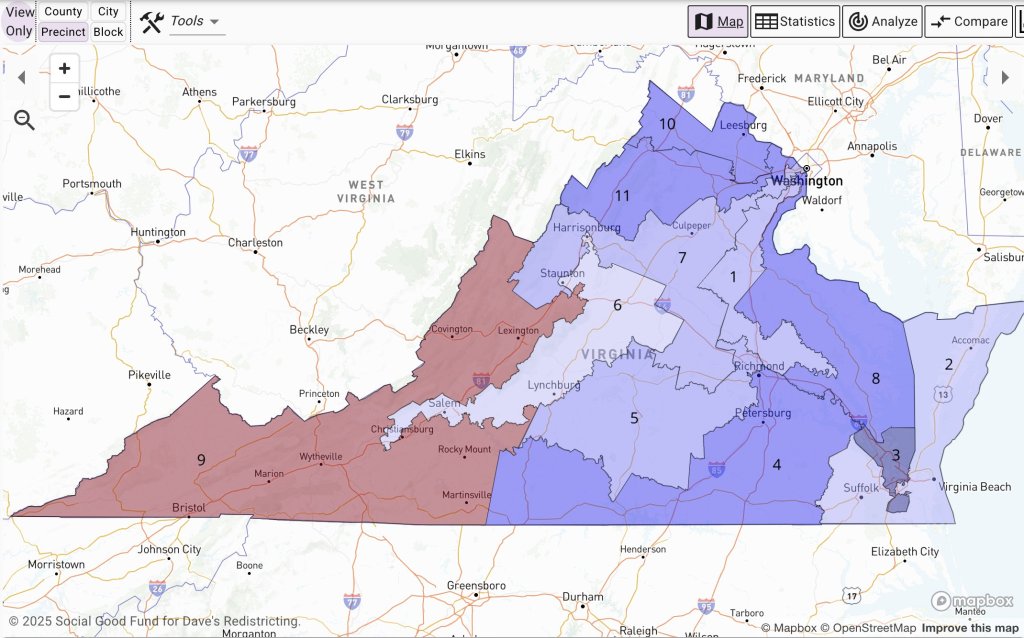 The proposed congressional map approved in an April 21, 2026, referendum. Social Good Fund for Dave’s Redistricting
Because the state’s redistricting commission was established by a voter-approved constitutional amendment, lawmakers had to propose an amendment to redraw the districts. That required approval of a resolution in two separate legislative sessions, with the state’s 2025 election sandwiched in between, to place the amendment on the ballot.
The legislature’s initial approval of the amendment occurred last October — while early voting was underway but before it concluded on the day of the general election. The legislature’s second vote on the amendment occurred after a new legislative session began in January of this year. Lawmakers also approved a separate bill in February laying out the new districts, subject to voter approval of the amendment.
The arguments focused on whether the October approval came too late, since early voting had already begun.
Attorney Matthew Seligman, who defended the legislature, argued that the “election” should be defined narrowly to mean the Tuesday of the general election. In that case, the legislature’s first vote on the redistricting amendment occurred before the election and was constitutional, he told judges.
An attorney for the plaintiffs, Thomas McCarthy, argued that an “election” should be interpreted to cover the entire period during which people can cast ballots, which lasts 45 days in Virginia. If that’s the case, he told justices, the legislature’s initial endorsement of the redistricting amendment came too late to comply with the state constitution.
The majority agreed with McCarthy, with Kelsey writing: “While the Commonwealth is free by its lights to do the right thing for the right reason, the Rule of Law requires that it be done the right way.”
“[V]oting in the general election for the House of Delegates began on September 19, 2025, and ended on Election Day, November 4, 2025. The General Assembly voted for the first time to propose the constitutional amendment to the electorate on October 31, 2025. By that date, over 1.3 million votes had been cast in the general election, which was approximately 40% of the total vote for that election cycle,” wrote the justice.
By attempting to hold that the statutory definition of “election” only applies to Election Day, Kelsey added, Virginia legislators “ended up denying over 1.3 million Virginians their constitutional right to have a voice in the debate over whether their Constitution should be amended.”
With Post wires