
Illustration: Zohar Lazar
This article was featured in New York’s One Great Story newsletter. Sign up here.
Alex, as we’ll call him, works for a global manufacturing company — a successful one with far-flung clients Alex visits weekly, sometimes aboard a private jet. His wife, who often joins him on the road, prefers a different mode of travel, and Alex generally lets her decide which one they use when they visit places together. That mode of travel is Delta 360°, the somewhat mythical elite-service tier offered by invitation only by America’s most successful airline.
“Can you keep my identity reasonably vague?” Alex asks. As long as I could, he was happy to share the secret perks that come with the membership. “I don’t want it taken away.” Is it true, I ask, that Delta sends a Porsche Cayenne to pick up 360° members and whisk them across the runway to meet a tight connection while the rest of the plane waits to deboard?
“Yes,” says Alex.
Is it true, I ask, that 360° members each have their own flight attendant?
“You have someone monitoring you all the time,” says Alex. “One time the flight attendant said to me, ‘You’re the most important person on the plane.’ I said, ‘What about the pilot?’”
Is it true, I continue, that before every Delta flight the airline sends him a handwritten welcome card?
“Yes,” says Alex a little bashfully. “I know it sounds silly, but you’d be surprised what a nice touch that is.”
Is it true that Delta One Lounges are not actually glorified cafeterias with stain-covered couches, free newspapers nobody wants, and the same views of the runway as the rest of the airport?
Alex takes a moment before answering.
“Let me put it this way,” he says. “We go out of our way to visit the lounges.” He says he would consider flying across the country just to visit the upcoming lounge in Atlanta, Delta’s base of operations.
Delta keeps details about 360° vague, and members observe an air of mystery, too. Once, Alex introduced himself to another 360°er sitting next to him on a flight. “How did you know?” the man asked. “I’ve never met another member.” The two traded notes. “You realize you have certain things in common,” says Alex. Income levels, of course. Influence within your company. Also, devotion to Delta.
“These are people who could have anything,” he says. “You’d be surprised how far people go out of their way just to stay with the airline.”
Americans tend to hate airlines. But Delta isn’t like most airlines. Through a combination of tech savvy, deft marketing, and opaque loyalty programs, a company that grew out of a Georgia crop-duster operation a century ago has made itself the most unlikely of things: a lifestyle brand. An airline that isn’t just not lame, not just a bus with wings, but an object of adoration, even status anxiety. Its customers aren’t just loyal. They post their boarding passes as status symbols on TikTok. They make pilgrimages to the Delta Flight Museum to buy old lavatory doors and trolley carts. They collect Delta trading cards that can go for thousands of dollars on eBay. And they obsess in online forums over how to secure access to — then not get expelled from — its elite tiers.
They also go to great lengths to avoid flying any other airline. Delta has the world’s most successful airline-loyalty program, SkyMiles, with an estimated valuation of over $31 billion, according to a ranking released in March by the consulting firm On Point Loyalty. Today it’s estimated that SkyMiles members have grown to over 120 million; the 360° program is estimated to have 5,000 members. (Delta declined to confirm those figures.) While American and United report similar numbers, in Delta’s telling they’re not flying the same passengers. Or, as an executive boasted in March, SkyMiles members aren’t just the top of the so-called K-shaped economy but “probably the highest end.”
If Delta executives sound cocky, who can blame them? Last year, Delta reaped 55 percent of the airline industry’s profits despite having only 20 percent of market share. The opening of the Delta One Lounge at JFK the year before was followed by euphoric publicity. “We’re No. 1 across the board in almost every metric in this industry you can look at,” Ed Bastian, Delta’s CEO, said in an earnings call in January.
SkyMiles members are so devoted they barely flinched when Delta did something two years ago other airlines had long wished to but couldn’t: It tweaked the formula of its loyalty program to reward travelers for how much they spent instead of how many miles they traveled. Those passengers, the company had long understood, traveled so often for business and pleasure they would spring for the extra-wide seats at the pointy end of the plane no matter the cost. This was a significant pivot for the airline industry: Profits used to come from the back of the plane, not the seats where people shrug at baggage fees. But it worked, and the competition followed suit. Scott Kirby, the CEO of United, the only airline that comes close to threatening Delta’s dominance — the two airlines reportedly share more than 90 percent of industry profits — has openly admitted to having copied Bastian’s elite-centered game plan in the past.
The airlines “went from making premium cabins attractive in order to get people into them to making economy cabins intolerable in order to drive people out,” says Dan Currell, a management consultant who has written about corporations and data analytics. “This only works if people are locked in, so it’s a little bit debatable how successful it is in the long run to make the basic class of service an absolute hellhole. But it is definitely the case that a lot of customer behavior is now being driven not by the attraction of being Platinum or Diamond but to avoid the indignity of paying for each checked bag or a packet of pretzels while having no room for one’s knees,” he says.
The “hellhole” strategy got its first serious stress test in February, when a partial shutdown of the Department of Homeland Security led to panic over three-hour waits at the pat-down line. The year had started with such optimism: Outbound travel was booming, fuel prices were stable, and the airlines didn’t mind gloating a little. But then the war in Iran came, and it seemed that what had actually arrived was one of the industry’s cyclical shakeouts in which airlines either go begging for emergency relief or vanish from the face of the earth. Some of that has come to pass: Kirby lobbied the White House to allow a merger with American — he was turned down — and Spirit was doing the bailout dance to avoid liquidation before it finally ceased operations this past weekend.
Delta’s response to the looming wipeout has been to sharply increase prices on popular routes from JFK (say, to LAX), to suspend less popular ones (sorry, Memphis and St. Louis), and to raise baggage fees on non-elite travelers. (A third checked bag is now $200, $50 more than at the start of the year.) In an interview on CNBC after the company announced $14.2 billion in revenue for the first three months of the year, Bastian didn’t show much concern about potential customer outrage over the industry’s biggest one-year baggage-price increase in a decade. In fact, he looked like the proverbial cat with a canary in its stomach. “The first quarter was a really strong start to the year, despite all the external challenges that we’ve faced,” he said, barely suppressing a grin. Delta passengers “are continuing to invest in travel. It’s their priority, and they want to have that experience.”
Translation: We’re bulletproof. Our passengers are immune to price increases, fuel spikes, and wars. What those first-quarter numbers showed was 14 percent growth in revenue from premium tickets, compared to a measly one percent from the main cabin. This is why new planes are being designed to accommodate a majority of premium passengers, the inverse of what planes used to look like when first class was just a couple of rows.
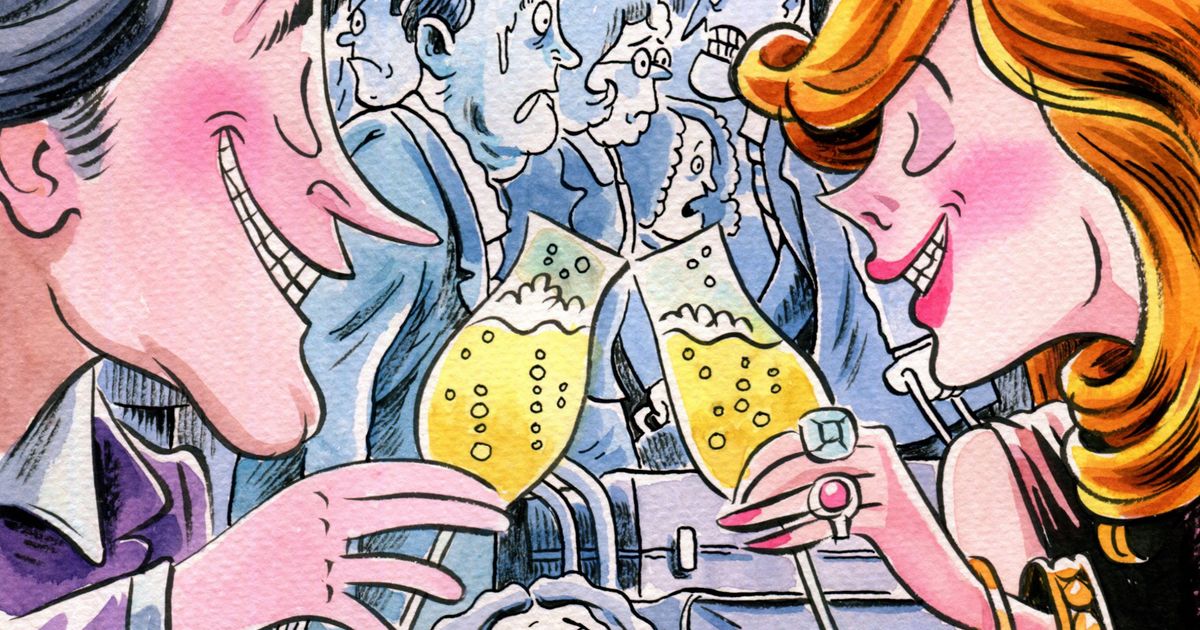
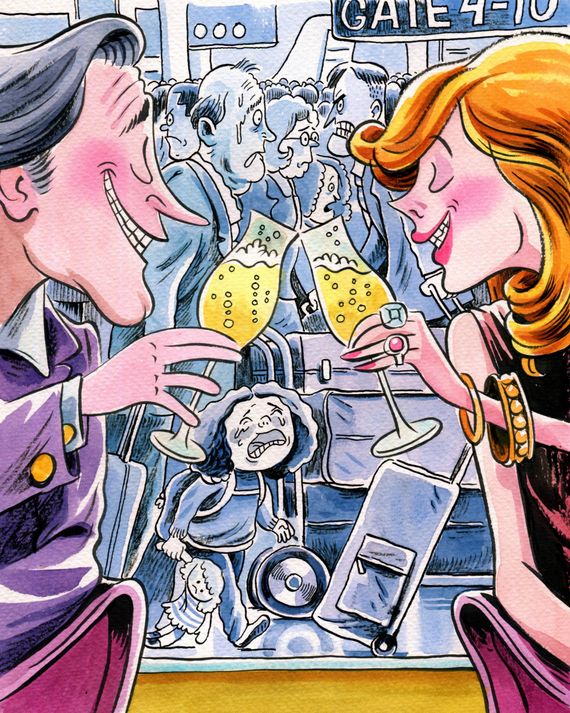
It’s an approach that comes with risk, though. People need to fly, and you can get away with provoking the masses with endlessly mounting fees and shrinking personal spaces for a long time, maybe forever. But Delta’s strategy is built around provoking the rich as well, or the near-rich, people who have tasted the spoils of the system it created. Serving high spenders, or at least Delta’s version of it, revolves around not just convenience and comfort but status — the feeling of being at the top. And status is never anything but a zero-sum game with room for but a select few. If the back of the bus disappears altogether, forcing everyone to pay higher fares for roomier seats up front, then Delta will have effectively turned Comfort class into the new main cabin.
“What we see every year is them increasing the thresholds to qualify for the different elite-status tiers. And the reason they do that is, as has famously been said, that if everyone’s elite, then nobody is. They need to keep raising the qualification level so that they can keep the population lower,” says Brett Snyder, founder of Cranky Flier, a website covering aviation. Delta is seeing “how far can they push it before people run away screaming or come at them with pitchforks.”
During the 2000s, Delta was just another carrier stumbling through the wilderness of bailouts, mergers, and bankruptcies after September 11. Customers took to calling it “Doesn’t Ever Leave the Airport” because of its reputation for delays. Like all airlines, it offered exactly one product: a dismal, no-frills voyage from point A to B. This was the Walmart era of flying, and carriers competed on price and schedule using algorithms to match each other.
“Everyone saw the opportunity” to stand out, says Currell. However, “American and United always seemed unable to commit, perhaps because of union contracts or culture.” Only one airline made the move: Delta came up with a plan to transform itself, and the first step was to be loved. To do so, it incentivized its flight attendants, customer-service agents, baggage handlers, and pilots to join the company crusade by giving out serious profit-sharing bonuses.
Next Delta had to offer some cool stuff. Currell compares the process to what was happening at the time with malls. “The middle was Sears, Montgomery Ward, JCPenney, which were destined to be toast because big-box stores undercut them on price,” he says. Delta, meanwhile, offered a frisson of exclusivity, even luxury for select passengers with its meals by Danny Meyer’s company and amenity kits featuring Kiehl’s and Tumi. “Delta really tried to hone in on the kind of Chris Black–Rimowa creative-class set,” adds Colin Nagy, a travel columnist. “It cracked the code.”
In its pursuit to conquer the skies, Delta also needed access to passengers’ brains. For many years, airlines didn’t differentiate between casual vacationers and high-value business travelers. Service was largely one size fits all because consumer profiles were too coarse to guess who would pay for a Missoni blanket, a second cocktail, or just more room to wiggle their legs. But analytics technology evolved, and smartphones soon opened a world of extractive possibilities. Glen Hauenstein, Delta’s president from 2016 until the end of February, lacks the charisma and flashy tailoring of Bastian, who looks like he was born on CNBC. But Hauenstein is widely credited with plunging the company into the data salt mines to capitalize on the behavior of its customers.
“You’d be surprised how little a retailer knows about you after a transaction,” says Currell. “If you use cash, they know nothing. Retailers don’t know your name; they know your credit-card number. If you switch cards, you’re a different person to them. Banks know who you are, but they actually have laughably incomplete data on what you spent your money on.” Airlines, on the other hand, can see preferences, such as whether you will spend on direct flights or better service. “This is the key,” adds Currell. “Every purchase you make is identified to you,” as a member of a loyalty program, not a card or an alphanumeric code.
Around the 2010s, carriers rolled out “densified” cabin configurations with thinner, lighter “slimline” seats that reclined less in some planes. Passengers freaked out. But Delta didn’t sweat the outcry. The airline had built an entire corporate strategy on the insight its customers were willing to pay their way out of the misery of coach. And passenger rolls confirmed as much: Fliers buying premium seats surged from around 10 percent of the plane to a third.
While at least one airline (WestJet) backtracked a decision that led to more cramped quarters, Delta had learned to monetize discomfort, charging for things that used to be standard, like snack service, that will soon be available on shorter flights for first class only. In 2015, it rebranded its Business Elite seats as a new, even more desirable and lucrative-class tier: Delta One. By 2017, Delta One passengers could fly in a suite with a sliding door. Coach shrunk as up-front seating got roomier and pricier.
As Delta rose, so did a new parallel currency, loyalty points, which not even economists fully understand. Points cause consumers to act in bizarre ways. They hoard them, then forget to redeem them, known in the industry as “breakage.” They pursue them as if their value was greater than dollars — for example, by going on so-called mileage runs, grueling trips to nowhere solely to upgrade their status.
For a long time, it was a mystery why airlines offered miles. After all, a point is a future liability, something the carrier owes the consumer — which is why, perhaps, it feels so good to collect them. Yet airlines have shown little trouble managing that liability, and when the pandemic shut down flying and forced airlines to take out loans, exposing their assets, the public finally got to find out why airlines like loyalty programs so much: They’re insanely profitable. Some are estimated to be worth even more than the airlines themselves. (Spending on Delta’s SkyMiles co-branded American Express cards is estimated to have reached $8 billion last year.) Analysts say the loyalty programs have taken on a life of their own, turning airlines into fintech companies with wings.
“If you went to the CFO of an airline in 2000 and asked, ‘What’s the value of your loyalty program,’ they wouldn’t have been able to tell you,” says Evert de Boer, managing partner at On Point Loyalty. “They would have said, ‘Loyalty programs are nice sources of external revenue, but we’re an airline, and this is what we focus on.’”
Today, most airlines couldn’t survive without a loyalty program. That’s because the programs aren’t just profitable; they address the industry’s deepest vulnerability — its exposure to external shocks such as the pandemic, geopolitical conflict, and government shutdown. Loyalty programs, by helping to keep you, the consumer, enslaved by your credit card, guarantee future business. “They’re consistent, and they offer control,” says de Boer. “There’s this whole behavior you can exploit. The gamification around tiers. The way you can incentivize people. You track them. It’s powerful. It exponentially increases the tool kit you have with consumers.” And fliers, de Boer’s research shows, will forego good fares with competing airlines to continue earning points in a loyalty program they are already invested in.
Airlines had built loyalty programs in the 1980s around miles traveled but eventually realized their error: Rewarding passengers for dollars spent was far more lucrative. But nobody could stomach the investment to tie the loyalty program to the existing accounting and booking infrastructure. “Data systems are hard, and they’re expensive,” says Currell, “and if you’re on the ropes financially, you don’t have the budget or management bandwidth to do it well.” Delta figured it out and made the switch formally in 2024.
The backlash was loud and angry, and to soften the blow Delta made some adjustments, partly around lounge access, but they were not serious concessions. The company calculated what its customers would tolerate and whether they would flee or not.
The travel writer and novelist Mary Morris, a longtime Delta loyalist, noticed her boarding pass for a flight said she was in boarding-group six, so she called customer service. “I said, ‘Why am I boarding with six?’ And the person on the phone said, ‘You don’t have status now. We switched it. It’s not about miles earned. It’s about money,’” Morris recalls, describing Delta’s behavior as “the difference between capitalism and community.” But she hasn’t defected. “I’ve got too many miles, too much skin in the game.”
Peter Thorp, a consultant for a headhunting firm, is a Delta Million Miler™, having flown 1 million miles on Delta and its more than 20 airline partners, including LATAM and Korean Air. A self-described “miles whore,” Thorp travels incessantly, aiming to reach 80 countries by his 80th birthday in three years. Recent excursions: Lithuania, Vietnam, and Slovenia with Tunisia on the agenda this spring. Thorp is not a high roller. His idea of a perk is a free ginger ale and a friendly flight attendant. Most of his miles were accumulated while traveling to Rwanda, where he spent nearly a decade working in education. In his case, Delta’s premium amenities — the José Andrés–inspired meals, the 19-inch seats, the real tableware, the breathable materials, and of course the lie-flat beds — are an indulgence for a true road warrior.
“I really love Delta,” Thorp says. “It’s a loyalty of passion. I feel connected to Delta, and I’m willing to pay the extra money.” He chuckled about once finding a note on his seat from the captain, thanking him for his years of patronage.
Then Thorp got an email announcing an increase in the qualifications for his current status, from 25,000 miles to $50,000 spent on his American Express card. Shortly after he got another offer informing him that if he upped his credit-card spend from $50,000 to $250,000, Delta would bump him to a higher level. “And they tried to convince me that this was a good idea,” he says.
“So I actually,” he continues, “and this reveals the kind of person I am, wrote a letter that I’m sure nobody read, saying, ‘Look, it’s your company, you get to do what you want. However, pardon my French, but don’t fucking tell me it’s a good idea to change it in a way that it’s going to be impossible for someone like me to continue at that level of status.’” Delta never responded. But, like Morris, Thorp sees himself continuing to fly Delta.
If anyone has an idea of how normie fliers would react to being squeezed, it’s Delta. With its trove of customer data, executives know precisely when to customize airplanes to account for shifting travel and spending patterns. Its recent actions suggest flying with it is about to get even Delta-ier. In February the airline published the seat map of its seven newest Airbus A321neos and 44 seats were first class, occupying a third of the plane’s space.
“The numbers tell the tale of the tape, right?” says Nagy. “Three-quarters of first-class seats are now paid for. They aren’t upgrades. Delta’s premium tickets are growing faster than economy, and they’re poised to actually overtake regular cabin revenue.” That was also true at United, where Kirby, who became CEO in 2020, recently reported passenger revenue per available seat mile from the premium seats up front coming ahead of coach by four points.
Could other airlines go even further? Will we see a day when one of the four largest airlines flies an all-premium flight from LAX to JFK and every single passenger has legroom, metal forks, and full-size bags of Chex Mix? “A couple of airlines have tried that in very premium-heavy markets. It is at best a niche or just a bad idea,” says Snyder. La Compagnie, a French all-premium airline flying between New York and Paris, will mark its 12th anniversary since its first flight this summer, but it has only two narrow-body jets. The majors have adopted an alternative approach that’s easier to scale.
“The industry is moving toward elite clientele,” says Stephen Milstrey, a veteran airline network planning and scheduling executive who has routed planes for Virgin America and Frontier. “Eventually the big airlines will minimize the main cabin and let Frontier and Allegiant handle those people.”
That would complete a major turnaround from the mass tourism that has characterized travel for the past two decades. Now Wall Street demands upscaling because profits are higher at the top end, not just in aviation but in hotels, cruise ships, and ski resorts. And companies are complying. Even Spirit, the former “Greyhound of the Skies,” announced last year after emerging from bankruptcy that it would retrofit its planes to accommodate more high-end customers willing to pay for extra legroom. It didn’t happen soon enough.
Would it be a blessing or a curse to be priced out of the travel market? In Japan, where outbound travel has never recovered from the pandemic, much of the population appears to have decided — despite the government incentivizing it otherwise with a reduction in passport fees — that leaving home isn’t worth the price. In the United States, airlines are betting there are plenty of customers to go around. Some of them write their own rules. “You know, the people who don’t even look at the bill when they stay at Amangiri,” says Nagy.
Some of their seatmates in the back of the plane don’t quite have that power, however, and are stuck playing Delta’s game, whether they realize they’re playing it or not. And they might be operating even more blindly than they realize. The company has told investors that it would be moving away from fixed ticket prices by using artificial intelligence made by Fetcherr, an Israeli start-up, to set fares at “a price that’s available on that flight, on that time to you, the individual,” as Hauenstein put it.
The move struck critics as a way to charge two passengers different prices for the same seat, and several New York Democrats, including Jerry Nadler and Alexandria Ocasio-Cortez, demanded clarity about the technology. Delta responded to the probe but didn’t back off from using the software, describing its position as “deeply committed to enhancing the customer experience.”
One Great Story: A Nightly Newsletter for the Best of New York
The one story you shouldn’t miss today, selected by New York’s editors.
Vox Media, LLC Terms and Privacy Notice