
Deep in Mesoamerica’s largest rainforest stands a bare concrete house with a sweeping view and dark history. Built two decades ago by a powerful narco-rancher, it once controlled a cattle pasture twice the size of Central Park, illegally carved from Guatemala’s Maya Biosphere Reserve — an extraordinary forest that helps sustain the migratory birds New Yorkers await every spring.
The house symbolized a violent era, when organized criminal networks used deforestation to seize territory and launder money, while environmental defenders faced death threats and attacks were common. Today, that same landscape tells a different story. Government agencies, local communities, and NGO allies have worked together to reclaim the land.
Now, this former narco house could become a visitor and science center: a place where restoration workers can rest, researchers can monitor forest recovery, and birders can watch migratory species return at sunrise. That transformation would resonate far beyond Guatemala.
Today, May 9, Global Big Day — the worldwide celebration of birds led by the Cornell Lab of Ornithology — birders from Cornell will join Guatemalan birders near this former narco house to count species. They will celebrate migration, but also something larger: what becomes possible when forests recover and communities thrive.
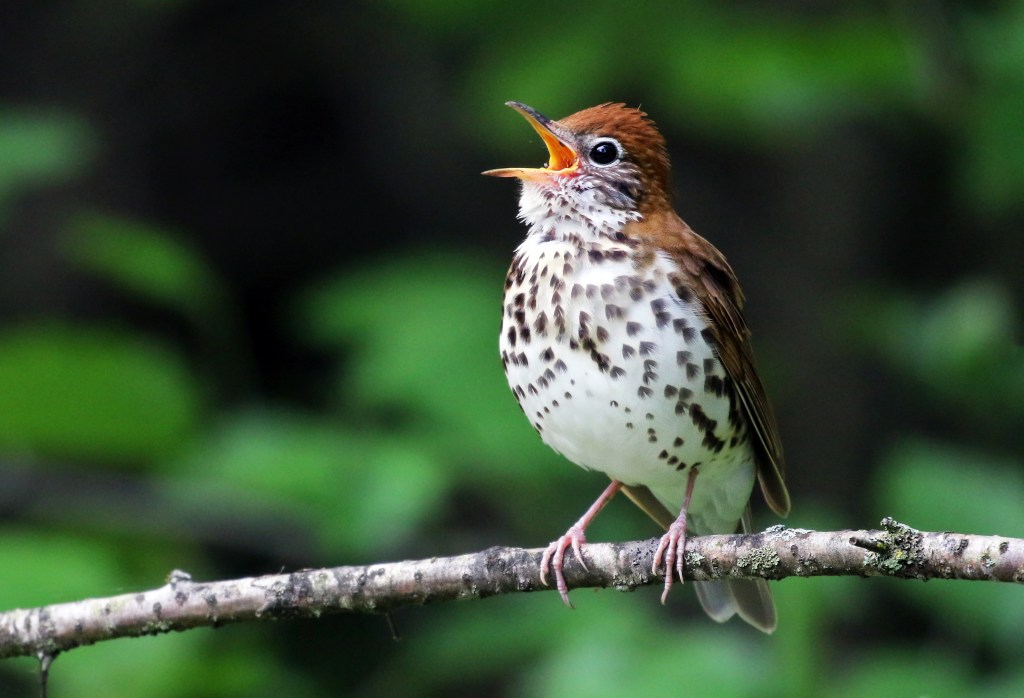
For New Yorkers, this story is not distant. Each spring, the city is reconnected to Mesoamerica. Wood thrushes sing in Central Park. Warblers fill Brooklyn’s Green-Wood Cemetery and the Bronx’s Van Cortlandt Park. Orioles and tanagers flash through city trees.
Many of these birds winter in Mesoamerica’s Five Great Forests — a network spanning Mexico to Colombia. A recent study found these forests support between one-tenth and nearly one-half of global populations for 40 migratory bird species.
Nearly a quarter of all wood thrushes and golden-winged warblers, and more than a third of Kentucky warblers, depend on them. Yet these forests are disappearing rapidly, largely due to illegal cattle ranching and fire. In just 15 years, three of the Five Great Forests lost nearly a quarter of their area.
If we want our birds to keep returning to the New York area each spring, we must protect their tropical homes. That is why the narco house matters. It sits in the Maya Biosphere Reserve, impoverished rural communities were once pressured by outside criminal interests to clear forests. Violence followed, trust collapsed, and ecosystems suffered.
Today, local families are restoring that land. Native tree nurseries produce tens of thousands of seedlings annually, including fruit trees for birds and valuable hardwoods like mahogany. Young forests are rising where cattle once grazed, while restoration-based livelihoods offer new economic opportunity and give parents hope for a better future for their kids.
In the Maya Biosphere Reserve, reforestation outpaced deforestation for the first time in 2019. Restored lands now shelter more than 200 bird species, including Wood Thrush and Kentucky Warbler.
What is happening around this one concrete house could become a model across Mesoamerica. Tens of thousands of acres could be restored if political will is matched by sustained investment in local communities. The narco house could become a place where people witness firsthand what’s possible when we invest in forests and people together.
When you hear a wood thrush in Central Park this spring, think of that house in Guatemala and the transformation it represents. Once, it watched a forest fall. With enough courage and support, it may now watch one return.
Lello-Smith is avian conservation coordinator for WCS (Wildlife Conservation Society). Radachowsky is director of the Mesoamerica Regional Program at WCS.