
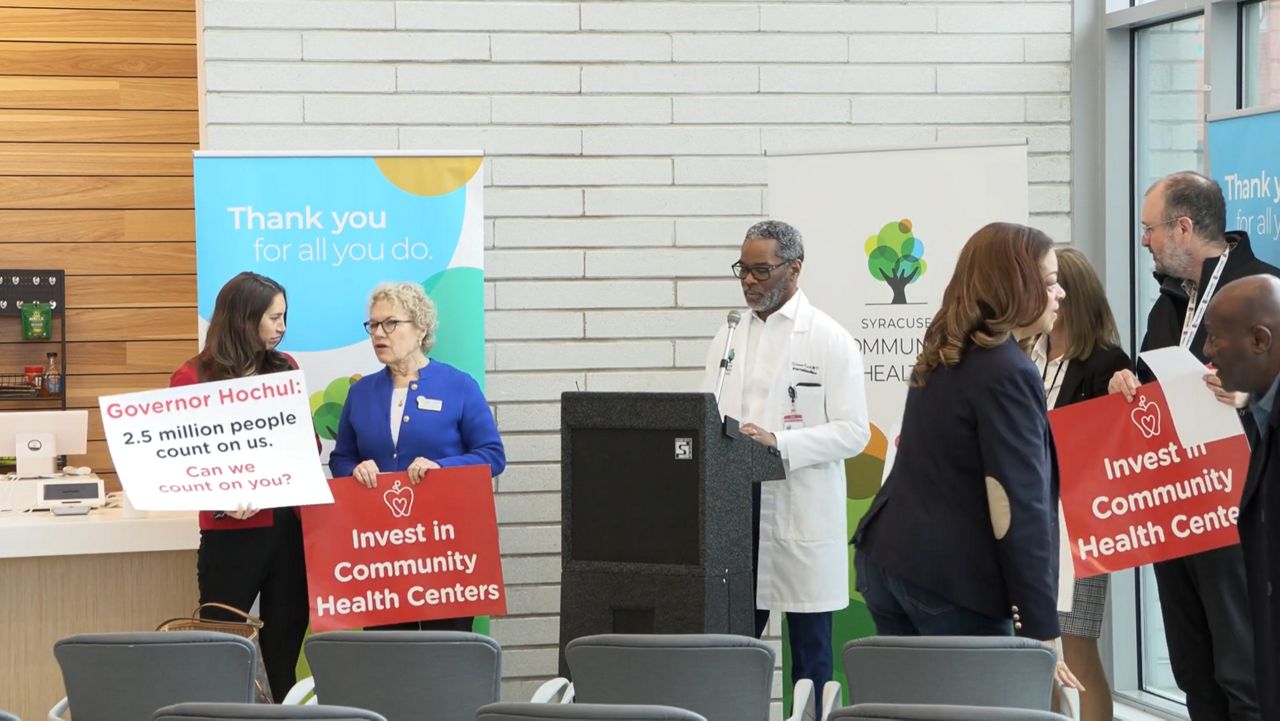

Community health leaders across New York state are warning that proposed federal Medicaid changes tied to H.R. 1, known as the “One Big Beautiful Bill,” could leave roughly 1.5 million New Yorkers without health coverage in the coming years, increasing pressure on clinics already serving millions of low-income patients statewide.
The concerns come as Gov. Kathy Hochul and state lawmakers continue negotiating details of New York’s delayed state budget, including funding levels for community health centers that providers say will be critical if coverage losses accelerate.
Under the federal reconciliation package, states would be required to implement stricter Medicaid eligibility checks and new work reporting requirements beginning in 2027. Health policy groups warn that those requirements could cause eligible recipients to lose coverage because of paperwork issues, reporting delays or administrative confusion rather than income ineligibility.
Reginal Pickard, who has cared for his older brother with paranoid schizophrenia for more than 20 years, said he recently learned his brother had lost Medicaid coverage after attempting to pick up medication.
“They told me it was $690 for copay,” Pickard said. “And the copay was only like $12 or $13 or so.
“They explained to me that I didn’t fill out some paperwork or some wasn’t done or was cut back.”
Pickard said he is now paying out of pocket to make sure his brother continues receiving treatment.
“I have to do what I have to do to make sure he receives his medicine, regardless of what I have to pay,” he said.
The Community Health Care Association of New York State estimates approximately 1.5 million New Yorkers could lose health coverage under the federal changes.
Additionally, the Fiscal Policy Institute reports that about 460,000 Essential Plan enrollees earning between 200% and 250% of the federal poverty level could lose coverage beginning in July 2026. The organization also estimates roughly 800,000 Medicaid recipients could lose coverage over time once new work reporting requirements begin Jan. 1, 2027.
“We need a $300 million to really take care of what we estimate we will lose, not just what we know we need to continue to grow,” said Tricia Peter Clark, CEO and president of ConnextCare.
New York’s community health centers currently serve about 2.4 million patients regardless of their ability to pay, so providers are urging Hochul to invest $300 million in community health centers, arguing that current state proposals are not enough to prepare clinics for a potential surge in uninsured patients.
The New York State Senate’s current proposal adds $50 million for federally qualified health centers and non-FQHC clinics, bringing total proposed funding for those clinics to $80 million.
Clark reiterates that community health centers are concerned that patients losing insurance coverage could delay care or overwhelm already strained safety-net systems.
“Those folks we anticipate are coming into our communities will be delayed just because we’ll try to take care of the safety net that we already have in place,” Clark said.
On May 7, Hochul announced a framework agreement on a $268 billion state budget more than a month after the April 1 deadline. Legislative leaders, however, said the budget is not yet finalized and negotiations on several issues are continuing.