
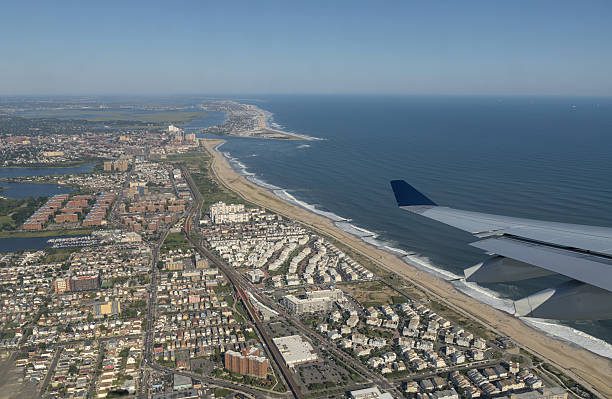
airplane wing flying over the rockaways after taking off from new york city airport heading east over atlantic ocean long island beach waves sand houses neighborhood arverne edgemere apartments
Life on the Rockaway Peninsula has always carried a distinct rhythm that feels tied to the Atlantic Ocean, and you can still sense that familiar pace as you move through your day in 2026.
At the same time, subtle layers of technology run beneath nearly every routine, so you begin to notice how small tasks feel smoother as information arrives exactly when you need it. You might check tide conditions before heading out, then glance at a delivery update, where each step connects through systems that operate quietly in the background.
These shifts do not interrupt the character of the peninsula, but they steadily adjust how you interact with it. Over time, you start to realize that daily life feels less fragmented, with tools working together in ways that reduce friction across work, travel and leisure.
Across New York City, roughly 30% of households still lack the combination of mobile and home broadband needed for full connectivity, which highlights how meaningful these incremental improvements feel in places like Rockaway, where access has historically varied.
Commuting feels more predictable
Travel on and off the peninsula has always required planning. However, current transit technology gives you a stronger sense of control over your time. For example, real-time tracking across the MTA network now integrates predictive modeling, so you can see where a train or bus is, and how delays are likely to unfold over the next hour.
If you rely on the A train, you might notice that updates feel more accurate during peak hours, which changes how you decide when to leave home. Navigation apps also factor in hyperlocal traffic patterns along Cross Bay Boulevard, with your route adjusting dynamically as conditions shift.
These systems connect across devices, so your phone, smartwatch or even your car display reflects the same live data, which helps you move with more confidence throughout the day.
Digital leisure blends into everyday downtime
Entertainment across the peninsula has expanded in quiet ways, as digital platforms integrate with how you already spend your free time. Streaming services tailor recommendations based on your viewing habits, so you find content that matches your mood after a long day near the water.
Mobile gaming has also grown in popularity, so you might notice references to platforms like Chicken Road Casino appearing in online communities, reflecting how niche digital experiences travel quickly across social spaces. These games rely on provably fair systems and high payout models, which align with broader trends in crypto-based gaming.
At the same time, you still see people gathering on the boardwalk or in local bars, although conversations often connect back to shared digital experiences that extend beyond the peninsula itself.
Local businesses adapt through digital layers
Walking along Rockaway Beach Boulevard, you still see independent shops and long-standing storefronts, but many now operate with digital tools that extend their reach beyond foot traffic. Ordering systems link directly to inventory software, so when you place an order online, you receive accurate pickup times that reflect real stock levels.
Some businesses use lightweight AI tools to anticipate demand, which allows them to adjust menus or product offerings based on weather patterns, local events or seasonal shifts. You might walk into a café that feels unchanged on the surface, but its back-end operations run on cloud-based platforms that streamline everything from payments to staffing.
Ultimately, these updates help small businesses stay competitive, also giving you a smoother experience as a customer without changing the atmosphere you expect.
Homes become more responsive to coastal living
Living close to the ocean brings unique challenges (as well as many benefits). Smart home technology has advanced to reflect the needs of coastal residents; for example, you might install sensors that monitor humidity levels, with these systems connecting to ventilation controls that adjust automatically as conditions shift throughout the day.
Meanwhile, flood alerts have become more localized, so your phone can notify you based on street-level data during heavy storms. Energy systems also play a larger part, where solar panels paired with battery storage allow homes to maintain power during outages, which has become a priority after past storm disruptions.
Overall, these technologies work together quietly, giving you a sense of stability without changing how your home feels on a daily basis.
Connectivity changes how you experience distance
The sense of distance between the Rockaway Peninsula and the rest of New York City has always shaped daily life, although improved connectivity continues to narrow that gap in practical terms. High-speed internet access has expanded through upgraded infrastructure, so remote work feels more viable even in areas that once struggled with consistent service.
You might join a video meeting with colleagues across the country, where the experience feels seamless enough that location fades into the background. Telehealth services have also become more common, which allows you to consult with healthcare providers without leaving the peninsula.
Ultimately, these changes influence how you think about time and access, as physical separation still exists; however, digital connections soften its impact in ways that feel increasingly natural.