
There is a pattern emerging in the coverage of Israel that should trouble anyone who still believes there is a moral difference between accusation and proof, between proportion and false equivalence.
Again and again, grotesque allegations, emotionally overwhelming imagery, and accusations of barbarism and genocide race across the globe before the underlying facts have settled into place. By the time corrections, qualifications, or deeper reporting arrive, the emotional conclusion has already hardened in the public imagination.
The New York Times has been central to this pattern. Let me show how.
On October 17, 2023, near the beginning of Israel’s military incursion into Gaza following the October 7 massacre, the world was told that Israel had bombed the Al-Ahli hospital in Gaza, reportedly killing hundreds of civilians. The claim went world-wide within hours.
Protests erupted throughout the Middle East. Protesters at universities and in the streets across the United States grabbed ready-made placards and hit the streets. Political leaders issued condemnations. Much of the reporting relied heavily on immediate statements issued by Hamas-controlled authorities in Gaza. Not long afterwards, multiple intelligence assessments and forensic analyses concluded that the missile was not of Israeli origin, but rather, a misfire from an Islamic Jihad rocket launched from within Gaza.
But by then, the emotional conclusion had already hardened into place for millions of people: “Israel had bombed a hospital full of civilians.” Many of the people I discuss Israel with still believe it. Dozens of similar editorial errors followed, their corrections barely noticed.
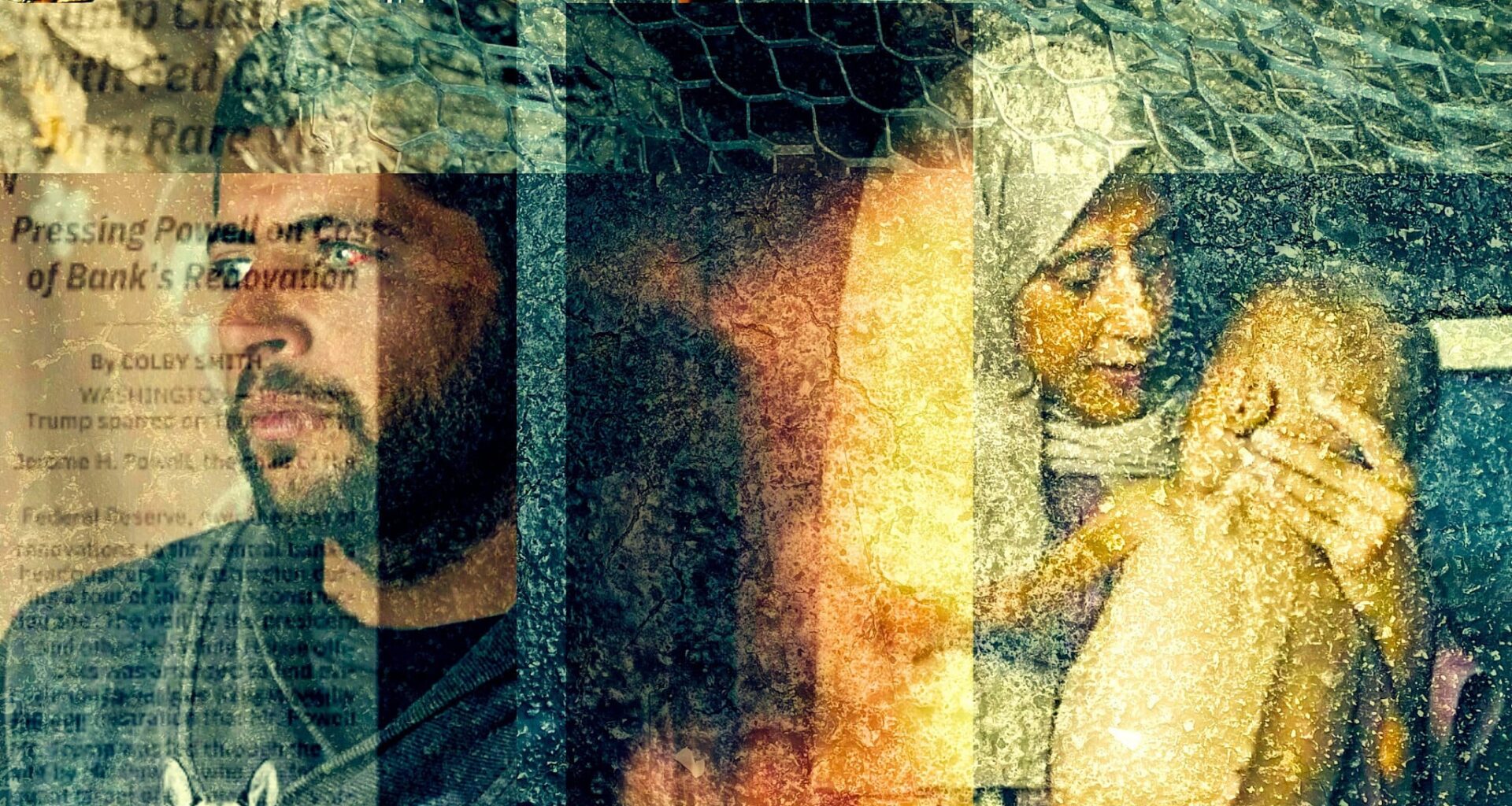
Take as another example the photograph of a grieving mother holding her skeletal child, an image used as symbolic proof of genocidal starvation in Gaza, only for subsequent reporting to reveal that the child suffered from severe preexisting medical conditions unrelated to starvation itself. Again, the image remained. The emotional verdict remained. The subsequent clarifications drifted by like moths.
The reputational damage done to Israel and its supporters is impossible to fully measure.
Despite the later revelations, the photograph —along with the larger body of Gaza imagery surrounding it—was later honored with journalism’s highest accolades, including Pulitzer Prize-winning coverage for Breaking News Photography. By then, the emotional narrative attached to the image had already settled permanently into the public imagination.
I should add that the image itself is beautiful, though in the same unsettling way that much of the visual propaganda of Nazi Germany or the Stalin era was beautiful. Beauty, after all, has never been a guarantor of truth.
And now comes Nicholas Kristof’s recent article in The New York Times, describing allegations of sexualized abuse and humiliation involving Palestinian detainees. Among the more sensational details circulated through activist reporting and repeated in public discourse were allegations involving dogs allegedly used in acts of sexualized abuse.
But the more grotesque and emotionally explosive the allegation, the greater the journalistic obligation to verify it rigorously before presenting it in ways that invite moral conclusions of systemic barbarism.
The specific allegation involving so-called “rape-trained dogs” is especially difficult to evaluate seriously. There is no recognized military or scientific practice of systematically training dogs to commit sexual assault against human beings. Dogs have tragically been used throughout history for intimidation, attack, tracking, torture, and terror. That is well known. But this particular allegation belongs less to the realm of recognizable military practice than to the realm of atrocity mythology — imagery so grotesque and emotionally overwhelming that it bypasses ordinary skepticism altogether.
And once such imagery enters the public imagination, it becomes almost impossible to dislodge, regardless of later qualifications, ambiguities, or evidentiary problems.
To be clear, all wars produce criminal acts, breakdowns of discipline, sadism, vengeance, and moral collapse among some individuals. This is true throughout every military conflict in human history. Some of the allegations described in the article may in fact prove true. Some may already have evidence behind them. They must be investigated seriously, and any guilty parties should be punished.
The question is not whether abuses occur. They can and they do. The question is whether such acts are state policy, culturally celebrated, strategically organized, or morally condemned and prosecuted.
That distinction matters enormously.
There is a profound moral difference between a military confronting allegations of criminal misconduct among individual soldiers, prison guards, or others, and an armed movement whose ideology, media ecosystem, educational culture, and operational planning openly sanctify massacre, kidnapping, rape, and eliminationist violence against civilians.
The atrocities of October 7 were not hidden. They were filmed. Celebrated. Distributed. Integrated into the operation itself. Hostages were dragged into Gaza while crowds cheered. Women’s bodies were paraded. Civilians participated. The attack was not merely tolerated by Hamas and allied movements. It was central to their vision.
It was also not some spontaneous eruption of rage. It was planned. It was supported by a wider ecosystem of Islamist violence and state sponsorship, including the Islamic Republic of Iran.
And yet in much Western coverage one increasingly encounters the suggestion — sometimes explicit, sometimes more opaque — that Israel and Hamas represent morally equivalent actors trapped in a symmetrical cycle of barbarism.
That is the real distortion. The true obscenity at the center of this entire narrative.
Clearly, not every allegation against an Israeli soldier is false. Not every report of abuse should be dismissed. That is not my argument. Not at all. My argument is that the framing matters. Sourcing matters. Proportion matters. And when sensational allegations are placed beside the planned atrocities of October 7 without a careful distinction between criminal misconduct and strategic barbarism, a false parallel is created.
That false parallel is not incidental. It has shaped and sustained public perception.
Much of the reporting and amplification surrounding these allegations traces back, directly or indirectly, to Euro-Med Human Rights Monitor, an advocacy organization founded by Ramy Abdu, a Palestinian political activist whose public posture regarding Israel is neither neutral nor difficult to discern. Euro-Med presents itself as a human-rights monitoring organization focused on documenting alleged abuses in the Middle East, particularly involving Israel and Gaza. Yet critics have repeatedly raised concerns regarding the organization’s sourcing methods, ideological activism, inflammatory rhetoric, and the circulation of claims prior to independent verification.
Activist organizations and professional investigative journalistic institutions are not the same thing.
Advocacy groups exist, by definition, to advance moral and political causes. Journalism, at least in its highest form — the form The New York Times purports to aspire to — is supposed to function differently. It is supposed to apply skepticism evenly, especially toward emotionally explosive allegations emerging in the middle of war. In the case of Israel, that distinction appears to have nearly collapsed.
Organizations like Euro-Med are now routinely treated by major journalists and media outlets as though they were functionally equivalent to neutral investigative bodies or forensic institutions. Allegations originating within highly ideological ecosystems are elevated almost instantly into mainstream discourse with insufficient scrutiny, particularly when the accusations concern Israel.
Somehow, the more grotesque the accusation against Israel, the less proof seems required. And the more monstrous the claim, the faster it travels.
At a certain point, one no longer knows whether to respond with outrage, disbelief, or a kind of exhausted grief at what journalism itself has become.
I have no problem with legitimate criticism of Israel, that is, criticism on par with that directed toward any nation engaged in war, conflict, or morally fraught political decisions. Israel, like every other country, is capable of error, excess, confusion, internal disagreement, and ethical failure. Serious people understand this. Serious people also understand that war itself is horrifying and destabilizing.
What troubles me is something else entirely: the increasingly reflexive willingness of major media outlets, prestigious journalists, and influential commentators to circulate the most grotesque accusations imaginable against the Jewish state with remarkably little evidentiary restraint— and then to place those accusations inside a moral frame that suggests equivalence between Israel and those who carried out October 7.
Is it wrong to suspect that this is no longer accidental?
Again and again, emotionally overwhelming claims race across the globe with astonishing speed. The accusation arrives fully formed, morally cogent, and socially contagious. Then later, sometimes within days, sometimes weeks, the clarifications emerge, each buried beneath the tropes and memes of the original outrage. The correction, if it comes at all, feels like someone quietly filed the necessary legal paperwork.
Like you probably did, I grew up believing that the great newspapers, however imperfect, were at least attempting to honor a serious distinction between accusation and proof. That distinction now feels frighteningly unstable where Israel is concerned. At this point, the pattern itself becomes impossible to ignore. This is where the matter becomes darker than journalism alone.
These are the very same features in the moral imagination that have surrounded Jews throughout history: the readiness to believe accusations of extraordinary cruelty; the fascination with an assumed hidden perversity; the lowering of ordinary standards of proof once Jews occupy the role of the accused. The imagery changes with the centuries, but the mechanism feels strangely familiar.
The blood libels rush to mind.
None of this is to deny the reality of Palestinian suffering. Real civilians have died. Real grief exists. Real tragedy exists. And at the same time, genuine suffering does not absolve journalism of its obligation to distinguish carefully between verified fact, activist amplification, emotional inference, and mythologized blame.
Nor does moral seriousness permit the collapse of all distinctions. War, horrible as it is, is not automatically genocide. Civilian suffering, however catastrophic, is not itself proof of eliminationist intent. Criminal acts by individual soldiers or prison guards, however odious, are not the moral equivalent of a terrorist movement whose foundational vision openly embraces the murder, rape, abduction, and destruction of civilians.
We are no longer entering dangerous territory; we are already there. Poorly sourced accusation has too often become sufficient. Verification has become secondary to emotional utility — or worse, to the need to promote one’s brand — and the world’s oldest fantasies about Jewish monstrosity are reappearing daily in the language of modern human rights discourse.
An entire civilization seems to have lost the ability to distinguish allegation from proof, spectacle from hard evidence, and criminal misconduct from strategic evil.
I’ve begun to feel like the boy with his finger in the dike, holding back the floodwaters.
If you have a bucket, please come and help.