
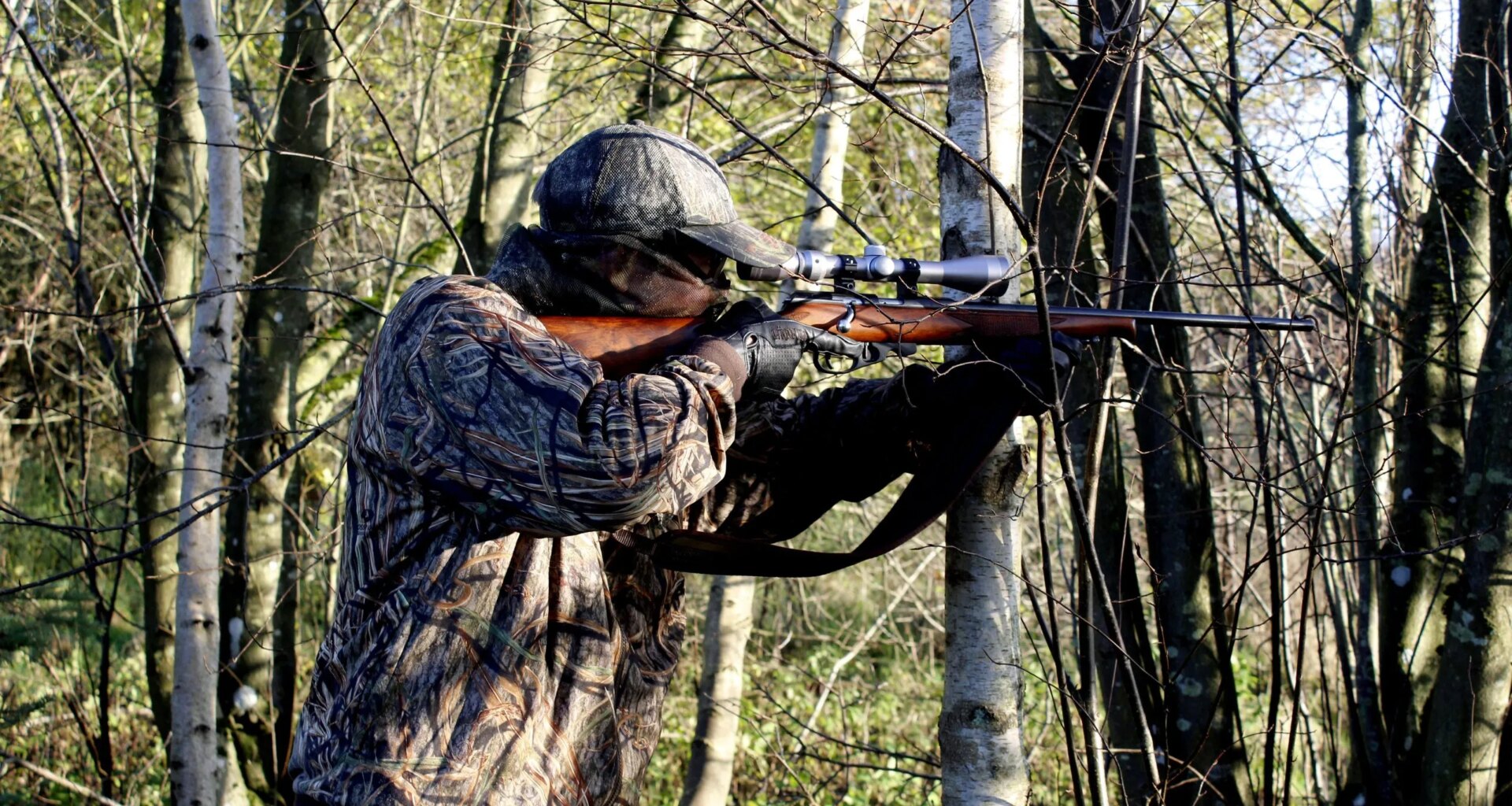
Each year in the U.S., food banks and food pantries receive more than 1,100 tons of wild-harvested game meat—an unknown quantity of which might be contaminated with lead fragments from ammunition.
Now, a bill before the New York State Legislature could make New York only the second state after Minnesota to ensure that potentially lead-contaminated venison and other game meats are not donated to food banks and food pantries.
The Lead-Free Game Donation Act was introduced in New York in the 2026 legislative session and has generated strong support. The bill would prohibit game taken with a firearm using lead ammunition from being donated for human consumption.
Retired New York Department of Environmental Conservation biologist Pete Nye, one of the authors of a study on this hazard—a study he brought to the attention of lawmakers, and which was instrumental in the drafting of the bill—said it has simply never occurred to most people that venison harvested with lead ammunition could be a source of lead exposure.
“Never before had any of this donated meat been checked in New York, either by X-ray or laboratory tests,” said Nye, who has hunted deer and who understands how a lead bullet can fragment upon impact.
Sponsors of the bill are Assemblymember Deborah Glick, chair of the Assembly Committee on Environmental Conservation; and her senate environmental committee chair counterpart, Pete Harckham. Co-sponsors are Assemblymembers Jo Anne Simon and Linda Rosenthal and Sen. Patricia Fahy. The assembly version has passed the environmental and codes committees; the senate version is before the Environmental Conservation Committee.
Lawmakers introduced the bill after learning about the study published in the Journal of Food Protection in July 2025. The study analyzed data collected beginning in 2022 from randomly sampled venison packages destined for donation to food pantries in New York and Pennsylvania. In the findings, 19% of the samples contained lead, and no warnings of potential lead contamination were posted at New York food banks or food pantries.
Although that 2025 study specifically examined lead contamination in donated venison destined for food pantries in two states, the risk of lead exposure in donated venison has been recognized for more than 15 years, as a 2012 paper published in the American Journal of Public Health noted.
That paper, titled “Biting the Bullet: A Call for Action on Lead-Contaminated Meat in Food Banks,” included Samantha Totoni as a co-author; she would later work with Nye on the 2025 paper that caught the attention of New York lawmakers. It was also that earlier paper that provided the annual tally of donated game meat nationwide: more than 1,100 tons.
In addition to Nye and Totoni, a postdoctoral associate in environmental and occupational health at the University of Pittsburgh Graduate School of Public Health, the other co-author for the paper that examined donations in New York and Pennsylvania was Karyn Bischoff, a veterinary toxicologist with the California Animal Health and Food Safety Lab at the University of California Davis School of Veterinary Medicine.
In his DEC career, Nye was the longtime head of the agency’s former endangered species unit, and he has extensive knowledge of the hazards of lead contamination in common loons and bald eagles. Although the federal government prohibits lead ammunition from being used to hunt waterfowl, loons consume lead fishing sinkers and jigs, and bald eagles ingest lead fragments when they feed on carcasses of deer that were killed with lead ammunition. Ingestion of even small amounts of lead can sicken and kill the birds.
From that knowledge about the risks of lead contamination to birds, it was a logical step for Nye to wonder about the risk posed to humans eating meat from game animals hunted with lead ammunition. He could not recall ever seeing a study about the risks posed by lead-contaminated game meat.
Lead is a neurotoxin and can be ingested or inhaled by humans. In the 2019 Global Burden of Disease Study—a comprehensive annual long-range study of diseases and health trends published under the auspices of the University of Washington School of Medicine—lead contamination is linked to nearly a million deaths each year. Lead poisoning causes intellectual disabilities and cardiovascular and kidney disease, and it is especially dangerous for pregnant women and children. There is no safe level of lead in the blood, and prevention is critical in addressing lead poisoning.
In the U.S., lead has been banned from batteries, paint and gasoline, and major efforts are underway to eliminate lead in water pipes. Lead ammunition, however, is still legal in all states except California. Many states have partial bans that apply to certain species or certain areas, in addition to the federal ban on lead ammunition for hunting waterfowl, but in New York, lead ammunition is still legal for hunting game animals, including deer.
The National Rifle Association’s Hunters for the Hungry initiative has established programs in more than 40 states, including New York, for hunters to donate game to food banks and food pantries. Nationally, much of the donated game meat is harvested with lead ammunition but it is rarely inspected for lead contamination. The New York State Department of Environmental Conservation estimates that hunters donate 50,000 to 70,000 pounds of venison each year.
An unknown amount of that donated venison is contaminated with lead fragments that are too small to detect when cooking or eating the venison. The DEC warns of this potential contamination on its website and provides suggestions for best practices in butchering to help avoid exposure to lead, and the New York State Department of Health has published a pamphlet that cites the results of the Nye/Totoni/Bischoff study. Despite this awareness, however, nothing right now prevents lead-contaminated venison from ending up at a food pantry, food bank or shelter.
Although a few other states randomly inspected some of their donated venison, Minnesota is the only state requiring routine annual inspections through imaging of all donated venison, and destruction of any found to contain lead.
As of this writing, the state legislative session was expected to continue into June. Watch the Almanack for updates on the Lead-Free Game Donation Act.
Darryl McGrath is a writer and journalist based in Albany.