
The National Science Foundation says that by 2034, job growth in STEM fields will outpace those in non-STEM. And around that time, New York state expects the early stages of Micron to be up and running.
What You Need To Know
Micron is trying to grow interest in STEM careers as it looks to the future, when it will need people to fill jobs in Central New York
Micron is providing Jefferson Community College a $750,000 grant to teach the engineering classes students need to earn those jobs
Jefferson’s connections with Fort Drum are another reason for the grant, as Micron would like to tap into the pool transferring out of the military
“Young people, they don’t see themselves in STEM careers,” Micron’s Dr. Kim Burnett said.
Burnett, the lead for social impact and community engagement for Micron, visited Syracuse University for a job fair in hopes to inspire young students in middle and high school to think of technology as a future.
“My job is to ensure that folks who think that engineering jobs and technician jobs are for someone else. It is not. It is actually for them,” she said.
If she and the industry are successful at that, for most of these students, the next step is college.
“Our goal is to be up with the credit bearing program by fall of 2027,” Dr. Daniel Dupee, president of Jefferson Community College in Watertown, said.
The school is about an hour north of Clay, where Micron will be moving in. His school is about to enter this new world.
“These jobs will be living wage jobs, so you’ll be getting a two-year degree and be able to move into a job that will sustain a family,” he said.
To be able to offer that non-transfer degree, JCC recently received a grant from Micron for $750,000, to create a curriculum based on semiconductor and advanced manufacturing.
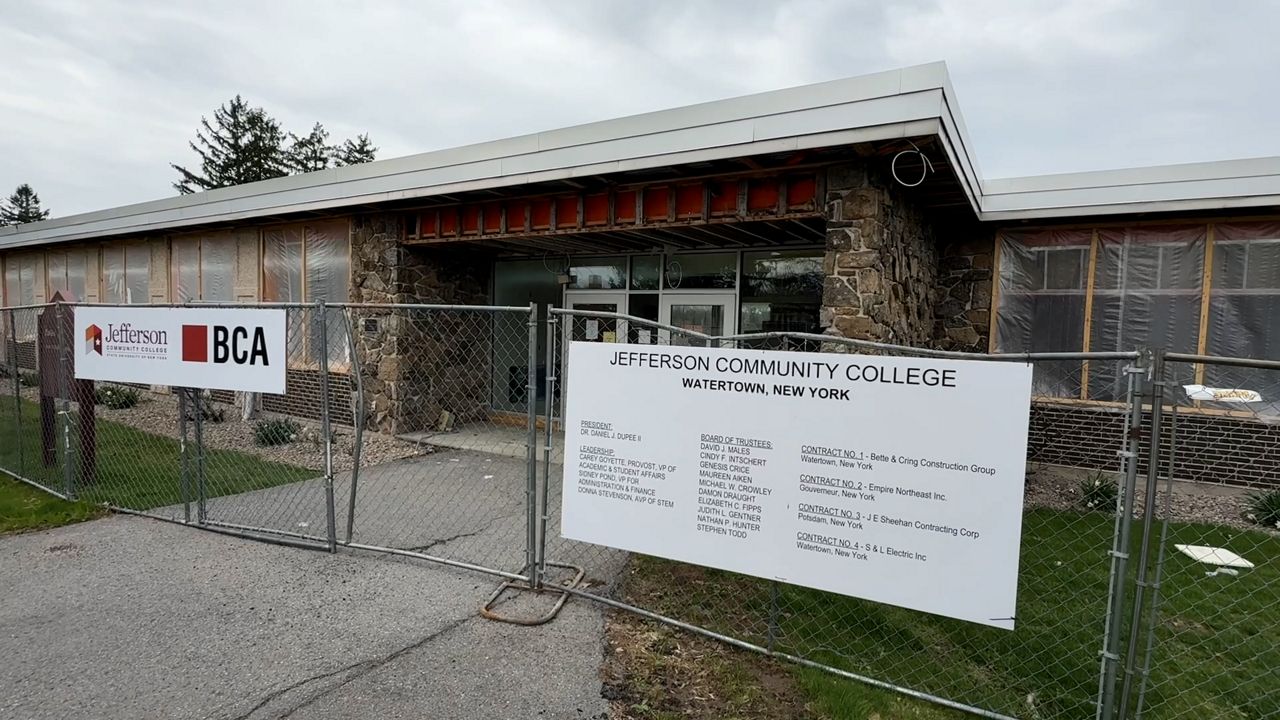
It’s called mechatronics and it’s about giving people the knowledge of various aspects of engineering. The school is renovating an entire building to help make it happen.
“We’re hoping, In the fall, to be able to open up that space, start doing some bootcamps, just to get people introduced to the semiconductor industry,” Dr. Dupee said.
People that include a talent pool many communities do not have.
It’s a big reason why Jake was so attractive to Micron. Fort Drum has soldiers transitioning out of the Army.
JCC’s student population is [approxmiately] 35% military-related. The school is reserving about half of its space in these future classes to those folks.
“It’s kind of a built in skilled workforce that hopefully will be able to provide the educational piece for them,” he added.
Dr. Dupee says roughly 300 soldiers a month are transitioning out of the Army in the North Country. Of those 300, JCC says about 100 stay in the area.
Through this program, the school wants to give them even more reason to stay.