
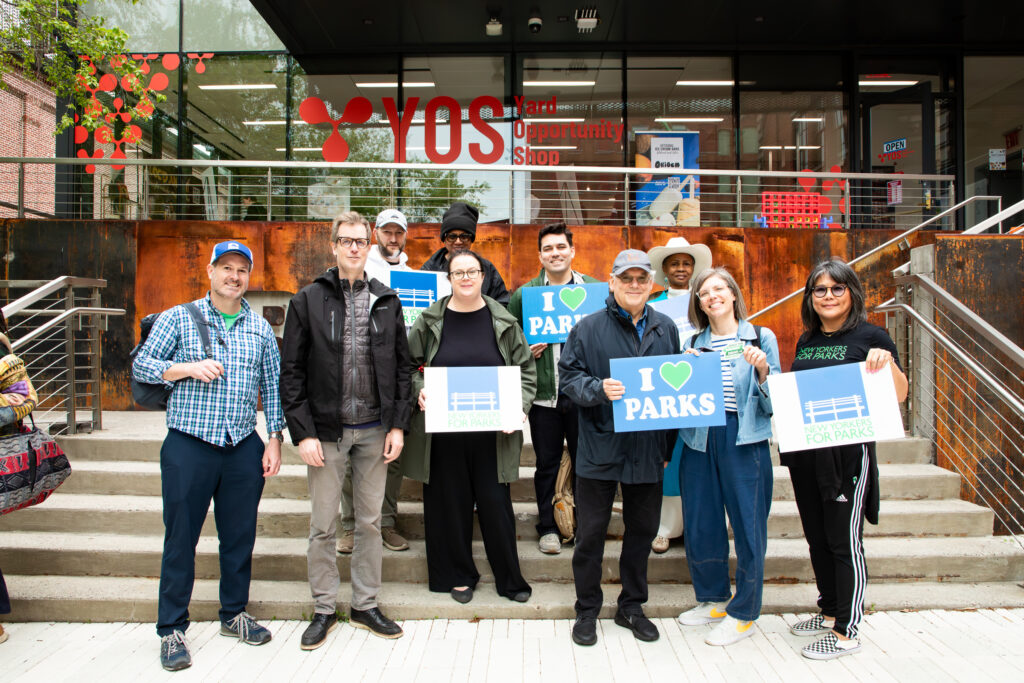
The tour was the fourth led by NY4P, which has identified a neighborhood in each borough with a pressing need for more open space. For over three hours, more than 20 representatives from local organizations, elected officials and leaders from citywide agencies made about a dozen stops across the neighborhood.
The tour started in Fort Greene Park, which could be seen as one of the neighborhood’s success stories. Its conservancy operates on a $1.7 million budget, and recently secured $1 million from the developers of the 395 Flatbush Avenue Extension, set to be Brooklyn’s second-tallest tower, thanks to the advocacy of Councilmember Crystal Hudson.
The Fort Green Conservancy is looking at the health of the community’s park system as a whole, which is “feeling the strain” from new development, said Executive Director Rosamond Fletcher.
“Our main focus right now is trying to figure out how we ensure that, as the population density is increasing, we have adequate open space and green space in the area,” Fletcher said.
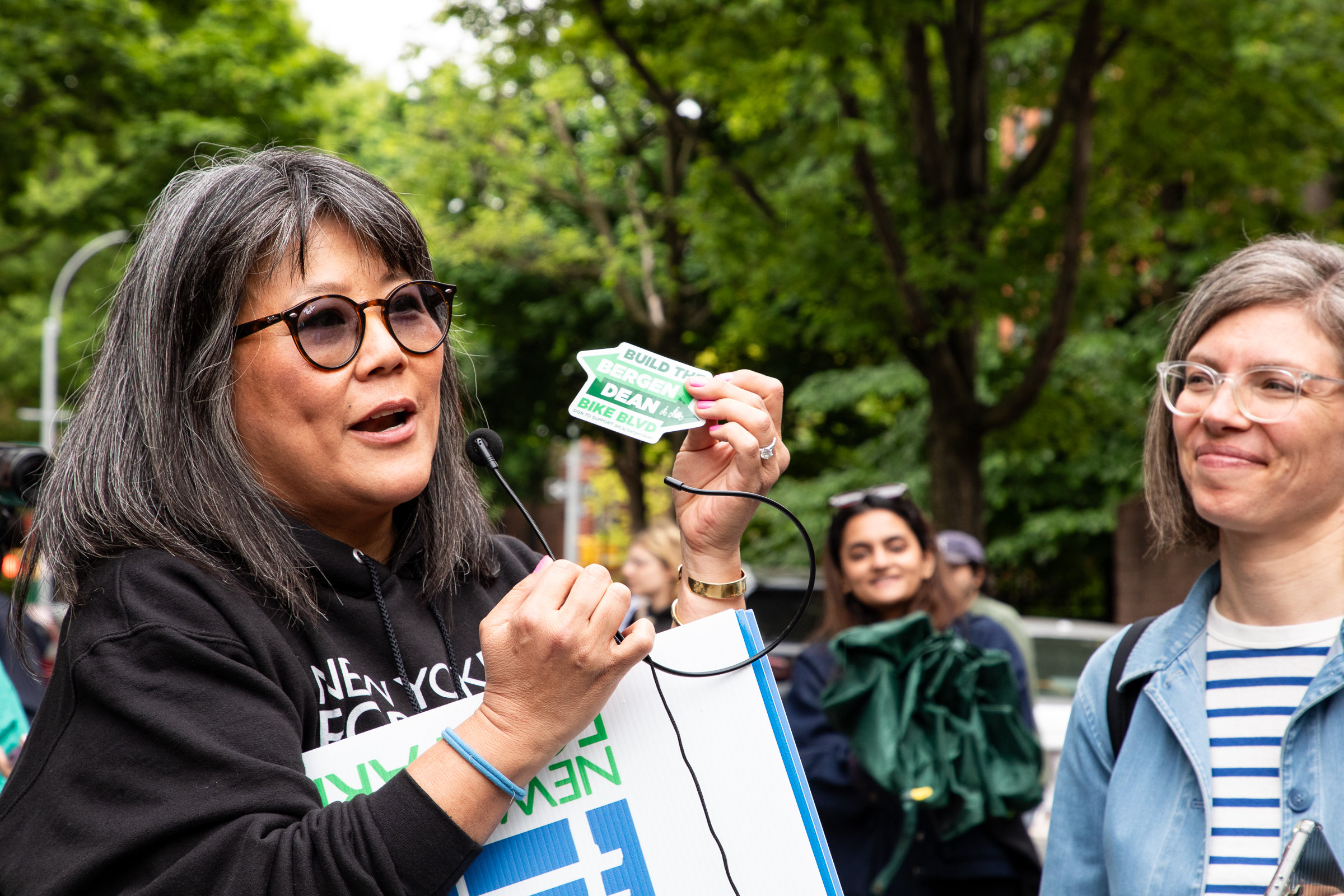 Kathy Park Price holds a sticker that says “Build The Bergen And Dean Bike Blvd” on the second stop of the walking tour. Photo: Julie Thompson/Brooklyn Eagle
The conservancy is looking to form a fund for green spaces with organizations across the neighborhood, which could resemble a business improvement district.
More parks would be ideal for Fort Greene, but there is a significant barrier: space.
Like much of the city, the neighborhood is already densely developed. That’s why local nonprofits are focusing their efforts on developing open spaces of all kinds, from plazas to gardens.
“When you’re in New York, because of the difficulty of building new green space, you have to get creative,” Ganser said.
The tour highlighted some of the ways open space has been carved out of existing cityscape, such as the seven-block open street on Willoughby Avenue starting at Fort Greene Park, dedicated to pedestrians, cyclists and vendors; a revitalization of the “Victory Love Garden” at NYCHA’s Walt Whitman Houses, where elder residents once taught gardening and community stewardship to the youth; a forthcoming plaza wrapped around Walt Whitman Library to replace an iron fence and another plaza at the front gate of the Brooklyn Navy Yard.
In order to build a neighborhood around open spaces, there must be human-centered pathways connecting them, advocates stressed. Open streets, like Willoughby Avenue, which closes to traffic from 8 a.m. to 8 p.m. each day, are key examples.
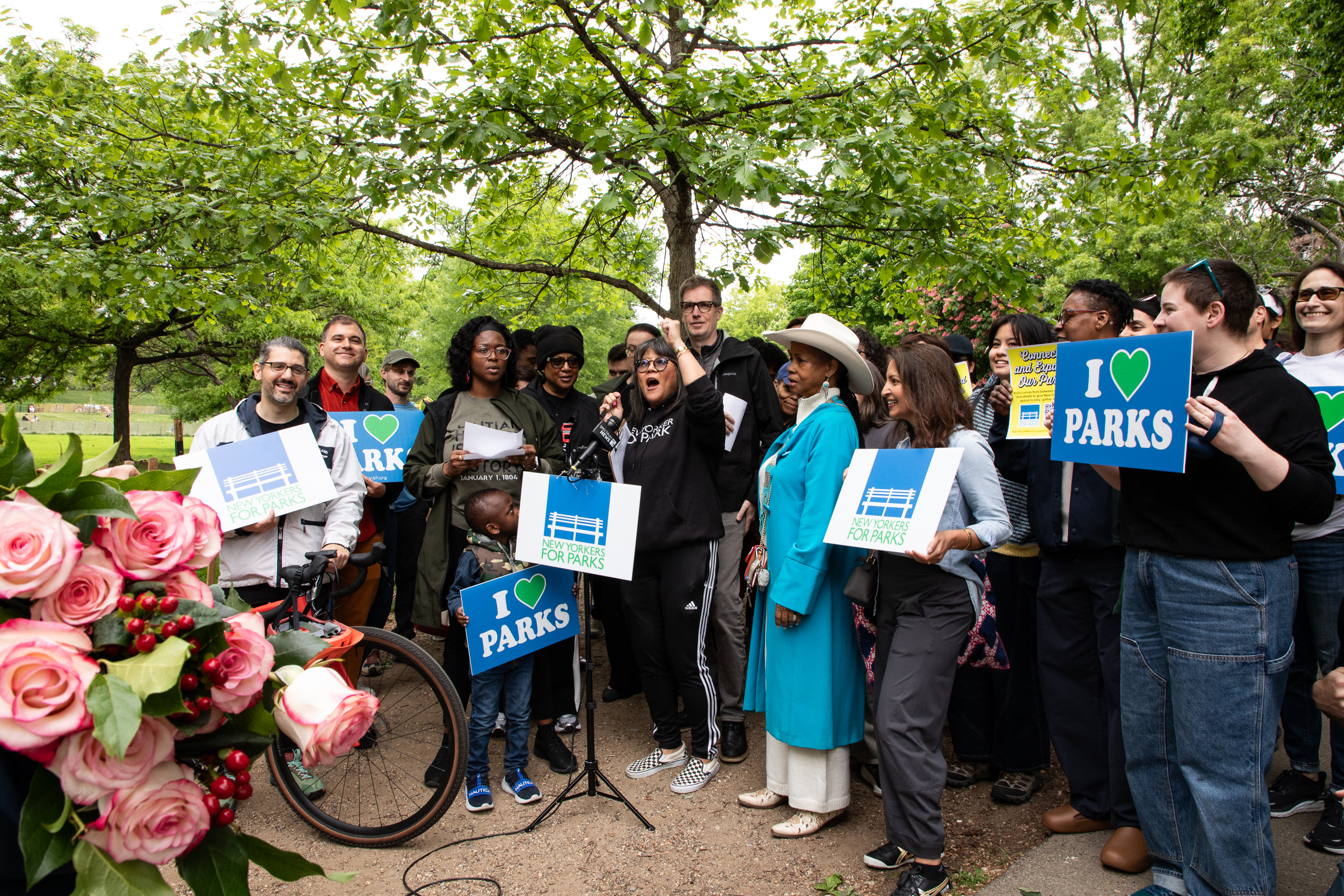 Kathy Park Price of New Yorkers For Parks makes opening remarks in Fort Greene Park at the start of the walking tour. On the left, off camera, her daughter holds a bouquet of roses to present in honor of Mother’s Day weekend. Photo: Julie Thompson/Brooklyn Eagle
“People are on this street every single day, and I think it’s really helped inform and encourage people to think of streets as public, open spaces,” said Mike Lydon, principal at Street Plans, a community partner behind the open street.
Bike lanes are another key connector of open spaces. One of the stops on the tour was the protected bike and pedestrian pathway along the Brooklyn Navy Yard, which is part of the 22-mile-long Brooklyn Greenway.
“I think of greenways as the connective tissue for all of our parks, all of our employment centers, our community centers, our libraries. How can we travel from those various community destinations safely in a clear, cohesive way?” said Hunter Armstrong, executive director of the Brooklyn Greenway Initiative.
One of the last stops on the tour illustrated the financial hurdles facing open spaces. The Friends of Commodore Barry Park are still waiting for the start of a $20.5 million revitalization of the park’s playground and cracked asphalt lot, which was supposed to be completed by 2026. Ganser blames NYC Parks’s budget.
“There’s just not enough funding to have the staffing levels that the agency needs to really take care of our city’s parks,” Ganser said.
Delays in funding allocation directly harm parks like Commodore Barry, Ganser continued, “When funding is allocated for the parks, it takes forever for the capital project to start, and then by the time it starts, the original amount of funding isn’t enough to do the project because everything’s gone up in price.”
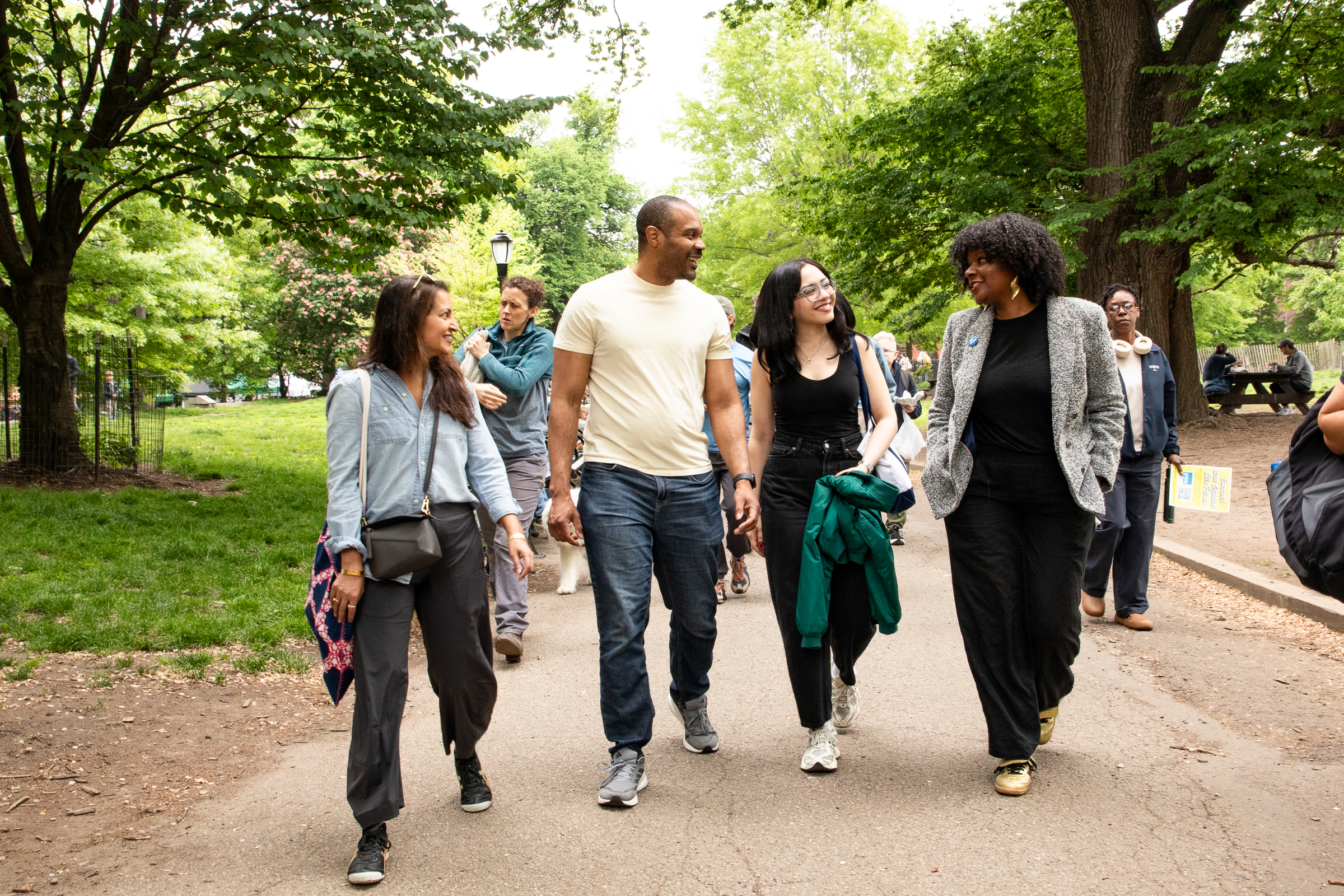 Left to right: Meera Malhotra Marti of the Fort Greene Park Conservancy, New York State Sen. Jabari Brisport, Chief of Staff to NY State Senate Liznel Palermo-Ventura and Joylynn Holder of the Fort Greene Park Conservancy walking between tour stops in Fort Greene Park. Photo: Julie Thompson/Brooklyn Eagle
Mayor Zohran Mamdani’s proposed 2027 budget cuts $33 million from NYC Parks, allocating 0.5% of the total budget towards the parks. This follows years of cuts under Mayor Eric Adams.
NY4P is pushing Mamdani to keep to his campaign pledge to dedicate 1% of the city budget to parks. A City Hall spokesperson said the mayor remains committed to the pledge.
Assemblymember Phara Souffrant Forrest joined the call to fund city parks at the beginning of the walk.
“Our district is changing quickly, and it makes it even more important to protect public green spaces that can belong to everyone,” she said. “We are working to make sure our families have the high-quality environments that they deserve.”
State Sen. Jabari Brisport took the microphone to say his office is “doing everything we can” to make sure city parks are fully funded.
NY4P is writing letters to the city recommending local policy initiatives based on findings from the walk, Ganser said. Following the next and final tour in Staten Island, the organization will publish a collective summary of its findings.