
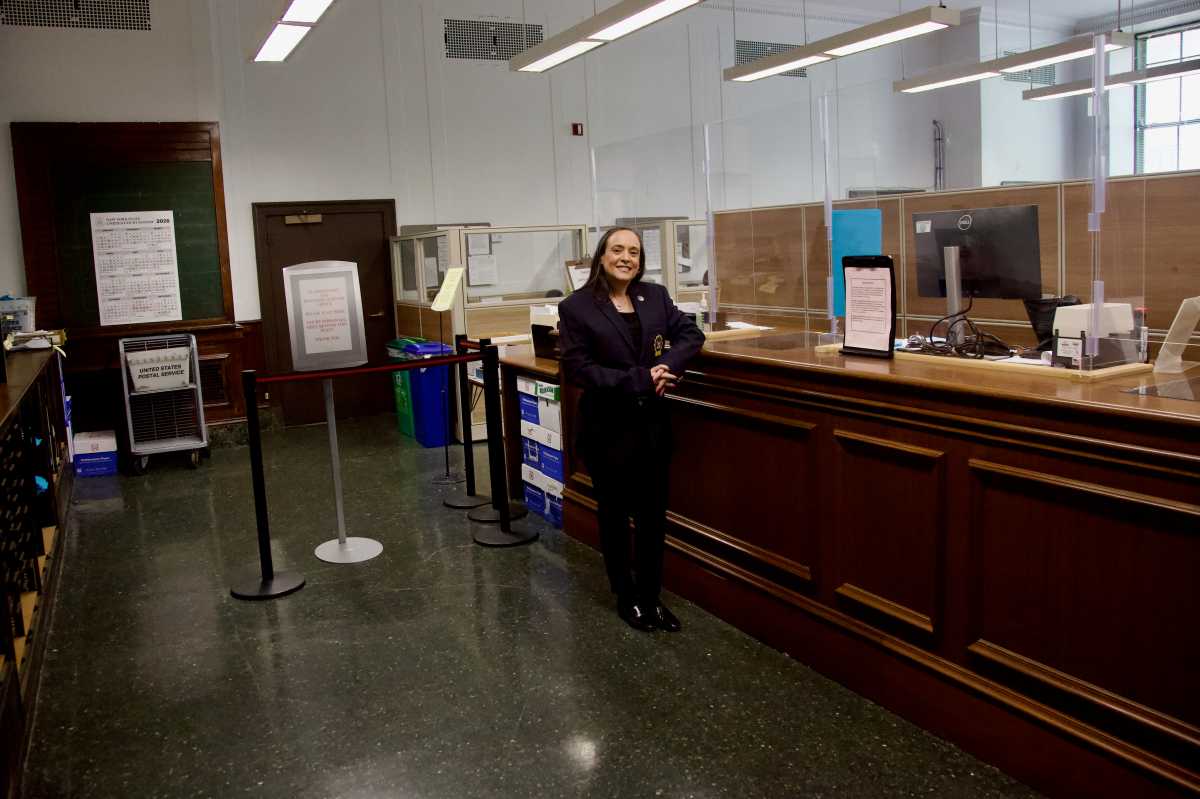
If court clerks are the engine that keeps New York state’s courts in motion, it’s a positive sign that the public often doesn’t see or hear of their work to keep the state’s legal system humming.
But court clerks are not just the employees one sees sitting in the courtroom at a desk in front of the judge’s dais. Their responsibilities are diverse and court-dependent. They process filings, maintain accurate records, coordinate between judges and attorneys, guide litigants through paperwork, troubleshoot facility issues, and sometimes even act in a quasi-social worker role to guide community members to public resources.
Valerie James, the chief clerk in Syracuse’s City Court, said that the first time she set foot in a clerk’s office to take a typist exam — her first court job — she was in awe of the energy and the structure.
She recalled it having the energy of an emergency room. Clerks were banging on typewriters. The bells of analog cash registers were constantly clanging. But somehow it all had a structure.
“I find it amazing to watch how this place operates,” she said. “It’s like a well-oiled machine in my mind. I remember when I first came, it was amazing to see how everything just falls in line from the beginning of the day to the end of the day when I hear that last cash register close.”
James, as the overseer of her court, described her role as an air traffic controller, responsible for the safe, orderly, and efficient flow of litigants and court documents through the system.
“There’s a very strong structure, but really it’s one big team,” she said.
The importance of court clerks
Court clerks date back to the state’s colonial and early state courts, before the system where they acted as local recordkeepers. In fact, their responsibilities in this less-formalized period of the courts would be familiar clerks today. They filed dockets, bail receipts, and pleadings for mayors and county courts, and worked closely with attorneys and judges, according to state archives.
But those core clerk duties are just the tip of the iceberg of the duties that clerks have taken on since the state court system centralized in the 1960s. And court system changes all went into hyperdrive during the pandemic when the shift to virtual court appearances turned court clerking on its head in ways that never fully reversed.
In Syracuse, James said that they had never done a virtual arraignment before the pandemic. Suddenly, they had 48 hours to figure out the process.
“There were so many things that cropped up during that process of setting those protocols in place that were just things that until that pandemic we never gave any thought to, but it really opened up the possibility of what we can really do when we set our minds to it,” she said.
Then there are the specialized courts. Yesenia Herrea oversees the court clerks of the Guardianship Office at Manhattan Civil Supreme Court, which operates the legal process through which a judge appoints a person or organization to make decisions for someone unable to manage their own personal or financial affairs. It exists to protect incapacitated adults or individuals with disabilities.
As the head of the clerks of that court, Herrea manages a group that serves members of the public at a front counter and those who cover the courtroom, ensuring that everything runs smoothly for all the guardianship judges. The nature of the court requires careful individualized consideration.
“I always say the human side sometimes could be challenging just in nature, the same way that nobody wants to be in this situation. But it’s just goes to trying to process everything in a timely manner,” Herrea said.
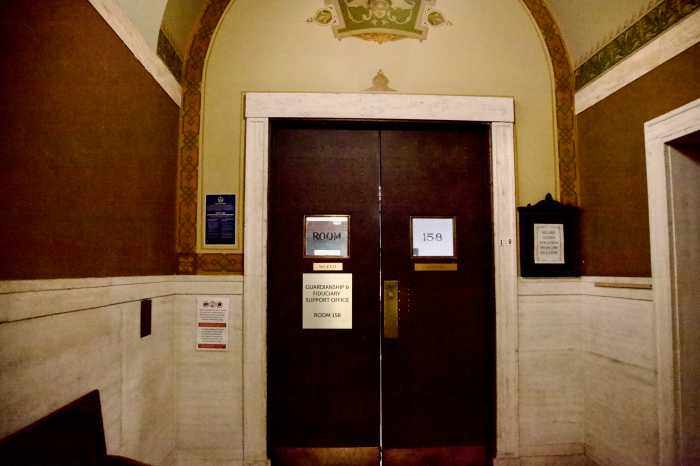 The doors to the public counter of the guardianship court in at Manhattan Civil Supreme Court.
The clerk’s window is not unique to the guardianship court. In various courts, members of the public often have direct access to clerks, who provide procedural information, accept filings, issue certified records, and direct people to the right courtroom or agency. It’s work that requires patience and clear communication, particularly for unrepresented litigants. In busy courthouses — like the one at 60 Centre St., where Herrea’s office is located — that frontline role also means navigating complex processes for people under stress.
Sometimes, there are additional city services that clerks can introduce individuals with disabilities or their relatives to, rather than merely filling out the proper court documents.
“And sometimes it’s like a social worker network and trying to see what resources there are or the alternatives for guardianship and depending on the situation and listening to them, given the opportunity to explain themselves,” she said.
Evolution of duties
James said that one court innovation in Syracuse that has complemented her work is the legal help counter, which offers litigants the opportunity to sit down with someone in a law library and get extensive information on what to expect from their case.
“I really think it’s important the public understand this should not be a scary experience, especially coming to a clerk’s office,” James said.
On the other side of the counter, clerks are the administrators who ensure judicial motions and filings are entered into the court system’s electronic filing archive. When a judge signs an order, clerks enter the information into the case management system and file it with the county clerk so that it can actually become enforceable.
Lakisha C. Brown, the head clerk in Bronx Civil Supreme Court, said that a large part of her role involves working behind the scenes and supporting the staff.
“I’m doing a lot of coordinating of courtroom activities, troubleshooting the issues that can arise, and just ensuring that the judges and the clerks receive the support that they need,” she said.
The Bronx’s civil court gets tens of thousands of new cases annually, and court filings for each one filter through the clerks. That pressure makes the clerk’s office a place of both logistical choreography and often unseen public service.
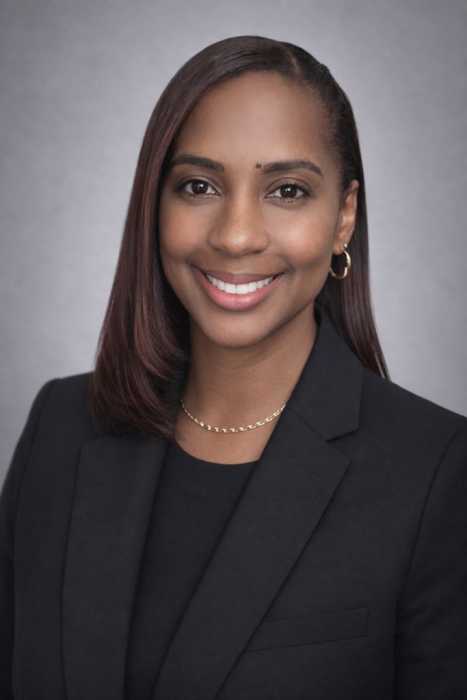 Lakisha C. Brown, the head clerk in Bronx Civil Supreme CourtPhoto courtest Office of Court Administration
In managing the caseload, Brown said she thinks about the impact of the cases for the litigants involved.
“The complexity of all the cases in the civil term… they affect the pace, the pressure and the responsibility of the work performed by the court staff and the court clerks,” Brown said. “Many of our matters involve significant financial claims or life-changing legal outcomes.”
There are other aspects of ensuring a positive experience for the community. Bronx civil court is getting a new roof and new elevators, which falls on Brown working with the court’s administrative judge to manage the different agencies and workers involved in those projects.
But it’s those types of managerial decisions that keep things interesting — surprising even. Brown, who has worked in the court system for over 25 years, said that both the intense atmosphere and the role of public service drew her in from the moment she began in an entry-level position.
“As a young mother looking for a stable career, I found myself naturally drawn to the courthouse environment because it combined those values that I like to work with people,” she said.
That sense the human scale of the job was shared by each of the clerks that amNewYork Law spoke with.
“You’re here for the court. You’re here for the judge. You’re here for the court employees, but first and foremost, you’re here for the public,” James said.
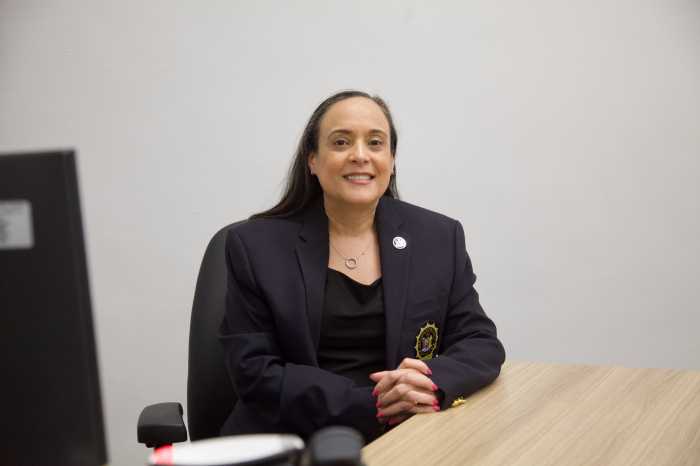 Yesenia HerreaPhoto by Max Parrott