
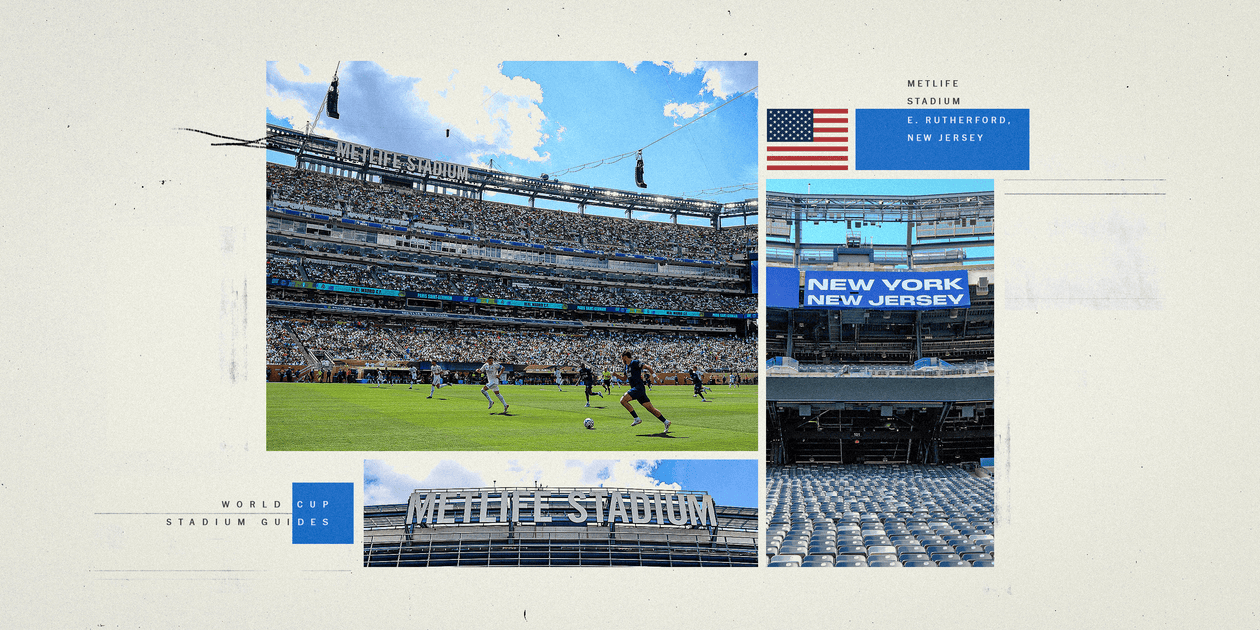
This article is part of our World Cup Stadium Guides series, in which we look at the 16 venues that will host matches at the 2026 tournament.
Few places on the planet carry the global presence of New York, but this summer stage belongs to more than just the city.
It reaches beyond the five boroughs and into New Jersey, where eight World Cup games, including the final, will be played.
In East Rutherford, New York New Jersey Stadium — as the MetLife Stadium will be known during the tournament — has long proven itself as a stage for the biggest events.
Now it will have the eyes of the world upon it as host of the 2026 World Cup final on July 19 next year.
The lights of Times Square and the symbolism of the Statue of Liberty will always draw visitors, but the tournament itself will play out across the Hudson River. Here’s everything you need to know about the stadium.
What is it normally called? And what will it be called at the World Cup?
The venue sits less than 10 miles west of Manhattan and is normally known as MetLife Stadium, taking its name from the U.S. insurance company that holds the naming rights.
During the 2026 World Cup, it will officially be known as New York New Jersey Stadium.
The change is down to FIFA branding rules, which do not allow corporate names to be used for stadiums during the tournament. Except Mercedes-Benz Stadium in Atlanta. So the MetLife branding around the ground will also disappear as the stadium takes on a neutral name and new signage.
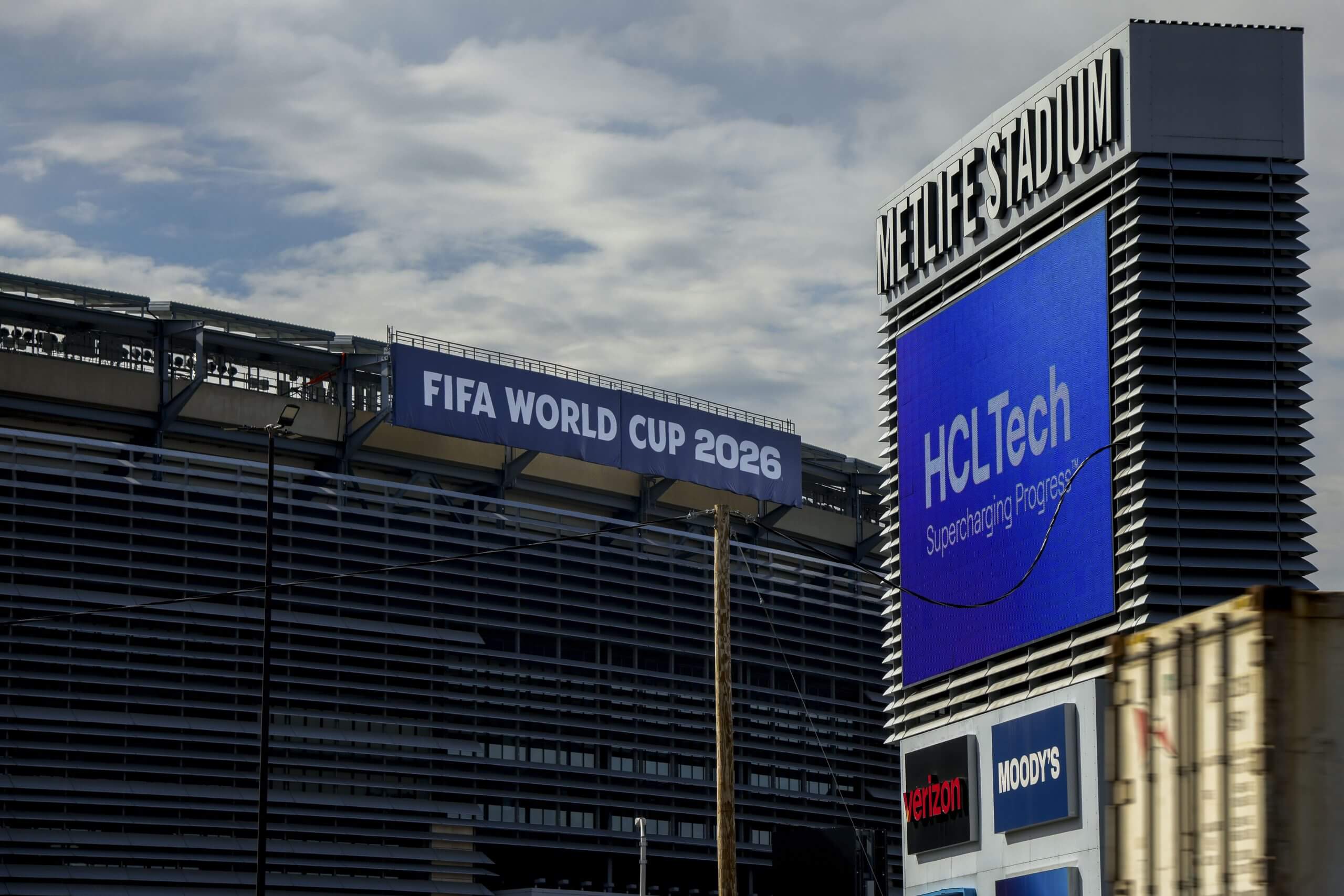
MetLife Stadium will officially be renamed New York New Jersey Stadium for the World Cup (Michael Nagle/Bloomberg via Getty Images
When did it open, how much did it cost, and who plays there?
MetLife Stadium opened in 2010 and was built at a cost of around $1.6billion (£1.2bn at current exchange rates). It is home to two NFL teams, the New York Giants and the New York Jets.
It is unusual for two teams to share the same stadium in American football, but the costly build was privately financed by the two franchises.
The stadium changes identity depending on who is playing. Its exterior lighting system shifts colours, turning blue for the Giants and green for the Jets on their respective game days.
At the World Cup, the lighting will be used to reflect the colours of host nations for each match.
What are the most famous moments to have happened at the stadium?
MetLife Stadium has already played host to moments that have resonated in modern soccer.
It was where the 2016 Copa America Centenario final took place, when Lionel Messi missed a penalty for Argentina in a penalty shoot-out defeat to Chile. Messi announced his retirement from international football in the aftermath — a decision he would later reverse.
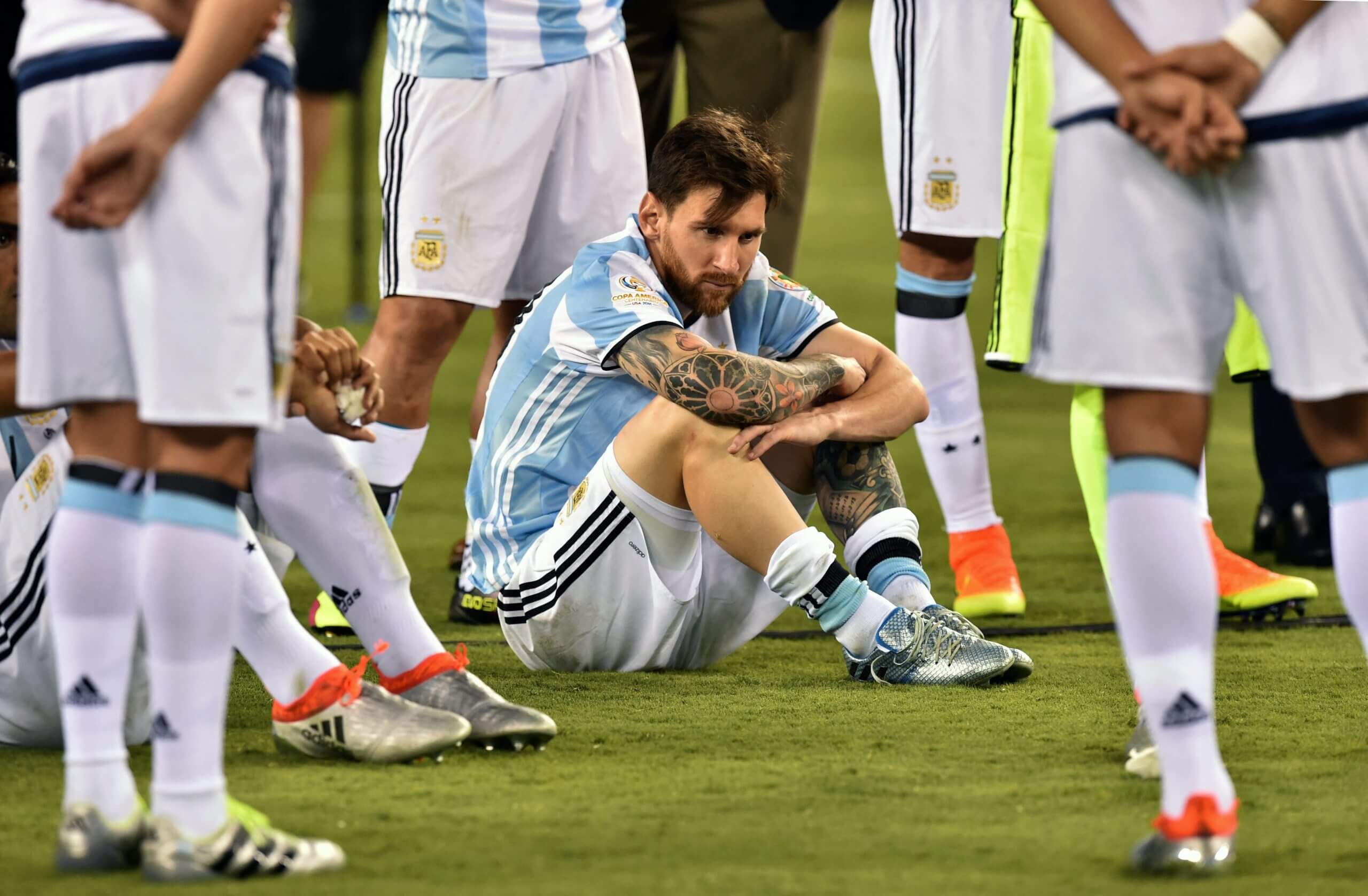
Lionel Messi after the 2016 Copa America final (Nicholas Kamm/AFP via Getty Images)
MetLife has hosted high-profile friendlies and tournament games, too — most recently the Club World Cup final between Chelsea and Paris Saint-Germain in 2025.
It was the venue for Super Bowl XLVIII — the first outdoor, cold-weather Super Bowl — and also WrestleMania 35, one of the largest live productions in the world.
MetLife has also seen moments that ripple beyond the stadium itself, including Odell Beckham Jr.’s iconic one-handed catch — considered one of the best of all time — against the Dallas Cowboys in 2014.
How many fans can it hold? Will it be full for the World Cup?
The stadium has a capacity of around 82,500 and is one of the largest arenas in the country. For the World Cup, this number may be slightly adjusted to accommodate new media areas, security zones and broadcast infrastructure.
Its record attendance for an NFL game was in October 2023, when the Giants played the Jets in front of 83,367 supporters.
Meanwhile, 82,262 fans attended a pre-season game between Manchester United and Arsenal in July 2022 — the highest attendance at the stadium for a soccer match.
MetLife Stadium also hosted nine Club World Cup matches last year, including the final, when 81,118 fans watched Chelsea beat PSG.
It is expected to be at capacity for games this summer.
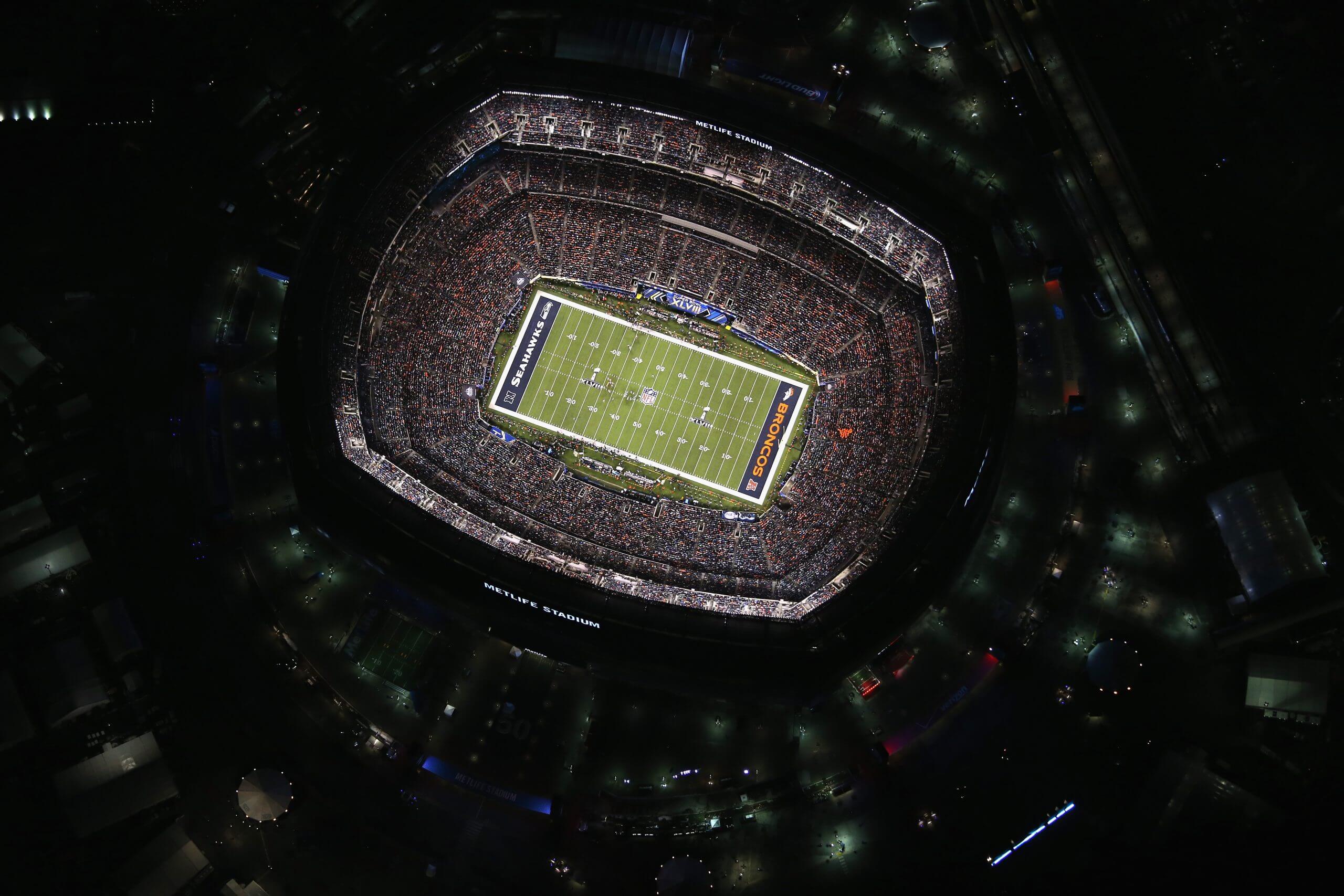
MetLife Stadium pictured during the Super Bowl in 2014 (John Moore/Getty Images)
What kind of pitch does it use?
Under normal conditions, the stadium uses a synthetic turf field designed for NFL, but FIFA requires natural grass for World Cup matches.
As such, a temporary natural grass pitch is being installed. This involves laying down a specially engineered grass system designed to remain stable under intense play. The grass is grown offsite, transported in refrigerated trucks, carefully laid and then closely monitored to ensure it meets FIFA standards.
Regulation pitch requirements for the World Cup are also different to the dimensions of an NFL field, so approximately 1,750 seats have had to be removed to open up space.
The stadium does not have a roof, meaning fans are open to the elements.
What will the weather be like?
Fans should be prepared for warm, often humid and occasionally unpredictable conditions.
Daytime temperatures usually range from the mid-70s to upper 80sF (around 24-31C), but heatwaves can push temperatures into the 90s (32-35C).
The humidity can make it feel significantly hotter, especially in a large, open-air stadium like this one.
Since the venue does not have a roof, fans will be exposed to direct sunlight during daytime matches — so sunscreen and hats are advised.
The weather can quickly change during the summer months, with the possibility of brief but intense thunderstorms. This brings the chance of heavy rain, winds and lightning, sometimes causing delays. Last summer, then-Chelsea coach Enzo Maresca called storm delays to several matches at the Club World Cup “a joke” after his side’s round of 16 tie against Benfica was postponed for nearly two hours.
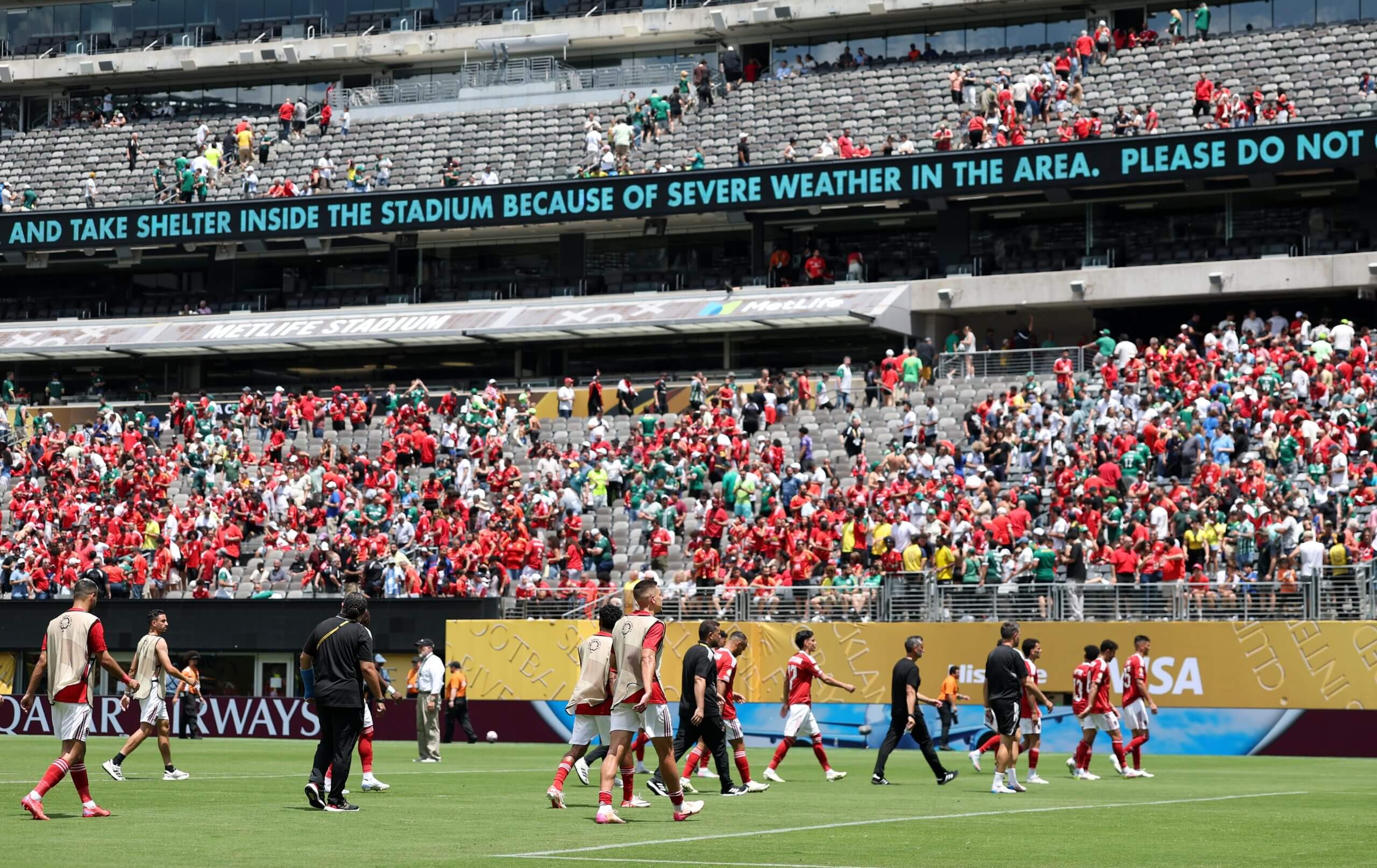
There were weather delays during MetLife games at the Club World Cup last summer (Al Bello/Getty Images)
Are there any other changes being made?
Improvements to security systems, expanded media and broadcast facilities, enhanced digital connectivity and upgrades to concession areas.
Significant enhancements include four new corner video boards, which are visually captivating and bring a more rounded viewing experience for fans. There is also a new audio system, while upgrades have been made to improve 5G coverage and capacity.
Additional camera positions are also being added to capture angles not used in NFL broadcasts.
How do you get there?
The stadium is located in East Rutherford, New Jersey — just outside New York City. There are three airports within one hour of the venue, which is one of the reasons the stadium was chosen for the final.
Fans can reach it via train, while it is also accessible by major highways and bus networks.
The New York/New Jersey host committee has slashed the cost of its World Cup shuttle bus service to the stadium by 75 percent, reducing the fare for fans from $80 to $20 during the tournament. The committee had previously committed to providing 10,000 bus seats for fans travelling to games at the ground, but has now increased its inventory by hiring classic American yellow school buses.
Many fans will travel via train, particularly the journey from New York’s Penn Station to MetLife Stadium, but the cost of travelling on the route has made headlines — with The Athletic first reporting that return trip would cost $150 for the tournament. That led to a significant backlash and last week New Jersey Transit reduced those tickets to $105 after securing support from “sponsors and other sources”.
Parking is going to be limited and no tailgating will be allowed in lots surrounding the stadium on game days.
Another option is rideshare apps, with a designated lot at the Meadowlands Racetrack, about a mile from the stadium.
What can fans expect?
The three-tiered seating bowl completely surrounds the field, creating intense sound and strong sightlines from almost every seat.
Travel to and from the stadium can definitely be tricky, so fans need to plan in advance.
Anything else I should know?
The local area is embedded in the U.S. soccer landscape, sitting within reach of three major professional clubs in New York City FC, New York Red Bulls, and NWSL side Gotham FC. Brazil, Senegal, Morocco and Haiti will use New Jersey as a base this summer.
This region was central to the sport’s first major surge in the U.S. during the 1970s, when Pele starred for the New York Cosmos.
The area was set to have an official FIFA Fan Fest, but this was cancelled just four months before the tournament in February, with smaller watch parties and street fairs to take place instead.
There will also be smaller fan events held at Rockefeller Center in Manhattan, the Billie Jean King National Tennis Center in Queens, Brooklyn Bridge Park in Brooklyn, among other locations across New York City’s five boroughs. There is also a paid-for fan event at Sports Illustrated Stadium in Harrison, New Jersey, where the New York Red Bulls play MLS games.
Which games will be played there?
June 13: Group C: Brazil v Morocco 6pm local time, 11pm BST
June 16: Group I: France v Senegal 3pm local time, 8pm BST
June 22: Group I: Norway v Senegal 8pm local time, 1am BST +1
June 25: Group E: Ecuador v Germany 4pm local time, 9pm BST
June 27: Group L: Panama v England 5pm local time, 10pm BST
June 30: Round of 32 5pm local time, 10pm BST
July 5: Round of 16 4pm local time, 9pm BST
July 19: Final 3pm local time, 8pm BST
The Stadium Guides series is part of a partnership with StubHub.
The Athletic maintains full editorial independence. Partners have no control over or input into the reporting or editing process and do not review stories before publication.