
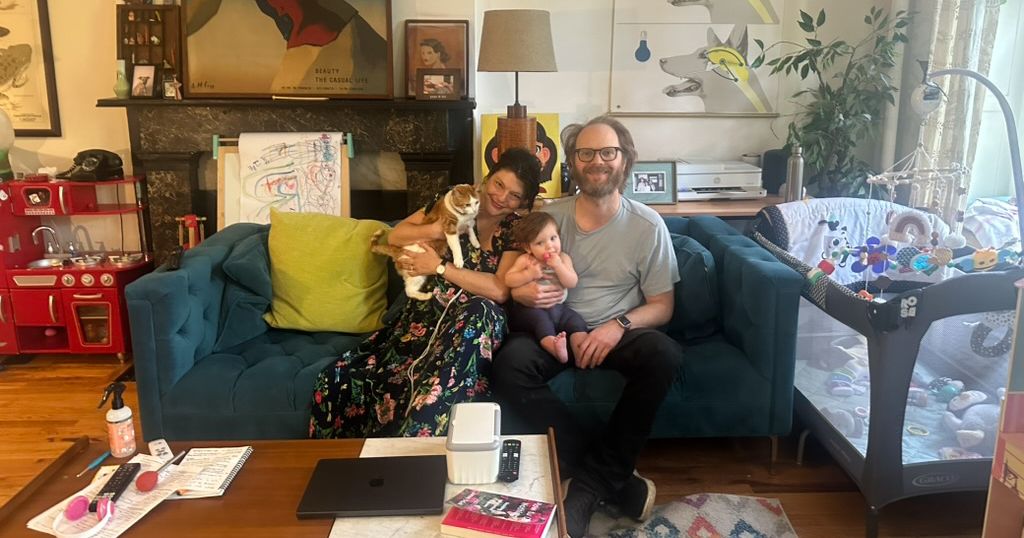
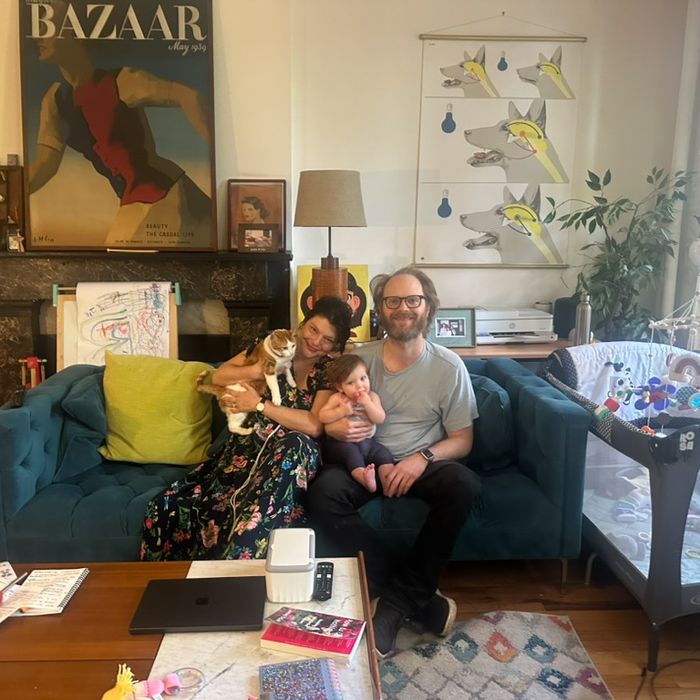
Annie with cat Sarah, baby Rose and husband Jason in the family living room, formerly the HQ for her mother’s illustration agency.
Photo: Anne Kadet
Annie Grossman’s new landlord would like her to relocate to an apartment in the landmarked building he owns just down the block. It’s a tempting offer. If she gives up her rent-stabilized, 1,500-square-foot two-bedroom in Gramercy, which she rents for $1,300 a month, he’ll install Annie and her family in a larger, newly renovated unit at the same rate for the rest of her life.
Her current apartment has issues. There was no hot water for several spells last winter. It has a railroad layout, so none of the rooms have doors except the tiny bathroom. There’s so much stuff and so few closets “that we’re essentially living in a closet,” she says. Her three daughters share a full-size bed that fills every inch of the tiny second bedroom, and the larger bedroom, which doubles as a home office with a desk for herself and her husband, also includes a clothesline for drying the laundry. And life there can feel a little eerie. “We are the only tenants in the whole building,” Annie says. “All the neighbors either took buyouts or died.”
And yet their Third Avenue home, also occupied by a chihuahua mix named Poppy and Sarah, an orange tabby, is crammed with far more than her late father’s paintings, three sofas, vintage posters, a playpen, toys, books, plants, pet beds, a piano, a big-screen TV, and a jumble of vintage and Ikea furniture.
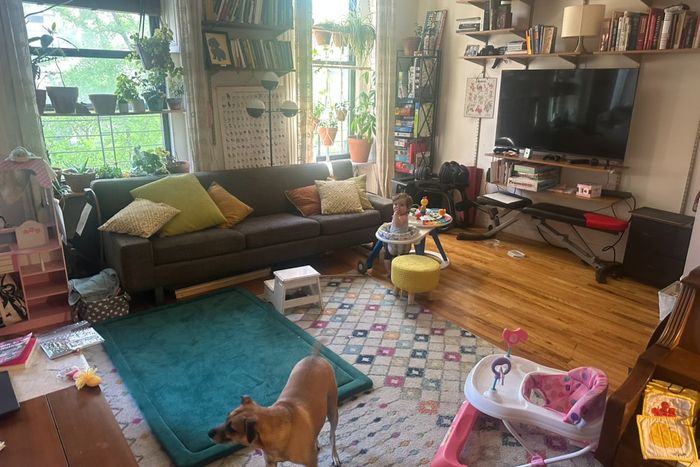
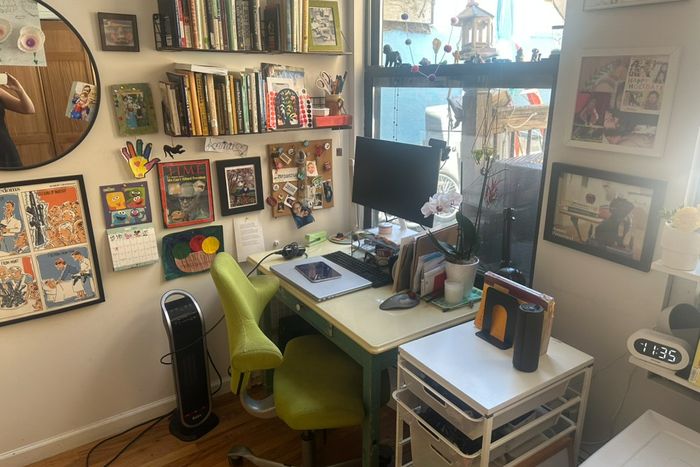
From left: The living room which used to host the illustrators agency run by Annie’s mother. Photo: Anne KadetThe desk in the parents’ bedroom that Annie shares with her husband. Photo: Anne Kadet
From top: The living room which used to host the illustrators agency run by Annie’s mother. Photo: Anne KadetThe desk in the parents’ bedroom that Ann… more
From top: The living room which used to host the illustrators agency run by Annie’s mother. Photo: Anne KadetThe desk in the parents’ bedroom that Annie shares with her husband. Photo: Anne Kadet
It’s where Annie grew up, and where her mother used to run her business, and where, for two years, she herself ran a training school for dogs (and later wrote a book about it). And then there are the not-so-warm-and-fuzzy memories that have become an essential part of the family lore, like the time when the apartment caught fire and the day she discovered her upstairs neighbor dead on the toilet. “My husband was the last person to see her alive, and I was the person who found her, so we ended up being interviewed as potential murder suspects,” says Annie. Now the apartment is where her children are growing up. If they stay, one of them could eventually take over the lease. While Annie says she’s not particularly attached to the place, there’s a lot she’d be leaving behind.
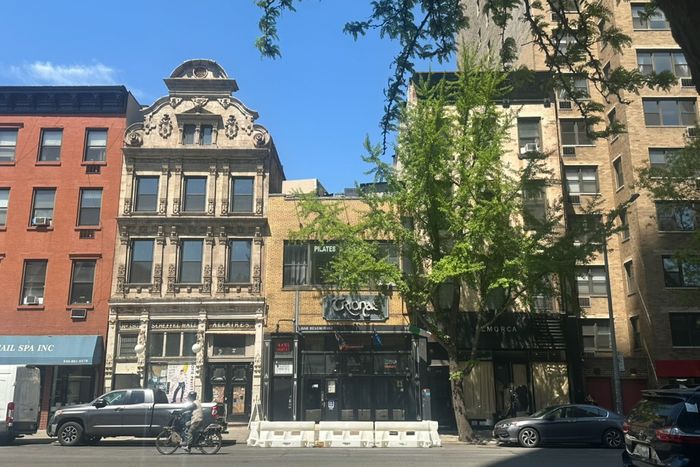
Annie’s current building, on the right, is just two doors down from the building where her landlord has offered her a bigger, newer apartment.
Photo: Anne Kadet
On a recent weekday morning, Annie, 46, nursed her baby, Rose, at the dining table in the middle room as she recalled the apartment’s history. She remembers when the room served as both a living room and a conference space for her mother’s illustrators agency.
“There were five employees working there sometimes,” says Annie. “Some of them were like second parents to me.” Staffers in the front office smoked, gabbed on the phone, and chatted with the illustrators and couriers stopping by the third-floor walk-up to drop off portfolios. Everyone shared the kitchen and bathroom; Annie and her mom slept in the back bedrooms. Many afternoons after school, Annie worked alongside the agents, bookkeepers, and assistants, doing her homework or helping with the filing. “Collating was a word I knew very young,” says Annie.
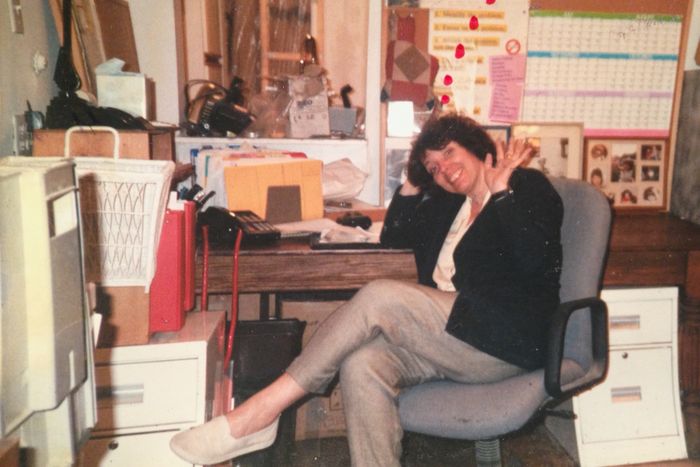
Annie’s mother, Vicki Morgan, in her illustration agency.
Photo: Courtesy of the subject
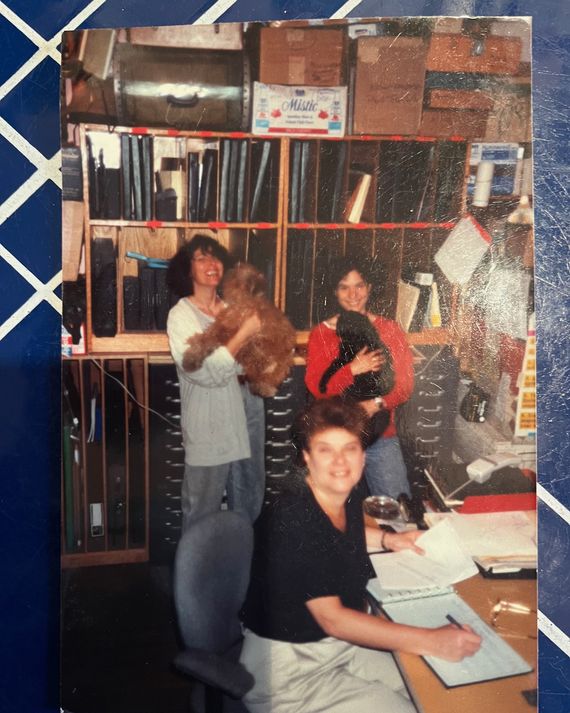
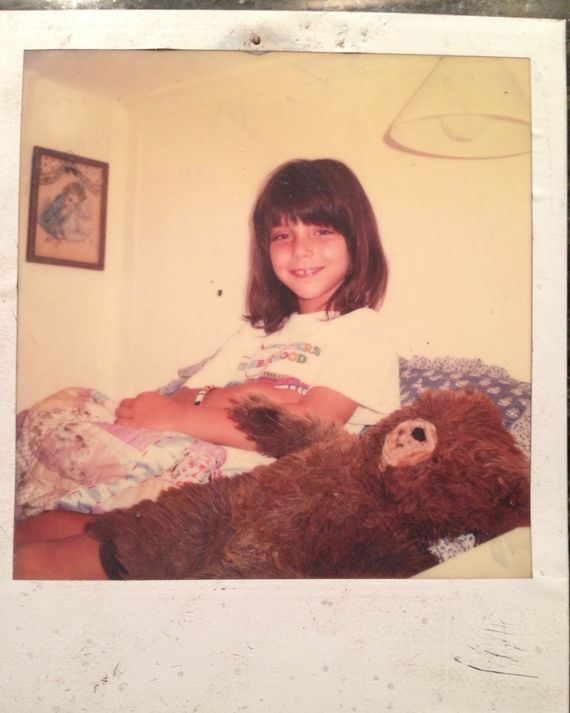
From left: Photo: Courtesy of the subjectPhoto: Courtesy of the subject
From top: Photo: Courtesy of the subjectPhoto: Courtesy of the subject
Because she was born into the arrangement, it never occurred to Annie that the situation was in any way unusual. Her mother, Vicki Morgan, had moved into the apartment with her first husband in 1970. She’d been living across the street in a studio and applied for the apartment when she saw a listing. She got it because she knew the super managing the building. The rent: $400 a month.
“I was making $75 to $90 a week at the time, so $400 was a lot!” says Vicki. She kept the apartment when her first marriage ended and started her agency in the front room, Vicki Morgan Associates (the company logo was a box of cigarettes with the tagline “Vicki Morgan Satisfies”).
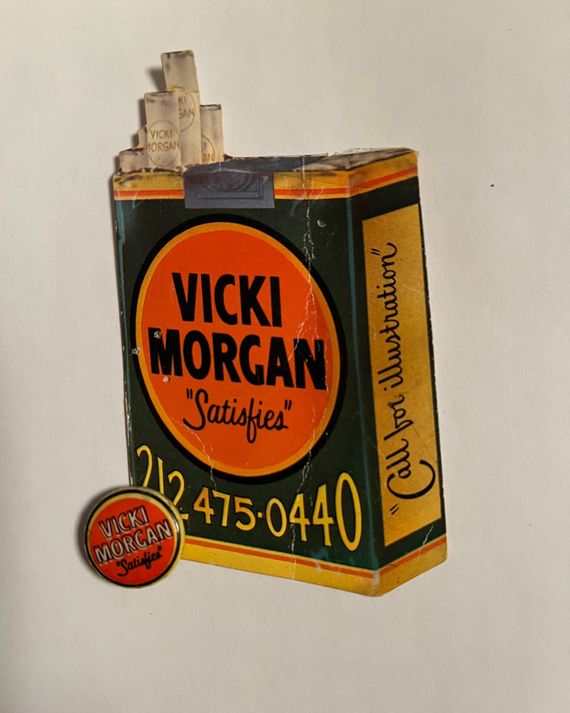
Her mother’s agency logo.
Photo: Courtesy of the subject
“She started out from basically nothing and became a well-known person in the industry. Pretty badass for a woman in the 1970s,” Annie says of her mother. Running the operation out of the apartment spared Vicki the cost of renting an office, but it wasn’t an easy life. “She worked all the time and was very stressed about money and making ends meet,” says Annie. For Annie, it meant she was always hyperaware of the precarious situation they were in. “On the other hand,” she says, “it gave me a sense early on that luck might be just be around the corner — the phone could ring and it could be a big job!”
Among the first illustrators Vicki represented was Robert Grossman, who eventually became Annie’s dad — his art still decorates the walls. This second marriage lasted about a year, and because Grossman maintained a rent-stabilized loft in Soho, he never fully moved in. “He took one box when he left,” Annie recalls.
Annie left in 1998 when she went to college and later lived in Brooklyn with her first husband. But after a 2011 divorce, she moved back in with her mom. And that’s when the situation reached peak madhouse: Annie, who had been training dogs on the side while working as an associate producer for Animal Planet, quit her job and launched her own business — School for The Dogs — out of the middle room.
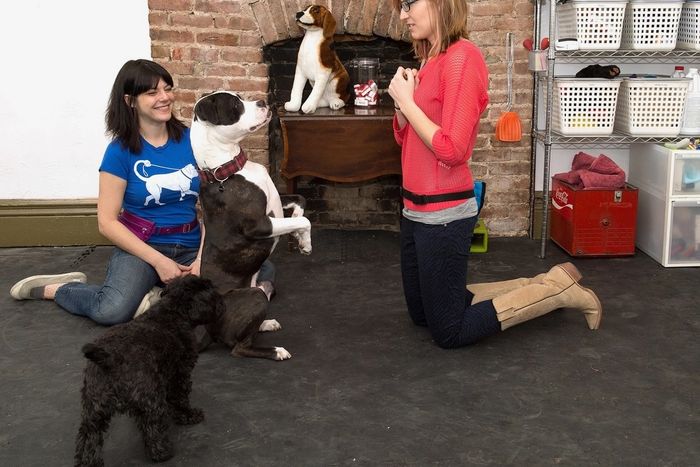
A School for the Dogs session in the middle room, which is now the dining room.
Photo: Ellen Senisi
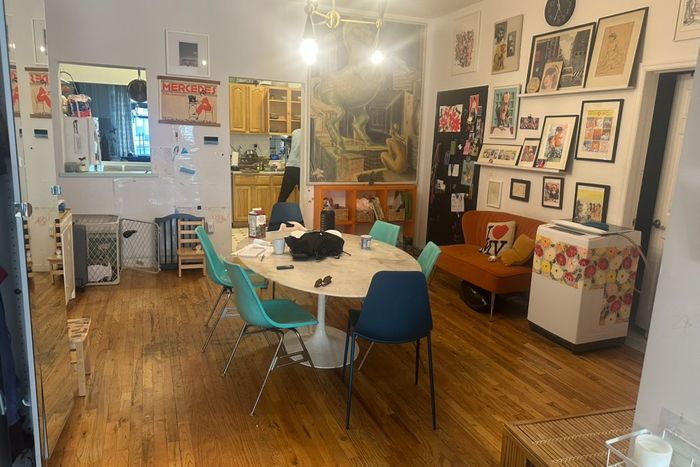
The family dining room now was formerly Annie’s dog-training facility.
Photo: Anne Kadet
Thanks to her attention-getting tactics (she was featured in The Wall Street Journal for training dogs how to use iPads), the school was a big success. Clients came by with their unruly pooches — up to six at a time — for group sessions in the windowless middle room that Annie had converted into a training facility with urine-safe flooring, a dog-food freezer, and wire racks stuffed with toys and equipment. After training sessions, the dogs frolicked on the sprawling back deck that Annie had transformed into a canine playground, complete with a swimming pool. Annie slept in the little bedroom and used the larger bedroom, with a newly installed Murphy bed, as a combination office, company storage space, and guest room for her mother, who was now living with her third husband. Her mother’s agency, meanwhile, was still humming away in the front. “It was madness. It was craziness,” Annie says.
The circus lasted two years. Annie’s mother moved the agency out in 2013 and Annie took the front room as her own bedroom and living room, devoting the rest of the apartment to the growing dog-training business. It was a great setup with just one problem: Annie learned that it was totally illegal, and her landlord was growing suspicious. But before things came to a head, the apartment caught fire.
Annie remembers hearing a strange crackling sound late one night when she was watching TV in the front room. Minutes later, the apartment filled with smoke and she escaped with just her dog and cat. It took 40 firefighters to put out the blaze. “The two back rooms were completely destroyed,” says Annie. “Just rubble. And everything in this room melted. It was this hilarious exhibition of melted dog toys. I lost about half my stuff.”
She moved out for a year while the place was renovated and found a commercial space in the East Village for her dog school for $3,000 a month. When she moved back in, she had the whole apartment to herself. The landlord did the cheapest possible renovation, she says, “but it was still totally new, and having been in this apartment for so many decades, living on top of my mom’s stuff and moving things around, it was amazing. It was a really incredibly wonderful thing to feel like, Oh, this is mine now, wow! One exception: She rented the small bedroom for $650 a month (which paid half her rent at the time) to a young woman who used it during the day to practice guitar.
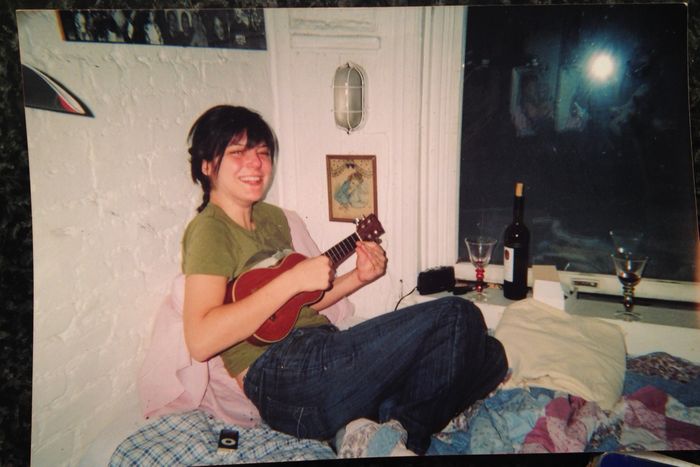
Annie in the little bedroom.
Photo: Courtesy of the subject
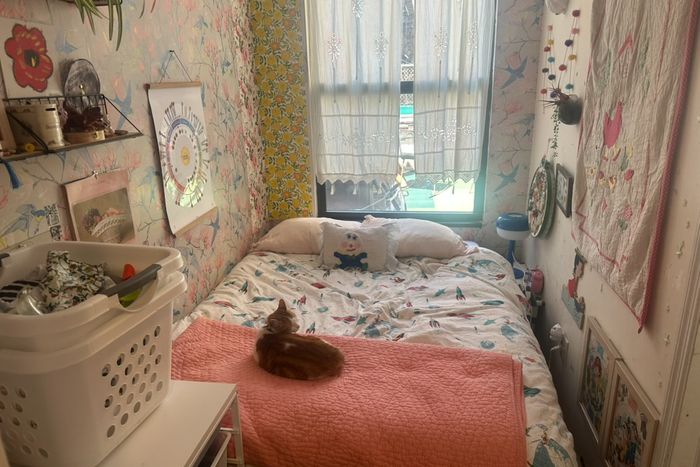
The little bedroom, now shared by Annie’s three daughters.
Photo: Anne Kadet
The solitude was temporary. Annie met her current husband, Jason, a year later. He remembers the first time he saw her home and being impressed with its size and the high ceilings. He didn’t marry her for the apartment, he says, “but it was certainly a bonus.”
Looking back, Annie says her life would have looked very different if it weren’t for the low rent on 194 Third Avenue. It allowed both her and her mother to take the risk of starting a business, and Jason has been able to continue running the nonprofit he founded. “I feel like I definitely can thank the apartment for making it possible to do that, and also to live in the middle of Manhattan without having to have 15 roommates,” says Annie. “And to have kids here. It’s a huge blessing in my life.”
It’s worked out so far. But how long can Magnolia, Marigold, and Rose, who are all under age 8, continue to share a bed? Or the single bathroom the size of a closet? One idea: Annie and Jason may move into the front room and let the kids have both of the back bedrooms. “We’ll figure it out,” says Jason. “We can move things around.”
If they decide against accepting their landlord’s offer, that is. “I know my kids want everything to stay the same forever and live in this apartment when they grow up,” says Annie. “It’s been a gift in so many ways. But if it turns out to be a gift I can upgrade, that’s like winning the lottery.”