
Metrics drive good governance. They quantify an initiative’s progress, validate its design and demarcate between aspirational and empirical.
Few initiatives concern the physical well-being of everyday New Yorkers more than their city’s traffic safety program.
Last month, the city Department of Transportation (DOT) released data analysis showing a record, seven percent downward trend in fatalities for early 2026, affirming the city’s Vision Zero strategy to eventually eliminate all traffic deaths and injuries on city streets.
Yet the gleam of success metrics can distort our perception. It can slacken priorities, and – particularly concerning for a life-and-death issue like traffic safety – it can blind us to missed opportunities and urgent next steps.
Worse, it often obscures the human stories that bridge complex government programs and real-world impact.
I could tell you about Nishat Jannath, who lived in my Queens district, in several ways: Nishat arrived in New York from Bangladesh at a young age. She was a CCNY student. And as typical of CUNY students, she juggled school and a job, working as a cashier at a parking garage. At nineteen, she was the second oldest of four daughters. She lived near Baitul Janna Mosque in Woodside, where her father serves as the Imam.
But perhaps she is best described as a big sister who doted on her younger siblings, ages nine and five.
On the night of March 30th – just two days before the DOT report was released – Nishat was fatally struck by a private garbage truck while crossing Roosevelt Avenue. She usually came straight home from her cashier job but had stopped to pick up a birthday cake for her little sister. She died, a few blocks from her waiting family, with that cake still in her hands.
Her father, Imam Helal Ahmed, told me: “I brought my family to New York because it is a place of hope and new beginnings. Like many parents before me, I wanted peace and prosperity for my children. To lose one of them in this manner is unimaginable.”
Nishat’s death has bereaved her family and galvanized our community – particularly my Bangladeshi American constituents.
Across the district, in neighborhoods like Woodside, streets are designed for speed rather than safety. Narrow sidewalks, blocked crosswalks and underlit crossings combine with large trucks on busy streets to jeopardize pedestrians, cyclists, and drivers.
In 2025, the city recorded its lowest number of traffic fatalities on record, with pedestrian deaths also declining. Still, there were more than one hundred pedestrians killed and dozens more injured while walking citywide. Queens alone saw fifty-seven traffic deaths last year, the second‑highest of any borough. Also in April of this year, a delivery truck struck and killed Jenny Maribel Chacho Sanchez while she was in a crash-prone Ridgewood crosswalk.
I have pushed legislation to further prevent tragedies before they take place. They include expanding automated curb enforcement to reduce dangerous violations like double-parking and blocked crosswalks, which create blind spots and force pedestrians into traffic.
Additionally, I had partnered in 2024 with community leaders and fellow elected officials on a seven-point street safety plan to better protect residents. The plan had pressed for installing permanent, brighter lighting at darkened pedestrian crossings, precisely the type of walkway where Nishat was killed.
After this tragedy, which took place minutes from my own home, I am recommitted to pushing even harder.
I stand rededicated to doing much more. Because success metrics mean nothing to a small child who lost a big sister on her birthday.
We – city and state leaders, DOT officials, community stakeholders – must do more. Because we cannot console a grieving parent with a positive trend announcement.
As her father, Imam Ahmed, asked me to share with lawmakers and the DOT: “Nishat should not merely be a statistic on your reports. She was beloved, by her family, by her community. There are immediate steps you can take. Please do everything in your power to save other families from the pain visited upon us, from the hole in our hearts, from the unbearable silence at our table.”
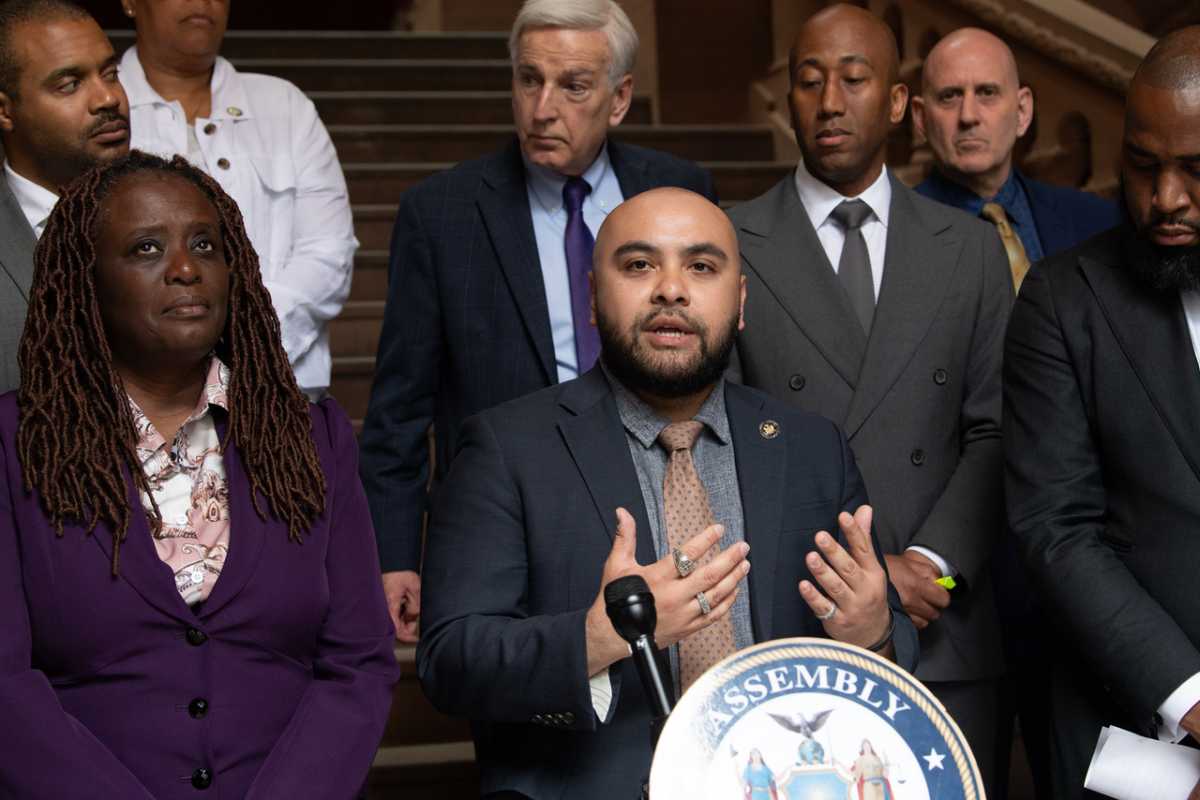
A two-term incumbent, Assembly Member Steven Raga represents sections of Woodside, Elmhurst, East Elmhurst, Jackson Heights, and Maspeth.