
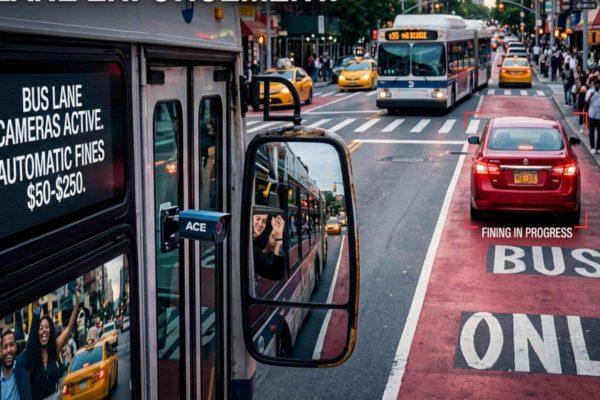
The new MTA fines will utilize ACE cameras to improve transit punctuality across Queens and Brooklyn.
Costs for invading lanes or blocking stops start at $50 and can escalate to $250 for repeat offenses.
Drivers in Queens and Brooklyn within The United States must avoid double-parking to evade these automated MTA fines.
The New York Metropolitan Transportation Authority (MTA) will begin issuing automatic MTA fines this Friday, May 15, through the ACE camera system in Queens and Brooklyn; this technological initiative seeks to optimize the flow of bus routes, as the presence of private vehicles in exclusive lanes delays millions of passengers daily; consequently, cameras mounted on buses will capture violators’ license plates in real-time to streamline the penalization process.For the community residing in these areas, understanding that enforcement will remain strict on the Q60 and B12 routes is essential, as traffic congestion has historically degraded public service quality.
Loading video…
Loading Video
Infraction costs and affected routes
The economic penalty scheme establishes that MTA fines will start at $50 for the first infraction, though the amount will progressively rise to reach $250 in cases of persistent recidivism. This Automated Camera Enforcement (ACE) program already operates on 60 routes across the city, yet this new phase expands surveillance to critical corridors in Queens and Brooklyn to discourage illegal double-parking. Crucially, the system records videos and photographs that go directly to the New York City Department of Transportation, ensuring that irrefutable evidence exists before the city issues a charge to the vehicle owner.
ACE system operations and exceptions
Furthermore, drivers traveling through The United States must remember that exclusive lanes generally operate 24 hours a day unless official signage indicates different hours in specific zones; despite the rigor of MTA fines, allowed exceptions include making right turns at the next street or permitting the quick boarding and exiting of passengers without obstructing mass transit flow. Ultimately, the effectiveness of this measure depends on strict compliance with traffic regulations, given that any vehicle stopped for more than five minutes will trigger detection by multiple bus units and receive an inevitable penalty.