
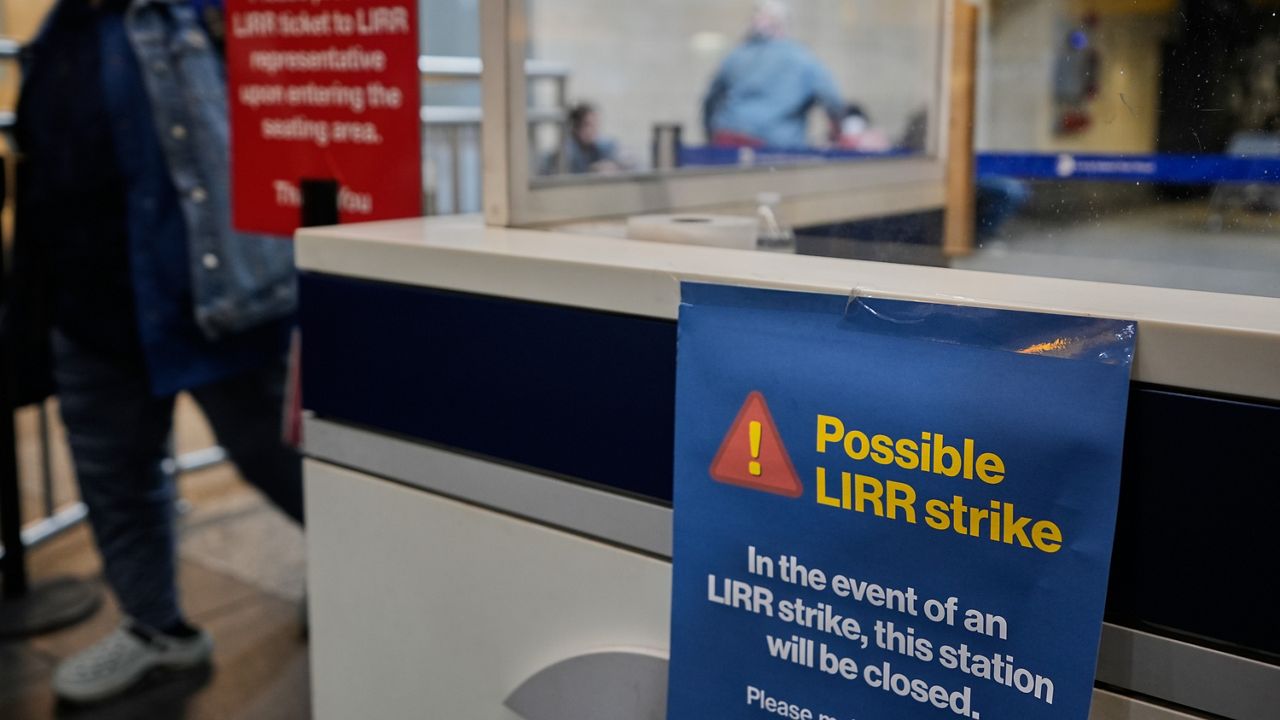
The Long Island Rail Road is facing a potential shutdown as a deadline nears to reach a deal with unionized workers to avert a strike.
The LIRR has been negotiating for months on a new contract with labor officials representing locomotive engineers, machinists, signalmen and other train workers.
As of early Friday evening, five labor unions representing about half the train system’s 7,000-person workforce were still in contract negotiations with the MTA. The strike deadline is Saturday at 12:01 a.m.
What You Need To Know
The Long Island Rail Road is facing a potential shutdown as a deadline nears to reach a deal with unionized workers to avert a strike
As of early Friday evening, five labor unions representing about half the train system’s 7,000-person workforce were still in contract negotiations with the MTA
The LIRR is the busiest commuter railroad in North America, carrying about 250,000 customers each weekday
Transit officials gave riders an update on the potential strike Friday afternoon, saying negotiations would go through midnight.
“We are planning for an orderly shutdown, and what that means is that we want to make sure that any trains that are operating, even if a work stoppage were to occur, the trains will make it to their final destination,” LIRR President Rob Free said.
Free advised riders to check the TrainTime app and the LIRR website to “ensure your trip is completed” before midnight.
“Even if those trains leave just before midnight, but are operating after midnight, they will continue to their final destination,” he said. “We don’t want any customers getting stranded on board our trains, so we’ll ensure that they get home safely.”
If employees go on strike, the MTA will launch a limited contingency plan that involves shuttle buses at multiple LIRR stations. The agency is also encouraging commuters to work from home if the strike occurs.
The MTA’s chief customer officer, Shanifah Rieara, said the agency will be using six LIRR stations for pickups and drop-offs in the event of a strike.
“And out of those six, we will be using three, mainly on the Suffolk County end for reverse commute,” she said.
“Again, this is limited service,” she added. “We are in no position to replicate the amazing service that Rob and his team put on daily. We cannot move 300,000 customers daily.”
Officials said they plan to transport 13,000 riders from east to the city with dropoffs at two shuttle bus locations in Queens.
A strike was temporarily averted in September when President Donald Trump’s administration agreed to help. Those efforts ended without a deal, giving both sides 60 days — ending 12:01 a.m. Saturday — to again try to resolve their differences before the union was legally allowed to go on strike or the agency could lock out workers.
The LIRR is the busiest commuter railroad in North America, carrying about 250,000 customers each weekday. LIRR workers last went on strike in 1994, for about two days. Workers nearly walked out in 2014 before then-Gov. Andrew Cuomo reached a deal with unions.
Gov. Kathy Hochul has also urged LIRR riders to work from home, if possible, as the free shuttles are meant for essential workers and those who cannot telecommute. The Democrat, months earlier, slammed the LIRR unions for “greedy asks” that threaten to “destabilize the local economy.”
Months ago, the MTA had proposed to the unions a 9.5% wage increase over three years, in line with what the system’s other unionized workers have already agreed to. The unions, however, held out for another yearly salary increase of 6.5%, for a total raise of 16% over four years.
But following Wednesday’s closed door meetings, Gary Dellaverson, the MTA’s chief negotiator, said the agency offered the unions what it said would effectively amount to a 4.5% raise in the fourth year of the contract. That offer, he said, was in line with what federal officials had recommended and would come in the form of lump sum payments rather than wage increases, as the union sought.
“The difference between those two positions is not unbridgeable,” Dellaverson said in a news conference. “It is describable simply in terms of money. There are no longer any complexities involved with the parties.”
Kevin Sexton, a spokesperson for the unions, issued a statement ahead of negotiations Friday morning.
“After literally years of stalling, gimmicks, fearmongering and game-playing MTA finally started negotiating real wages Thursday,” Sexton said. “They offered more than a three percent wage increase, and we came down from our five percent ask. The union representatives were prepared to stay at the table all night, but management chose to put on a show.”
“MTA’s chief negotiator Gary Dellaverson slammed his file folders on the table and walked out. It was quite a performance,” Sexton added.
The MTA didn’t issue its own statement in response Friday morning.