
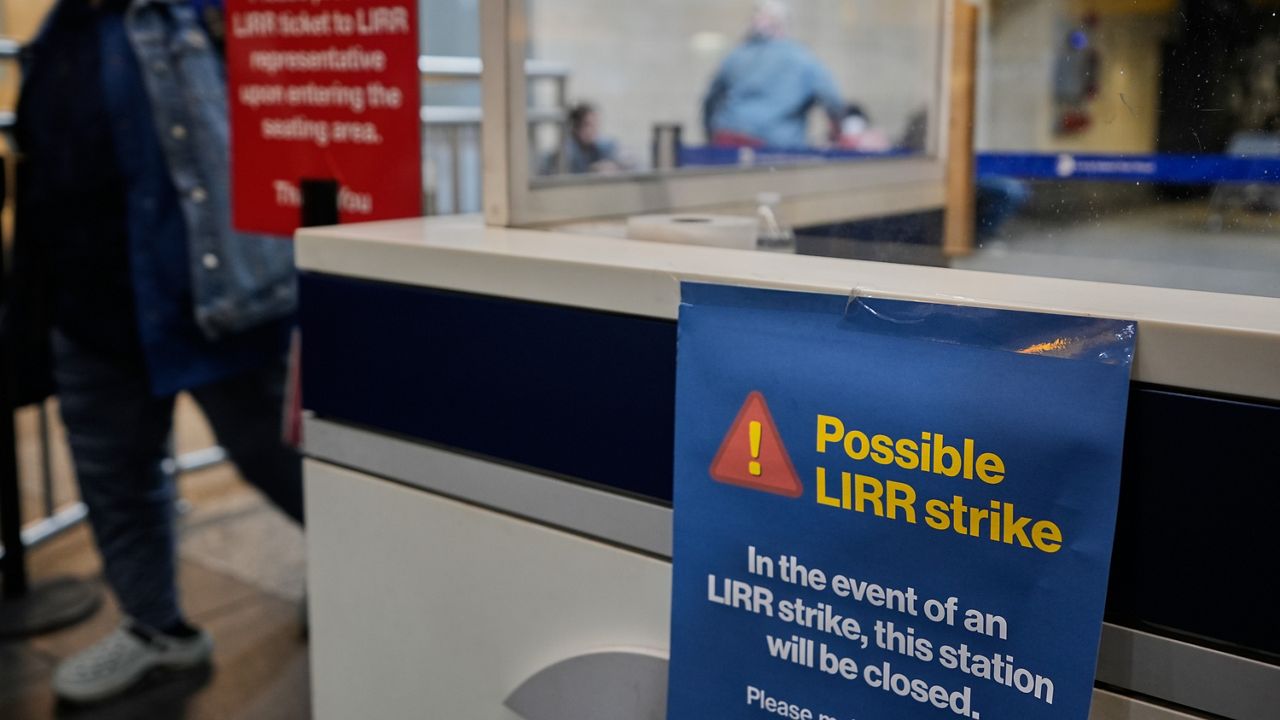
Long Island Rail Road workers are on strike, union officials said early Saturday, paralyzing the busiest commuter rail system in North America.
Labor unions representing about half the system’s workers announced the walkout after negotiations with the MTA ended Friday without a new contract.
What You Need To Know
Long Island Rail Road workers are on strike, union officials said early Saturday
Labor unions representing about half the system’s workers announced the walkout after negotiations with the MTA ended Friday without a new contract
The strike will force the roughly 250,000 people who ride the system each weekday to find alternative routes into New York City from its Long Island suburbs or to work from home
The five unions, which represent about half the system’s 7,000 workers, including locomotive engineers, machinists and signalmen, weren’t legally allowed to go on strike until 12:01 a.m. Saturday.
Kevin Sexton of the National Vice President of the Brotherhood of Locomotive Engineers and Trainmen said no new negotiations have been scheduled.
“We’re far apart at this point,” Sexton said. “We are truly sorry that we are in this situation.”
Janno Lieber, the MTA chairman, said the agency “gave the union everything they said they wanted in terms of pay” and that to him it was apparent the unions always intended to walk out.
The strike will force the roughly 250,000 people who ride the system each weekday to find alternative routes into New York City from its Long Island suburbs or to work from home. That means more cars on traffic-choked highways and longer work commutes.
The strike could make it challenging for some sports fans to get into Manhattan to watch the NBA’s New York Knicks playoff run or see the baseball rivals the New York Yankees battle the crosstown Mets this weekend.
Gov. Kathy Hochul has urged LIRR riders to work from during the walkout as the MTA plans to provide free but limited shuttle buses during the work day rush hours geared toward essential workers.
In a statement she blamed the strike on union leadership.
“Commuters are dealing with unnecessary dysfunction and thousands of union LIRR workers are being forced to go without a paycheck because of decisions made by a small group of union leaders,” Hochul said. “I stand with LIRR riders and will fight to preserve the long term stability of the MTA.”
Both sides said the fight was over wage increases and health care premiums.
Details on exactly where each side stood late Friday weren’t released, but the union had gone into the talks demanding a total raise of 16% over four years, saying it was needed to help workers keep up with inflation.
The MTA has argued that the union’s initial demands would lead to fare increases. Lieber said that while the MTA had met the pay demands, it had asked for new hires to the LIRR to pay higher health care premiums to offset some costs. The union rejected that idea.
A strike was temporarily averted in September when President Donald Trump’s administration agreed to help with negotiations. Those efforts ended without a deal, giving both sides 60 days — ending 12:01 a.m. Saturday — to again try to resolve their differences before the union is legally allowed to go on strike or the agency could lock out workers.
LIRR workers last went on strike in 1994, for about two days.
Workers on the commuter rail system connecting Manhattan to New Jersey, New Jersey Transit, went on strike last year. It lasted three days.