
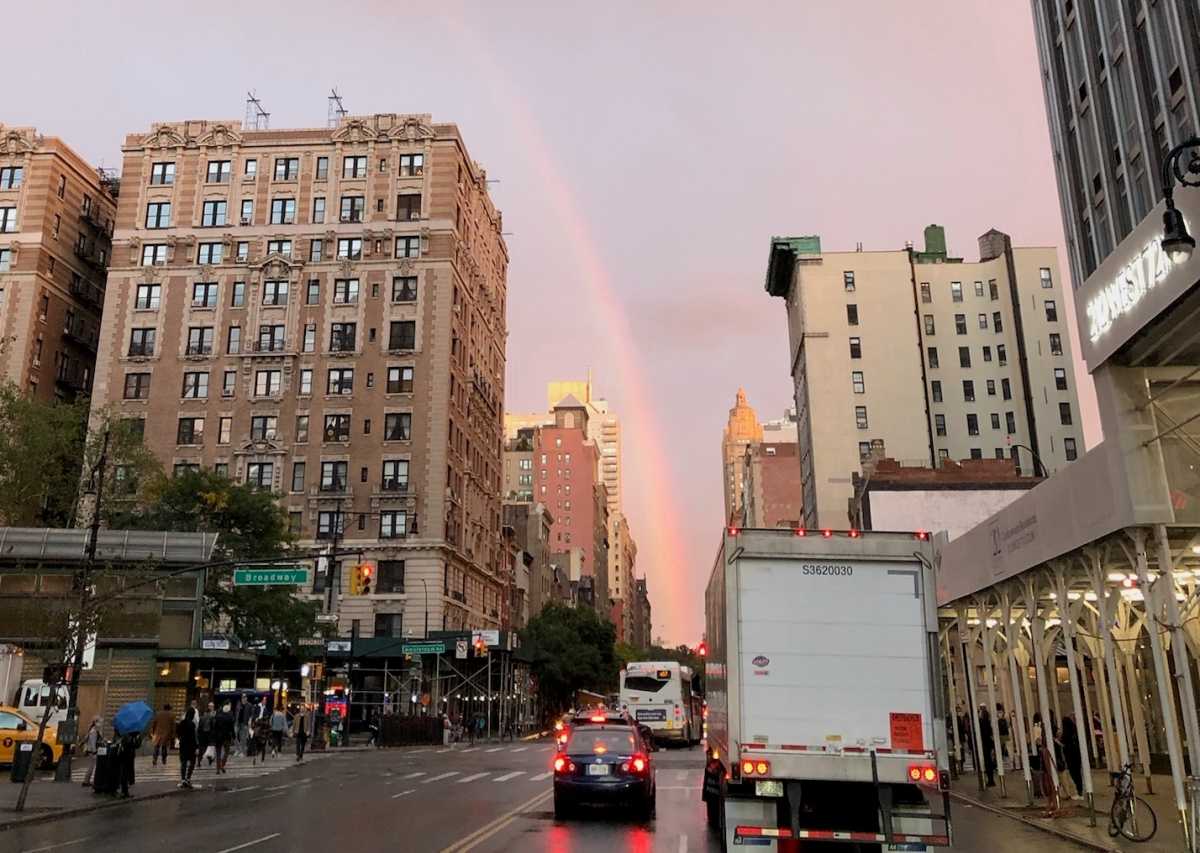
In the late 1800s, when the Upper West Side was the remote edge of a growing city, and the automobile was still decades away, West 72nd Street was a tree-lined boulevard connecting the carriage drives of Central Park and Riverside Drive, near what would become Riverside Park. We have the chance today to reestablish that historic park-to-park connection, and the Department of Transportation’s recently proposed redesign of West 72nd Street is a solid first step.
The initiative I direct, StreetopiaUWS, has been studying the West 72nd Street corridor for three mayoral administrations, so we have a pretty good handle on the issues at play. But even a passing glance tells you all you need to know: crowded sidewalks with no seating and little shade, parked cars lining both curbs, four underutilized travel lanes, numerous buses, rampant double parking, frequent U-turns, and cyclists navigating through it all with no safe place of their own.
In 2024 we proposed a vision for the corridor that took all these conditions into account and invited the public to imagine a street that worked for everyone. Picture a 14th Street-style busway that speeds buses by allowing local vehicular traffic but prohibiting through traffic; delivery zones that help goods and services reach residents and businesses efficiently without cars and trucks blocking the street; and a curb lane that makes room for myriad non-parking uses, like trash containerization and outdoor dining. Add to that a two-way protected bike lane that echoes the usability and feel of the popular greenways this street already connects, plus wider sidewalks, benches, and trees, so pedestrians can stroll and linger in comfort.
The DOT’s plan for West 72nd Street has many elements of our vision, if not the full ambition. It prioritizes bus riders with new platforms and in-lane boarding. It addresses delivery and curb access needs by revising outdated parking regulations, and it connects the parks with what would be the Upper West Side’s first crosstown protected bike lane, something that is desperately needed as enthusiasm for cycling continues to grow.
Pedestrians are also big winners in the DOT’s plan. The data on safety are clear: street redesigns like the one proposed for West 72nd Street create safer conditions for all street users, especially pedestrians, with deaths and serious injuries reduced by 24% overall and by 39% for seniors. Based on the safety benefits alone, it would be irresponsible not to implement the changes to West 72nd Street as soon as possible.
But there’s an opportunity to think beyond safety. The plan presented by the DOT at Community Board 7 last month makes little mention of trees and plantings and other quality of life elements that would make the corridor more inviting for shoppers, tourists, and locals alike. The DOT should partner with invested local stakeholders, like the West 72nd Street Block Association, to identify areas of need and enlist them to help maintain these shared public spaces.
As so often happens with change, a vocal group of opponents has materialized to oppose the project, repeating the same arguments made against every bike lane proposal for the past 20 years. While there are some good-faith concerns that should be thoughtfully addressed by the DOT, the agency shouldn’t let the noise stop them from implementing what is, at the end of the day, a basic safety upgrade to a long-neglected corridor.
One area of concern that deserves special attention is how to allocate limited curb space. The current arrangement results in rows of double-parked vehicles that narrow the existing travel lanes and create unsafe and unpredictable conditions for everyone on the street. There’s a simple solution: eliminate long-term passenger parking for the length of the corridor and convert those spaces to short-term loading zones and metered spots.
A similar parking reform effort around the corner on Columbus Avenue was compromised last year when Council Member Gale Brewer called on the Adams Administration to roll back a key part of the changes, thus limiting their effectiveness. This offers an important lesson: for projects like West 72nd Street to succeed, local politicians should get on board and lead, or at the very least, stay out of the way.
There’s no going back to the bucolic Upper West Side of the 19th century, but we can undo the worst mistakes of the 20th. Restoring a park-to-park connection along West 72nd Street isn’t a controversial prospect akin to Robert Moses bulldozing communities, as some residents have preposterously suggested. This project is a long-overdue investment in the present and future of the neighborhood, and it gets us one step closer to the livable city that Upper West Siders, and all New Yorkers, deserve.
Carl Mahaney joined Open Plans in 2021 to lead StreetopiaUWS, where he manages multiple grassroots campaigns focused on reclaiming public space for the public good on the Upper West Side of Manhattan.