
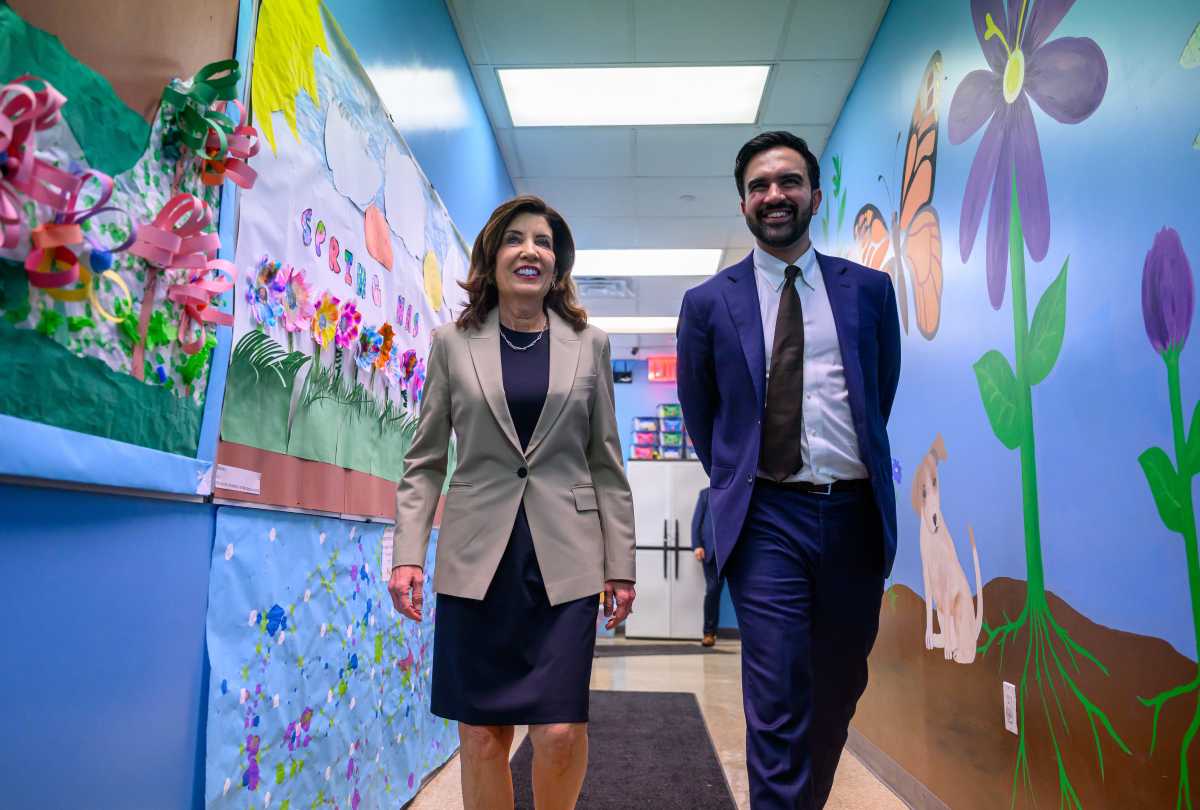
Fewer New York City families are being assigned to 3-K programs they did not choose, and average travel distances are shrinking, city officials said Tuesday, as the city tries to make its free 3-K seats easier for parents to use.
Mayor Zohran Mamdani, Gov. Kathy Hochul and Schools Chancellor Kamar Samuels said the city extended 99,921 offers for 3-K and pre-K seats for the coming school year. City Hall said the average travel distance for 3-K families was cut by about six blocks.
The administration said more families received one of the programs they ranked on their applications. The share of families receiving their top 3-K choice rose from 65% last year to 70% this year, while the share receiving one of their top three choices increased from 80% to 84%, according to the city.
The number of families assigned to programs they did not list on their applications also declined. City officials said those placements fell from 15% of families last year to 12% this year.
For that smaller group of families, the average distance between home and program dropped by 0.85 miles, or about 17 city blocks.
“Universal child care should mean meeting parents where they are, no matter where they live,” Mamdani said during a May 19 press conference at The Garden School in Jackson Heights, Queens.
He said families have too often faced a choice between traveling a significant distance for free child care or spending more than $20,000 per child each year to stay closer to home.
The city also reported a sharp drop in out-of-borough 3-K offers. Last year, 720 families received offers outside their home borough, with most placements more than three miles from home.
This year, fewer than 200 families received out-of-borough offers, and all were within three miles of home, according to City Hall. Mamdani said the changes are meant to make the city’s free early childhood programs more usable, not simply larger.
“We’ve heard from families before who’ve said, ‘I live in Bed-Stuy, and I’m getting an offer for a center in Astoria,’” Mamdani said. “That doesn’t mean much to me.”
He said the city is trying to deliver programs closer to home “so more people can actually use it.”
Preliminary 3-K offers went out Tuesday
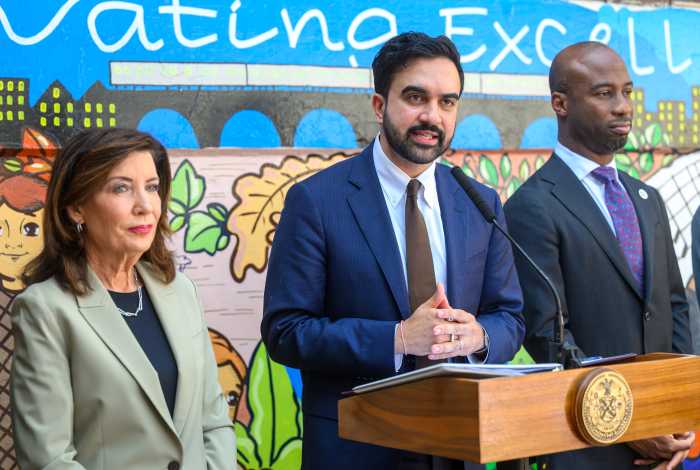 Mamdani speaks at The Garden School in Jackson Heights, Queens, flanked by Gov. Kathy Hochul and Schools Chancellor Kamar Samuels.Photo by Susan Watts/Office of Governor Kathy Hochul
The city has also said more than 700 recently added 3-K seats will be available through the waitlist process, giving some families a chance to seek programs closer to home.
The offers announced Tuesday are preliminary, and families will be able to express interest in additional programs in the coming weeks. Emmy Liss, the administration’s child care czar, said families who received manual placements may still be able to move into programs closer to home as those newly added seats become available through the MySchools website.
Liss said the city would look at applications and enrollment as it evaluates community needs and travel patterns. The advocacy group New Yorkers United for Child Care praised the announcement, saying the city’s progress should be measured by whether seats actually work for families.
“Enrollment numbers only tell part of the story,” Rebecca Bailin, the group’s executive director, said in a statement. “What matters is whether parents can get a seat that fits their family — and by that measure, this year is night and day compared to previous years.”
Bailin said families last year were fighting to preserve 3-K while some parents who could not get seats they were counting on had to draw down savings to pay for private care.
“What a difference a year makes,” she said. “Thanks to Mayor Mamdani and Governor Hochul’s commitment to investing in and expanding 3-K, thousands of families can rest easy, knowing they can get a seat that works for them.”
Hochul said the effort is backed by $1.2 billion in state funding for early childhood care and education. At the news conference, she said child care costs can run from $20,000 to $40,000 a year and have become a major factor in whether families can afford to remain in New York.
“Child care should not be on that list of worries,” Hochul said.
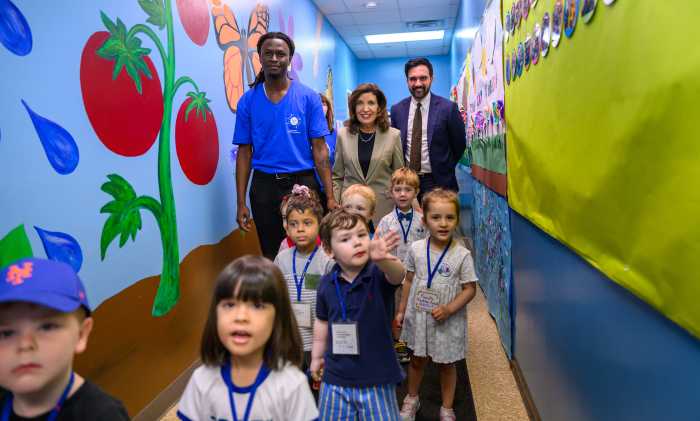 Photo by Susan Watts/Office of Governor Kathy Hochul
Still, officials acknowledged that expanding seats does not resolve every problem in the system.
Asked about outreach, Mamdani said his administration inherited what he called a “bare bones outreach team” for child care and said there had been “sustained disinvestment” in outreach around universal child care, particularly for 3-K and pre-K. He also cited fear among immigrant families about using city services and years of confusion over what programs were available.
Mamdani said the city would need sustained outreach to rebuild trust, saying many parents would be more persuaded by other parents’ experiences than by city advertising.
The mayor also acknowledged that some child care centers had sat unused for years after public funds were spent bringing them up to code. “There isn’t a great answer for the holdup of a lot of these centers,” Mamdani said.
He added that the city is trying to reopen unused sites and add seating where families need it.
Samuels said shorter commutes would mean less stressful mornings for families.
“This is real time back in the hands of families every single morning,” the chancellor said.