
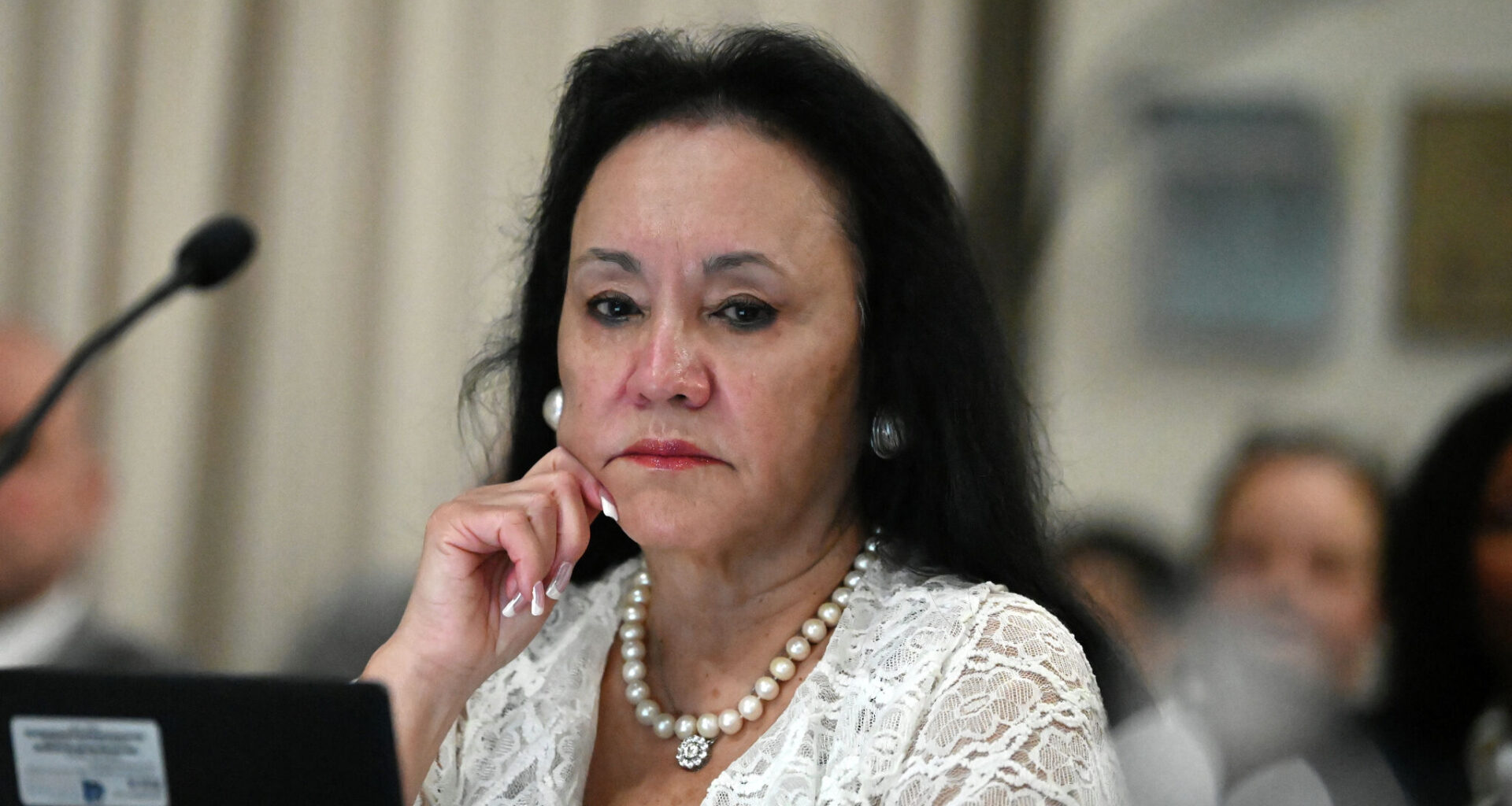
Under Commissioner of Education Betty Rosa, the Board of Regents plans to replace Regents exams as a high school graduation requirement. But after two years with slim details, school districts are developing their own plans.
Will Waldron/Times Union
ALBANY — Nearly two years after the Board of Regents announced that Regents exams would someday become optional for students to earn their high school diplomas, school districts are taking matters into their own hands.

Some districts and BOCES organizations have already adjusted their classes to align with the state’s new Portrait of a Graduate, the high school graduation requirements intended to replace the Regents exams. The Portrait calls for students to learn critical thinking, communication and other skills.
Article continues below this ad
The philosophy behind the new requirements is that students will have many ways to show they have mastered the required skills, rather than only taking exams. The Portrait lists six required skills, with some examples of how to show mastery. But the state has not detailed what would constitute a non-exam way of showcasing skills in classes like Algebra I or Biology — or if those classes would even be required.
Districts are leaning into the non-exam idea, leading students to produce projects and presentations on the Portrait of a Graduate skills, though not for the currently required core classes.
Two school districts and the Washington-Saratoga-Warren-Hamilton-Essex Board of Cooperative Educational Services (WSWHE BOCES) presented their progress to the Board of Regents Monday. Regents said they welcomed the news.
Make the Times Union a Preferred Source on Google to see more of our journalism when you search.
Add Preferred Source
The schools’ work “actually helps us develop further what we need to do,” said Regent Shino Tanikawa.
Article continues below this ad
“It’s really exciting to see that school districts and BOCES are not waiting for us,” she said.
Regent Patrick Mannion assured districts that the state will do its part in time.
“The (non-exam) assessments are going to be legitimate and appropriate and there in time for them to roll out in, I think, one to two years,” he said.
He wants to make sure every school offers the same “rigor,” he said.
Article continues below this ad
“It was easier to measure — whether or not that measurement was accurate — … with Regents exams,” he said.
He acknowledged that many school officials have asked for more details from the Board of Regents, which has not yet written the regulations that will end mandatory Regents exams. Nor has the group set a date to vote on those regulations, although Regents said two years ago that they would “sunset” the mandatory exams “by fall 2027.”
Some superintendents have said they don’t believe the state will drop mandatory exams by fall 2027. So they said they won’t make changes to the currently required Regents classes, for fear that the rules won’t change and then their students would not be able to get a diploma.
Currently, students must pass Regents exams in Algebra I, English, Social Studies and a science. Some superintendents said they are excited about the idea of adding projects and more hands-on work in those classes — but not at the expense of the Regents exam prep time.
Article continues below this ad
Mannion urged them to take a leap of faith.
“People want to have those definitions of success before they take the step out,” he said. “We need to continue to communicate that that success is going to come from them.”
The superintendent of WSWHE BOCES presented to the Board of Regents a detailed timeline of what the state should accomplish, and when, to get to the new non-exam diploma. It suggested the board would use the time from fall 2027 to summer 2029 to end mandatory Regents exams and switch over to one New York State diploma.
But a state Education Department official said the state is going to meet the fall 2027 deadline.
Article continues below this ad
Board of Regents members also asked WSWHE BOCES how it had managed to get teachers to add in projects so quickly.
Turina Parker, superintendent of WSWHE BOCES, said that in working with school districts in her region, her biggest message is to build a network with employers and other schools.
“I think it’s critically important,” she said. “Collaborate with networks … I think that’s the foundation of it.”
She and school district officials described projects and presentations that students have done this year in response to the new Portrait of a Graduate. While projects are not new to education, and exist in many school districts, other districts have said they do not have the funding, equipment or staff to create, for example, a student newspaper. Parker said BOCES can be the key to the collaboration needed for such endeavors.
Article continues below this ad
That’s what has led to many of the new projects highlighted Monday that impressed the Regents.
Board of Regents Chancellor Lester Young, Jr. described meeting teams of high school students who were working on projects to meet the civic involvement requirement in the Portrait of a Graduate. One team connected virtually with children in Haiti and raised money to improve conditions there.
“Which is a real civic engagement project,” he said. “It was one of the most amazing experiences I had.”
Article continues below this ad