
by Alexa Lewis
Comedian Joe Torry has begun to think about his life the way an athlete might think about a game: in quarters. The first quarter is birth to 20. The second runs from 20 to 40. The third takes you from 40 to 60. And the fourth — “hopefully,” he said — carries you from 60 to 80.
Torry is 60 now, newly arrived in what he has deemed his fourth quarter. That transition is informing his material, he shared. He describes the idea of life’s quarters as a progression of what one learns and loses, what one can still do, and what one can’t. For the longtime performer, entering this new era means, in part, showing audiences who he’s become with age. But it also hints at something larger — a comedic legacy spanning decades, and with it, the accumulation of mastery and community.
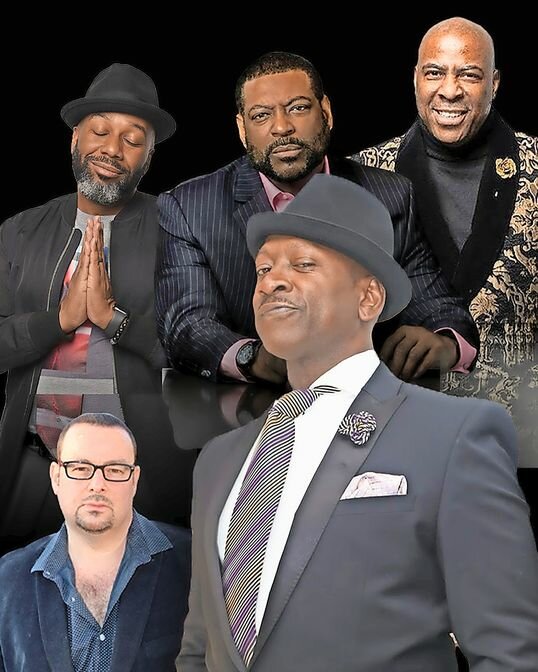
That sense of accumulation runs beneath the surface of “Comedy Kings Live,” a performance taking place May 23 at Lehman Center for the Performing Arts featuring Torry and fellow kings of comedy Talent Harris, Capone and Joe Clair, hosted by A.G. White. Lehman Center itself has been a cultural cornerstone of the Bronx for over 45 years, hosting performers ranging from Latin music icons and international dance groups to popular rappers such as Princess Nokia, scheduled as one of the venue’s opening performers for next season. Now, it welcomes a lineup of comics who are each cornerstones of the comedy community in their own right.
On paper, the Comedy Kings show may read almost like a victory lap. Veteran comedians, familiar names, an audience ready for a greatest-hits set. But when Torry and Harris talk about the show, the nostalgia aspect is only part of the equation. What matters more is the work itself — comedic skills and bits that have been honed and polished for years to create an experience that brings everyone in the room together in laughter.
Both Torry and Harris described the show as a “reunion” between seasoned comedians whose paths have crossed many times before in the comedy world. Throughout their careers, the comedians have variably appeared together in lineups for Apollo Theater sets, Comedy Central appearances, Def Comedy Jam performances and other high-profile events. Torry described the upcoming performance as an opportunity for their gang to link back up after being taken in many different directions by their own careers.
Harris has been doing comedy for about 35 years, he said, and his career has branched into film, radio and television. Through those endeavors, he built connections in the entertainment and media worlds that led to even more opportunities — “branches on branches on branches” of relationships and knowledge, he said. However, he noted all of his creative endeavors have had one thing in common: having to be funny, and honing the ability to make many different audiences laugh. Pursuing comedy for years quickly trained him in the skills he needed to do just that, not only because of the practice he gained on stage, but the amount he had to travel to get to those stages. City after city, crowd after crowd, an endless geography of performance venues and hotel rooms, all culminating in valuable comedic knowledge.
That travel, Harris said, makes you “worldly quicker than you would ever be.” The average person’s relationship to travel is occasional. The odd work trip, a family vacation. For a career comedian, travel is part of the job. By experiencing many different communities, cultures and comedic sensibilities, Harris picked up an essential skill for his trade: creating a shared experience through universality.
His worldliness became part of his material, Harris shared, but it also became part of his technique. Comedy is not just about telling a funny story, but about learning how to tell it so it lands in any room. As Harris explains it, “comedy is 100 percent relatability.” He describes it as a kind of rule of comedy. You have to “get universal,” Harris said. If an act is too local, it limits a comedian’s expansion to broader audiences. The comedian who can’t translate his craft into something portable has a hard time taking off.
That universality, relating to and bringing together vast audiences, is central to Torry’s work as well. He observes that everyone, despite our differences, has core, human aspects in common. We all have family. We all work. We all eat. We all go to the bathroom. We all want to be free. The job is to speak to those common denominators without sanding down the texture that makes the comedy feel true. In that way, Torry and Harris take on the task of turning a room full of separate lives into a shared story each time they take the stage.
But while there is immense value in universal comedy, Torry noted the simultaneous importance of understanding the community you’re performing for. He recalled one of his worst nights on stage, when he arrived late to a show in Kentucky. He went onstage with his jokes, but immediately sensed some tension from the audience. It turned out, recent flooding was weighing heavily on the audience’s mind. When Torry stood before them, they didn’t just want to be entertained, they wanted to be seen. It’s why Torry has made a practice of checking the local news and studying up each time he lands in a new city, enabling him to add a local touch to his performances.
That desire from audiences to be understood and connected with makes Harris particularly excited about the upcoming Lehman Center performance. He described Lehman as “the backyard,” explaining that he grew up in Mount Vernon, close enough that he feels like he’s returning to home territory. He argued that he and Capone, also a New York comic, will have an advantage at this performance, being able to lean into local nuance to strike the perfect balance between universality and specificity to connect with the audience. For Torry, who hails from St. Louis, performing in New York presents an exciting opportunity not only to connect with a lively audience, but with the generations of comedy greats who have called the city home and continue to inspire his own work.
Asked what the Comedy Kings performance will feel like, Torry reached for a musical metaphor. The show, he said, will be like a concert where every performer has their own recognizable songs. Many in the audience already know what each comic is known for, and the pleasure comes from hearing all those distinct styles in one night. He compared it to a jukebox — drop in the coin, pick the track, let the room fill with something everyone can sing along to.
Harris, similarly, said that a comedy fan is typically a “seasoned” audience member. Someone who understands the art form. But he predicts newcomers will fall in love with comedy through the show as well. He compared live comedy to his own experience with live music: once you experience it in person, you start wanting more of it. People bring friends. Those friends bring other friends. The audience grows and expands like a living thing.
Torry said this performance is also a chance to show audiences a version of himself they might not expect. They’ve seen “young Joe Torry,” he said, but they haven’t yet seen “grown Joe Torry.” The difference matters, because the fourth quarter is not a replay of the first.
“This is going to be legendary,” he said. “Who knows? You may never see these four together again in the Bronx.”
For one night though, the Comedy Kings will unite to offer something increasingly rare: a room full of strangers laughing at the same thing at the same time, held together by performers who have spent decades learning how to make connection feel effortless.
Keywords
Def Comedy Jam comedians,
Lehman Center comedy night,
Joe Torry career,
Talent Harris comedy,
Bronx cultural events,
live stand-up comedy,
Comedy Kings Live