
New York’s control over Block 780 in Midtown, coveted by Amtrak for an unneeded and exorbitant dead-end terminal for NJTransit costing upwards of $20 billion, must not be stripped away by an act of Congress. Penn Station needs to be fixed properly and Block 780 should be left untouched.
As reported by the Daily News, well after midnight Thursday night, the House Transportation and Infrastructure Committee approved the transportation reauthorization bill with a dangerous amendment aimed at seizing Block 780, warns Rep. Jerry Nadler.
Ten years ago this week, we first wrote in opposition to Amtrak’s desire for 780 as part of the larger Gateway project in an editorial entitled “Tunnel blockheads.” Since then 167 editorials on Gateway have followed, exposing many aspects of the boondoggle. This is the 169th.
Gov. Hochul is adamantly against the destruction of Block 780 and the leveling of the homes and businesses and the historic Gothic Revival St. John the Baptist Catholic Church. But the new Gateway tunnel under the Hudson is designed to bring trains into Block 780. Without a terminal at Block 780, the new tunnel won’t do a damn thing for additional service unless it is modified. Smart answer: Dig the tunnel, but adjust the design so it can efficiently deliver additional trains into Penn.
Amtrak and Transportation Secretary Sean Duffy last week selected Halmar and Skanska to redo Penn Station. Duffy also said that there’s $8 billion for the job, but it’s unclear where that money is coming from.
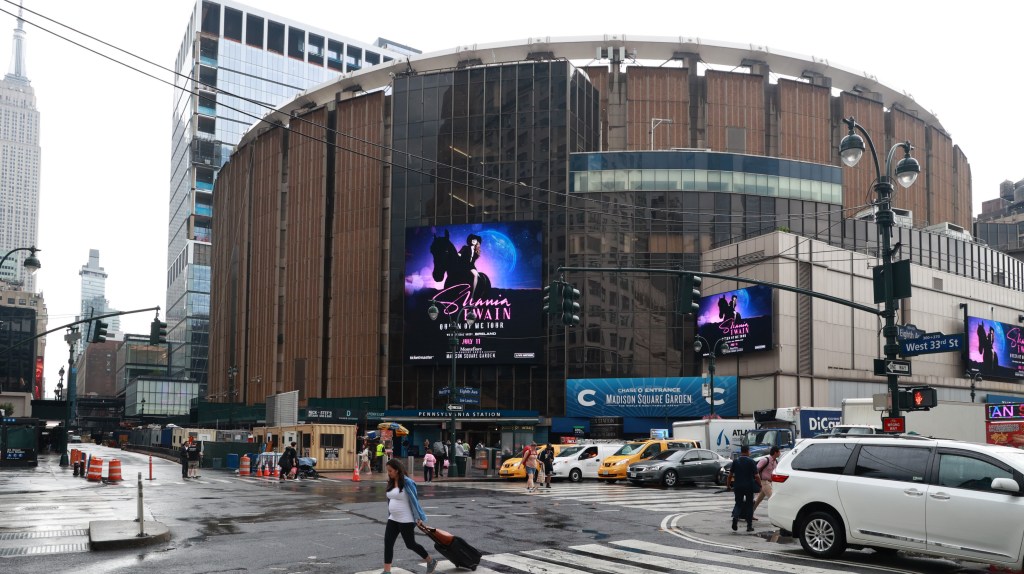
Earlier Penn plans from this group focused on opening up a larger entrance on Eighth Ave. (which Gov. Andrew Cuomo wanted) by eliminating the old Felt Forum or whatever Madison Square Garden calls it now, while leaving the Garden itself in place. Past versions had the Garden owner Jim Dolan being paid perhaps $500 million in exchange.
During this past decade, we have been less concerned about the headhouse than improving the movement of trains in and out of the station (called through-running) and moving passengers on and off trains.
Working under Andy Byford, Halmar and Skanska need to remove Penn’s upper level and clear the lower level of all the storage rooms and crew quarters. Use the Penn Station Service Building, a 1908 remnant from McKim Mead and White that was the old powerhouse across 31st St., for those functions.
The building, which sits in the middle of Block 780, is connected to Penn via a pedestrian tunnel under 31st St. and now its floors are either empty or cluttered with junk.
Inside Penn, Tracks 1 through 4 must be lengthened to accommodate 12-car trains and reach the West End Concourse and Moynihan Train Hall. The Central Corridor, which only covers Tracks 21 to 13, must go all the way to Track 1. And there have to be many more vertical access points.
The MTA and LIRR did this decades ago to their side of Penn, but Amtrak never learned. Amtrak also hasn’t learned that night and weekend repairs to the damaged East River Tunnel would have been far wiser than their taking Line 2 out service for more than year, which they did against the wishes of Hochul and her election rival this year, Nassau County Executive Bruce Blakeman, who both urging using a L-train style repair.
Ten days ago, there was a bad fire caused by Amtrak that knocked out Lines 3 and 4 from Thursday before noon until Saturday night, forcing a total shutdown of Penn (which was overshadowed by the LIRR strike). Night and weekend repairs to Line 2 would have kept Penn operating instead of canceling hundreds of trains.
Line 2 is back in service on July 6. The repairs to Line 1 must be done nights and weekends. Amtrak was supposed to consider this better option, but never did so.
Amtrak’s CEO was fired last year by the White House and the No. 2 man is leaving soon, so new leadership must adopt modern railroading ideas, from abandoning the Block 780 dead-end terminal boondoggle, to using through-running at Penn to making night and weekend repairs to the damaged tubes under the East River and Hudson River.
Let’s match a new Penn headhouse to a new way of thinking for the railroad.