
In August 1968 the Duke of Windsor, Britain’s former king then in self-imposed exile in France, turned up at the funeral of Marina, Duchess of Kent, dead at 61 from a brain tumour. From the organ loft of King George’s Chapel in Windsor Castle, a 14-year-old schoolboy from neighbouring Eton College examined the expressionless, white-haired aristocrat. He was dressed in the morning coat he had worn for his reign-ending wedding to the American divorcee Wallis Simpson in 1937, the summer after his abdication.
“I watched him for the whole 45-minute service. As he walked out under the organ screen I’d never seen such sad eyes on a man,” says the 74-year-old Hugo Vickers, whose teenage obsession with Queen Elizabeth II and her highly extended family has led to a distinguished career as a royal biographer, pundit and ultra-royalist.
I meet him in his cluttered Regency flat in Kensington, which is lined with scrapbooks, aristocratic correspondence and monarchical memorabilia (Simpson’s black leather Cartier clutch bag perches next to me). On a banister, rather than over the coffin it befits, is draped a pall-like red cloth with golden tassels and the cypher EIIR. Vickers sewed it himself. This crowded house/museum at present also manages to accommodate his three adult children — although not, as yet, Vickers’s unlikely new girlfriend, Cindy Jackson, a “queen” herself, but of plastic surgery, whose recent entry into his life I must, of course, address.
“Very tactfully, the duke came over alone,” Vickers says of the funeral. “The duchess had some other engagement in Paris. She wasn’t going to inflict her presence, as it were.”
The duke and duchess, Edward and Mrs Simpson, are newsy again with the imminent release of Mike Newell’s feature film My Duchess about Wallis Simpson’s decrepit final years under the control of her French lawyer, Suzanne Blum (who died aged 95 in 1994). It has spurred an updated edition of Vickers’s spookily brilliant and fanatically detailed 2011 biography Behind Closed Doors: The Tragic Untold Story of Wallis Simpson, which has earned warm commendations from the film’s stars, Joan Collins, who plays the duchess, and Isabella Rossellini, the sinister Blum.
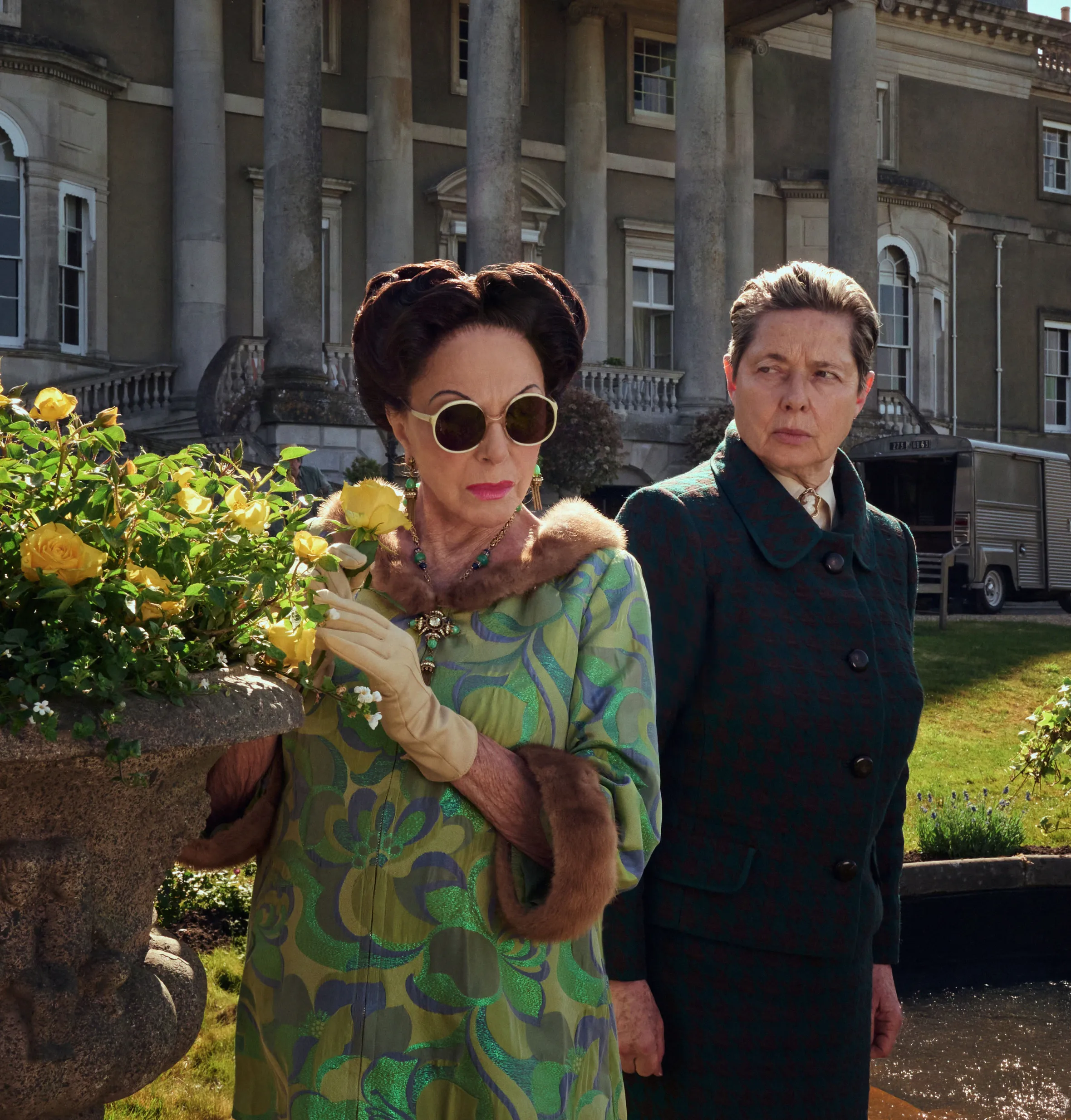 Joan Collins as the Duchess of Windsor and Isabella Rossellini as Suzanne Blum in My Duchess Rory Mulvey/John Gore Studios/PA
In its gothic menace his book is Hitchcock’s Rebecca meets George Cukor’s Gaslight. “The way I put it is if you’re a very rich widow and you’re in a failing house, you have no relations of your own, you’re not on brilliant terms with your husband’s relations and you’ve got a sly butler, a dodgy doctor, an avaricious Swiss banker and a dishonest lawyer, you’re in serious trouble,” he says. “And that’s what happened to her. They closed in on her. Maître Blum gradually got rid of all the people who were protecting her, who could have protected her, and took the thing over.”
Employed by Burke’s Peerage, the young Vickers first crossed the threshold of the Windsors’ home in the Bois de Boulogne outside Paris in 1972, just a few days before the duke’s death. He would visit many more times but heard the duchess’s voice just once, and then over the phone to her private secretary. He did meet Blum, however. “She started off charming and then menaced if she had to. It was, ‘Attends, beau monsieur,’ and all that stuff but I wasn’t taken in.”
Vickers is all but sure that a letter of authorisation apparently initialled by the duchess in 1975 was a fake made later during her incapacity. It allowed Blum to publish anything the Windsors had written over their lifetime. A book of the “love letters” was duly serialised by the Daily Mail days after the widow’s death in 1986. The duchess, Vickers maintains, wanted the papers to go to the Queen. “Blum must have made lots of money out of it. It was an international bestseller.”
This was a nasty betrayal but how sorry for them need we feel? Wasn’t the duke a crypto-fascist who, visiting Hitler in 1937, was so impressed that he came back convinced the Führer was a pacifist? “I don’t think the duke was particularly keen on Hitler,” says Vickers, who insists he certainly had no intention of returning to Britain as a puppet king after a German victory. “He spent a lot of time abdicating and getting away. I don’t think he had any wish to come back. My theory about him is he didn’t want to be king. He would have denied it but if you woke him up at four in the morning and said, ‘Do you have any regrets?’ he would have said no, he didn’t.”
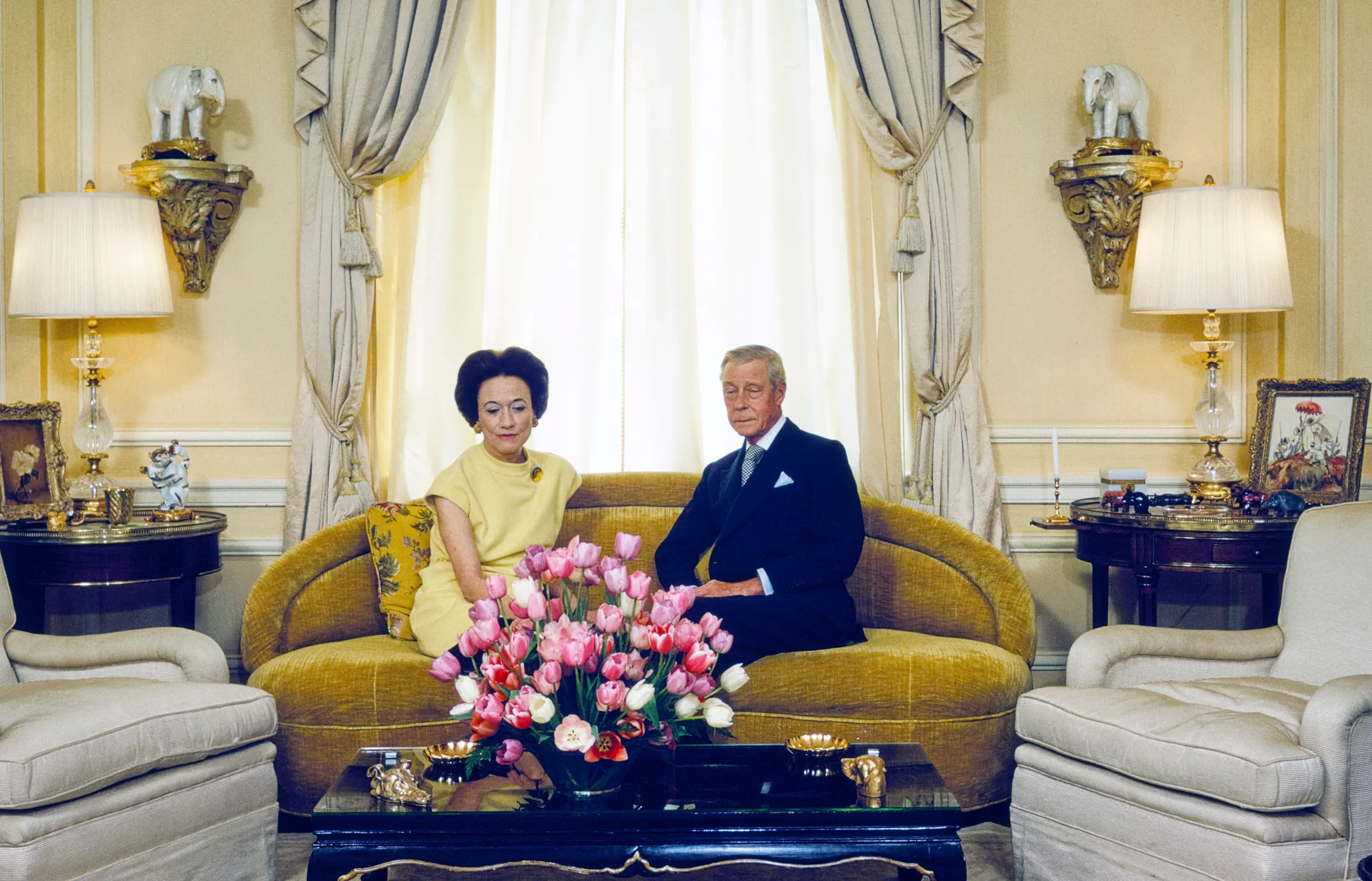 The Duke and Duchess of Windsor in 1966Circa Images/GHI/Universal History Archive/Universal Images Group/Getty Images
But wasn’t it Simpson who wanted him to abdicate? “I’m sure she didn’t. I’m sure what she liked was being the king’s friend and I don’t mind what interpretation you put on the word ‘friend’. Can you imagine? When she’s giving a dinner party, anyone would come to it to get to the king. Gold plates and flowers and delicious food would come around. Suddenly she’s having to look after a man who’s got absolutely nothing to do. There’s a poignant moment in the honeymoon when they’re in, I think, Austria, and they say, ‘What do we do now?’ She had to look after him and fill his days as best she could, and she did: she fed him better food in more beautiful surroundings in the second half of his life than he had in the first half. But it was kind of pointless.”
There’s an interesting parallel with the Sussexes now, I suggest. “It’d be the only interesting thing,” he says. “Meghan lured Harry into his escape. The duchess certainly didn’t do that, of that I promise you.”
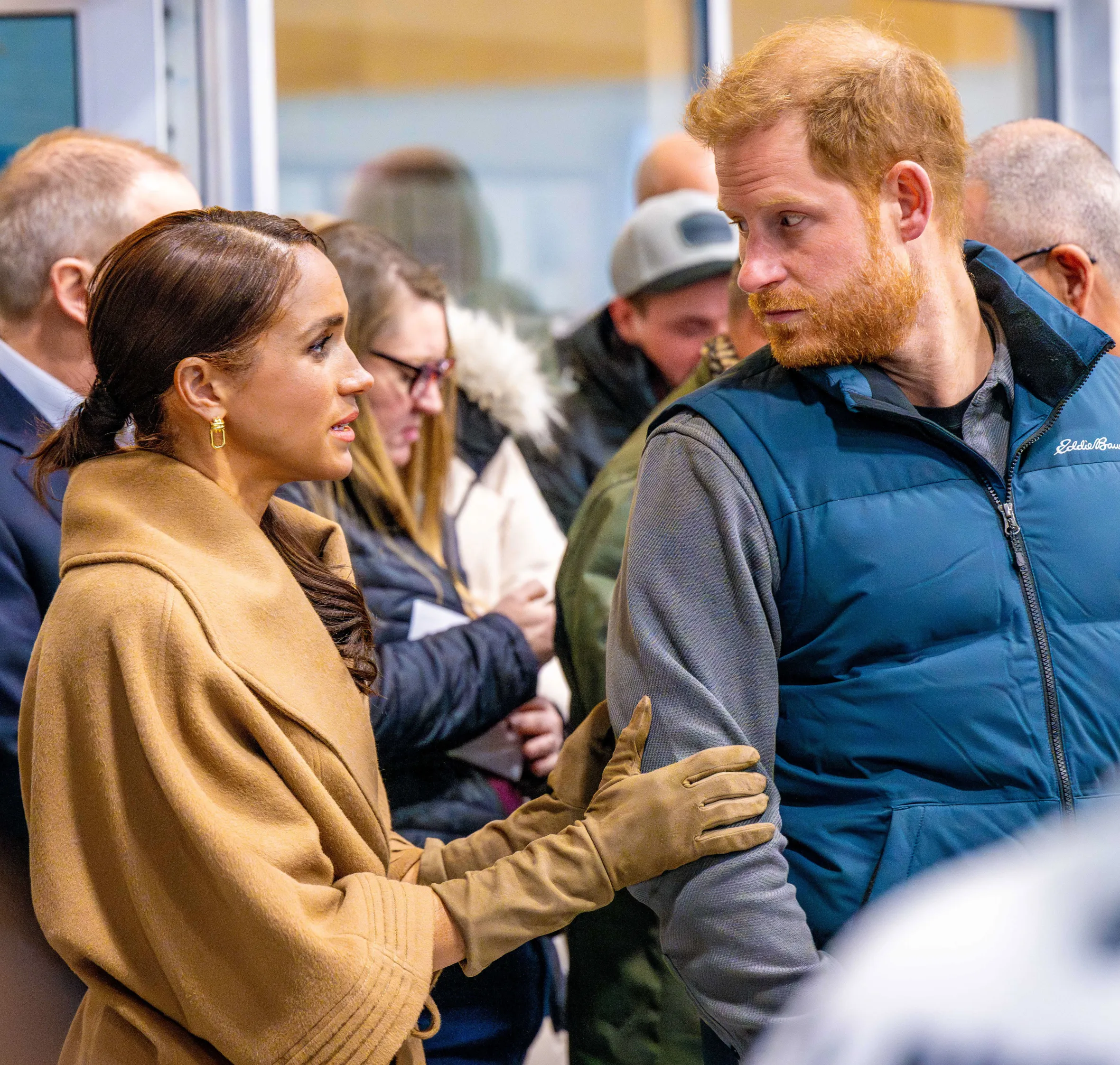 The Duke and Duchess of Sussex this monthSplash news
But I have another comparison. This is with Vickers’s private life and its turn towards the mildly sensational. In April the Daily Mail reported that Vickers had himself fallen for a glamorous American, a 70-year-old veteran of the plastic surgeon’s knife who was recently delayed by passport control officials unconvinced her wrinkle-free face tallied with her birthdate. Of her romance with Vickers, Cindy Jackson said: “People have been surprised. They didn’t realise that people could experience such joy at our age. I tell them that it’s a plot twist and this is our final chapter.”
“Ah yes,” he says, “but that article! I have been divorced since 2014, so I didn’t suddenly sort of dive off.” (Like any divorce, he says, his, from his second cousin and namesake Elizabeth Vickers, was “awful — especially when the lawyers get involved”.)
“She’s a British citizen but she comes from Ohio, yes. She lives in London,” he says of Jackson. They have been together for about seven months and met through friends while he was finishing his book Queen Elizabeth II: A Personal History. “So I shouldn’t have been doing anything else except finishing my book but I invited her out to dinner and she came, so one thing led to another.”
What can they have in common? “Well, we have lots to talk about always and we obviously know a lot of the same people, I suppose. And she’s very supportive. We have a lot of nice times together.”
So Jackson is not his Wallis Simpson? “She is not a Wallis Simpson, no, no.”
But there is one thing Jackson and the duchess have in common, I say, for Jackson too has been traduced in print. “She’s had a terrible time in the press at different times in her life, yes. But she’s a brilliant adviser on cosmetic surgery and things. She herself looks about 36. She’s very, very kind and thoughtful.”
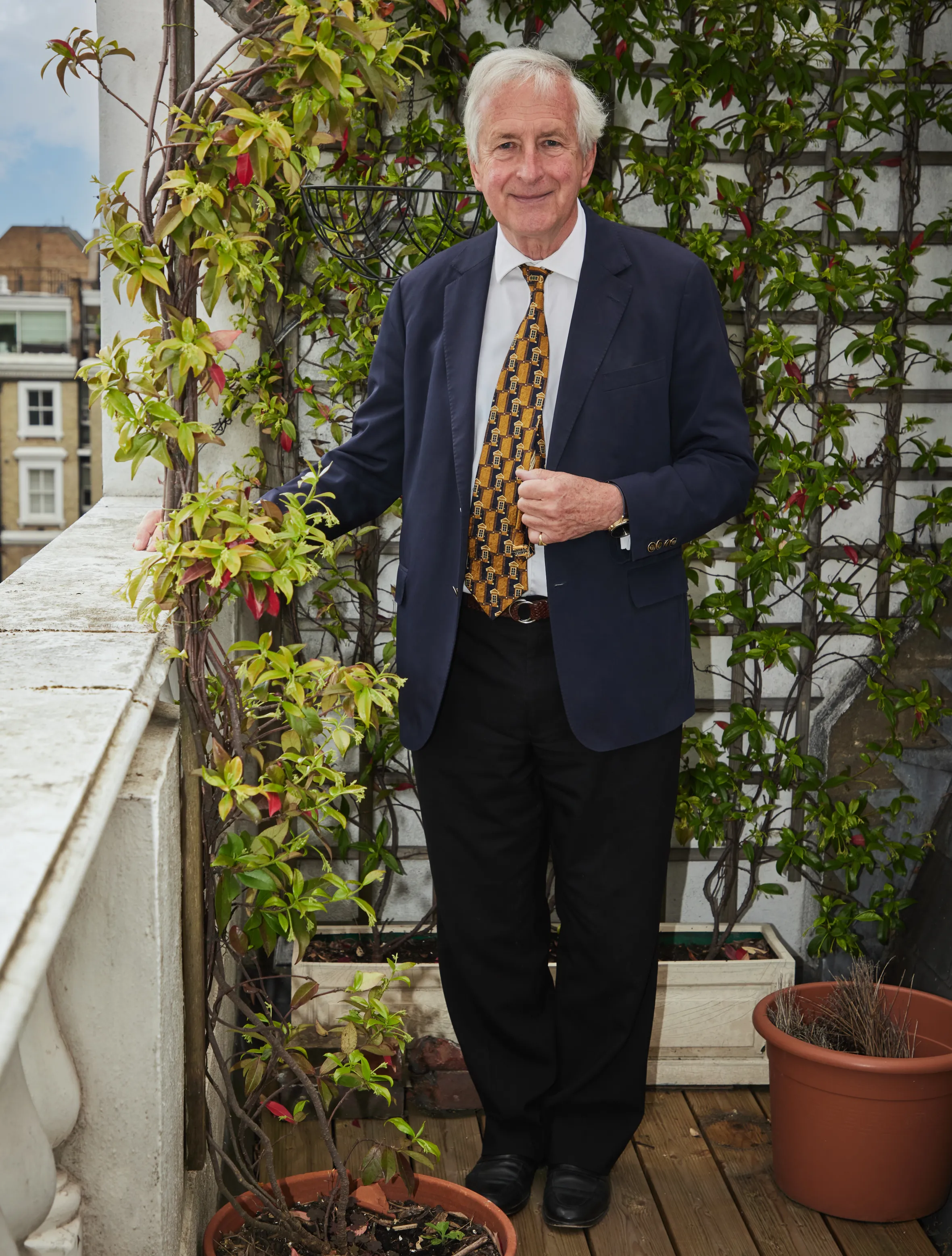 Hugo VickersAndrew Farrar for the Times
Her website fumes that she has been the target of “countless made-up clickbait stories”. She has not undergone “dozens of full-scale operations”, nor did she hold the world record for plastic surgery; indeed there is no such category, although she did once possess “a title for cosmetic procedures, mainly nonsurgical”.
She was also, which she does not deny, a girlfriend of Princess Diana’s lover James Hewitt, a reformed cad who Vickers in his new book on Elizabeth II says “proved oversexed”. Naturally he is too much of a gentleman to discuss a lady’s past. “Her name gets linked with people but I don’t know whether it’s true. That’s for her to say, not for me.”
If Vickers has a fault as a biographer, or indeed as an interviewee, it is not that he is afraid to wield the knife but that he won’t point it at anyone royal. Fortunately, occasionally mischief gets the better of him, as when I ask about the rumour that the Duke of Windsor had an unusually small penis. “I don’t think I put anything like that in my book, but I have heard people say that a page had helped to adjust the duke’s kilt and said afterwards, ‘Was it for this… !’”
More seriously, reviewers have criticised his new book on Elizabeth for neither addressing Prince Philip’s alleged affairs nor conceding that the great monarch was a poor mother, distant to her older children but absurdly indulgent of her errant second son.
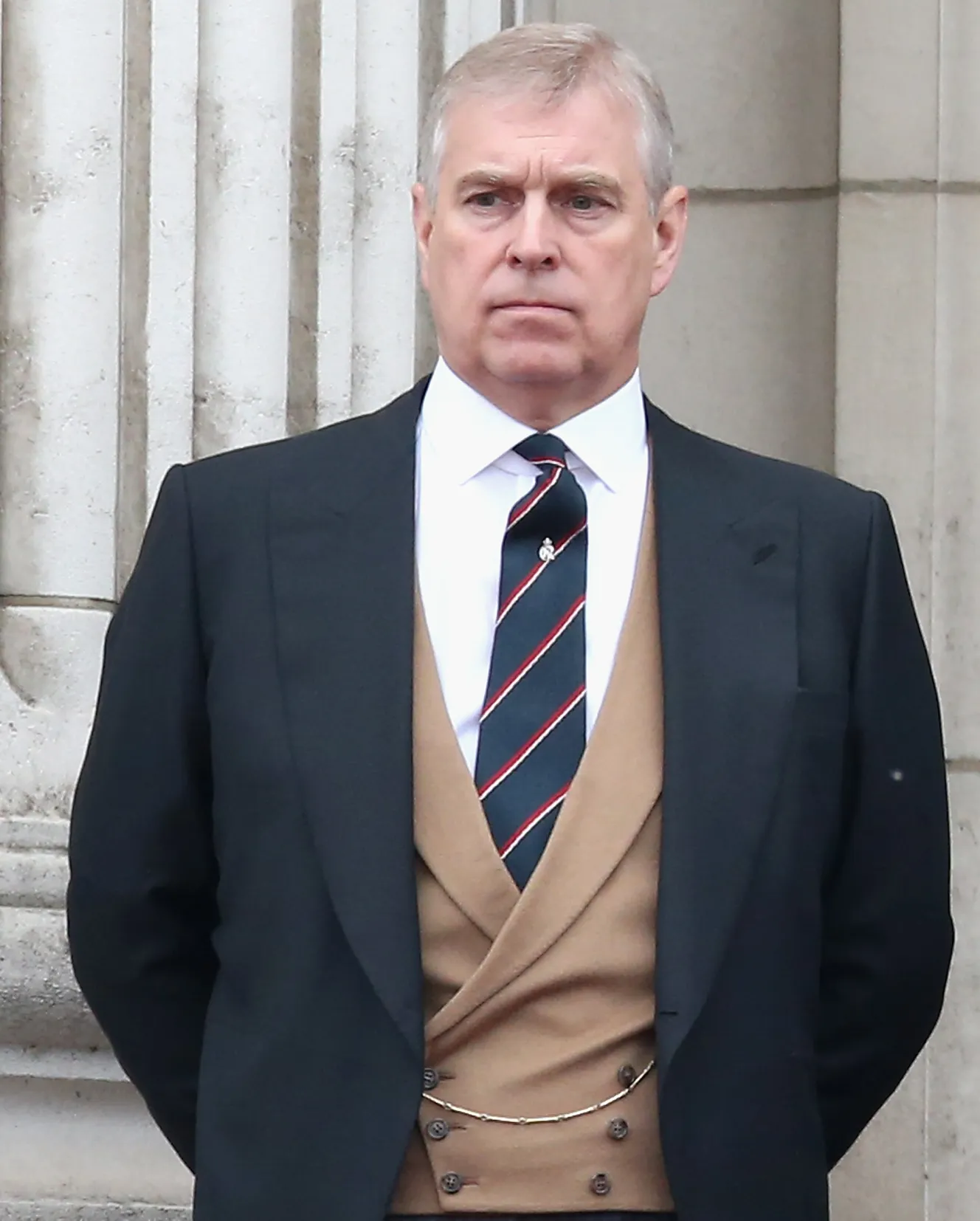 Mountbatten-WindsorChris Jackson/Getty Images
“Prince Andrew was the politest little boy you could possibly imagine,” Vickers responds. “OK, it changed, but, you know, that’s probably the little boy the Queen saw. And he was good with the Queen. She was worried about him as well, worried what was going to happen to him. Thank God she didn’t live to see what they did to him.”
They did to him?
“Well, that’s an Emily Maitlis moment, isn’t it?” he says, as if I would be offended by the comparison. “Well, look what’s happened. Listen, I don’t want to get involved in the Prince Andrew thing but he hasn’t actually been convicted in a court yet,” Vickers says, though he reflects on the possibility that he may yet be. “He’s a complete pariah. Everything’s been thrown at him. And I’m fairly certain the Queen didn’t think he was guilty of the things he was being accused of.” Mountbatten-Windsor has denied any wrongdoing.
There was a rumour in the Eighties that a teenage Vickers made tiny dolls of the royal family he kept in a doll’s house. This rumour turns out to be almost true and no secret (although I think he forgivably denied it to me when I was on the Times Diary back in the day). What he had constructed was a model of King George’s Chapel peopled with handmade dolls of “the deans, the military knights, the garter knights and the royal family”. The Lilliputian nobs now reside in Vickers’s second home in the country.
The innocence of yesteryear, I think, but then think again. As the life and death of the Duchess of Windsor demonstrates, there never was an age of innocence.
The revised edition of Behind Closed Doors by Hugo Vickers is published by Penguin on June 4