
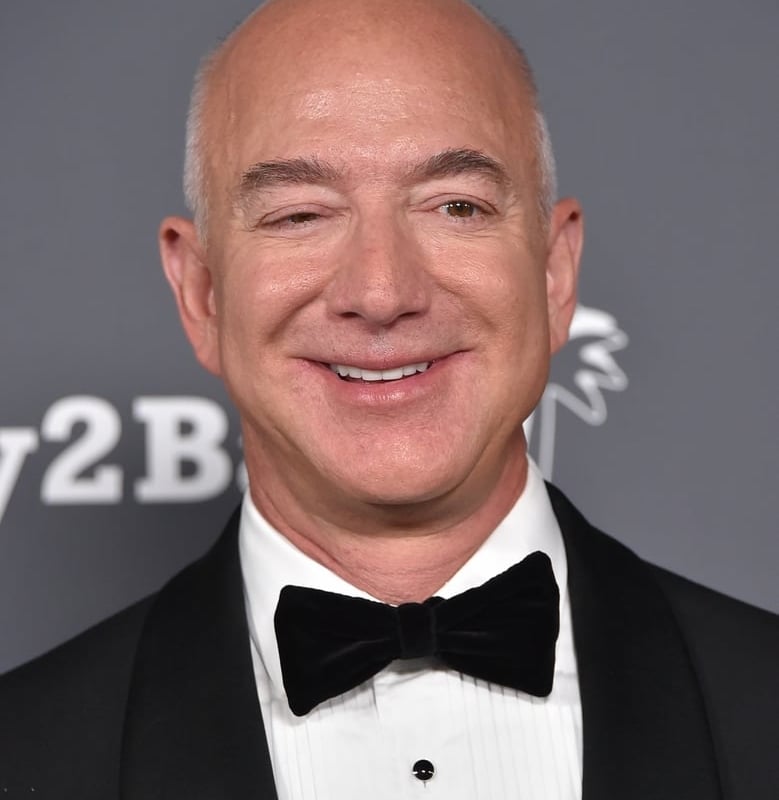
Amazon founder Jeff Bezos built a company obsessed with getting paper towels to someone’s front porch in under 24 hours and somehow turned shipping speed into a business philosophy.
So when Bezos wants to criticize inefficiency, he usually does not reach for abstract political jargon. He reaches for cardboard boxes.
During an appearance on CNBC on May 20, Bezos used Amazon’s delivery machine to make a broader point about spending, execution and results while discussing New York City’s public school system and the larger debate around taxes and government efficiency.
“If we ran Amazon the way New York City runs their school system,” he said, “your packages would take six weeks to arrive. We’d have to charge you a $100 delivery fee. And then when the package did finally arrive, it’d have the wrong item in it anyway.”
Don’t Miss:
The remark quickly stood out not simply because it was sharp, but because it perfectly captured the management philosophy Bezos has spent decades building into Amazon.
Importantly, Bezos was not arguing against public education itself or criticizing teachers individually. His point centered on outcomes, efficiency and whether massive spending actually translates into better results for the people using the system.
Bezos Was Really Talking About Execution
The comments came during a broader discussion about taxes, government spending and operational performance.
New York City’s public school system has become a lightning rod in those debates because of its enormous budget. Recent figures place annual spending at roughly $44,000 per student, among the highest levels in the country.
Bezos argued that simply adding more money to systems already struggling with execution does not automatically improve outcomes.
“You could double the taxes I pay, and it’s not going to help that teacher in Queens,” Bezos said during the interview.
New York City Mayor Zohran Mamdani responded to Bezos’ comments. “I know a few teachers in Queens who would beg to differ,” he wrote in a post on X.
That idea closely mirrors the philosophy Bezos used to transform Amazon from an online bookstore operating out of a garage into one of the most dominant companies in modern business history.
Trending: What If Your Investment Income Didn’t Rely Entirely on Market Swings? Some Investors Are Taking a Different Approach
But Bezos’ larger point was not really about teachers. It was about execution.
That philosophy has shaped Amazon from the beginning. For Bezos, customer trust comes from consistency, reliability and relentless operational discipline.
Amazon’s entire business model depends on removing friction. Fast delivery. Accurate fulfillment. Lower prices. Fewer headaches. Customers click a button and expect the right package to appear quickly and reliably at their front door.
The six-week-shipping analogy was Bezos’ way of illustrating what happens when large systems lose focus on execution while costs continue rising.
The Amazon Philosophy Behind The Remark
Bezos has spent years describing Amazon as “customer obsessed,” a phrase that became central to the company’s culture during his tenure as chief executive before transitioning to executive chair in 2021.
That mindset helped shape everything from Amazon Prime to the company’s warehouse logistics empire.
Bezos’ remarks essentially applied that same framework to public systems.
In his view, spending alone means very little if the experience for the end user — whether customer, parent or student — continues to disappoint.
That does not mean public schools operate like private businesses or should be measured identically. Bezos was making a management critique, not arguing that schools should literally function like Amazon warehouses.
See Also: Bad Ads Live Forever — See How This AI Helps Fortune 1000 Brands Avoid Them
The Investing Angle Bezos Has Quietly Influenced
The broader Bezos philosophy extends far beyond retail.
Many companies and investment platforms now market themselves around the same ideas Amazon popularized: reducing friction, simplifying access and making complicated systems feel easier for ordinary consumers.
One example is Arrived, the Bezos-backed real estate investing platform designed to let investors buy fractional shares of rental homes with just $100.
Traditional real estate investing historically required large amounts of capital, financing, property management and significant time commitments. Platforms like Arrived attempt to streamline that process into something far more accessible to smaller investors.
That “make it simpler, faster and easier for the customer” mentality is deeply tied to the operational philosophy Bezos has championed for years.
Whether in government, investing or corporate America, Bezos has long argued that outcomes matter more than intentions and execution matters more than spending alone.
That philosophy helped turn Amazon into one of the world’s most valuable companies — and, at least according to Bezos, probably kept millions of customers from opening boxes filled with toaster ovens instead of toilet paper six weeks late.
Read Next: If there was a new fund backed by Jeff Bezos offering a 7-9% target yield with monthly dividends would you invest in it?
Building Wealth Across More Than Just the Market
Rad AI
Immersed
Connect Invest
rHealth
rHealth is building a space-tested diagnostics platform designed to bring lab-quality blood testing closer to patients in minutes rather than weeks. Originally validated in collaboration with NASA for use aboard the International Space Station, the technology is now being adapted for at-home and point-of-care settings to address widespread delays in diagnostic access.
Backed by institutions including NASA and the NIH, rHealth is targeting the large global diagnostics market with a multi-test platform and a model built around devices, consumables, and software. With FDA registration in progress, the company is positioning itself as a potential shift toward faster, more decentralized healthcare testing.
Arrived
Masterworks
Lightstone
AdviserMatch
Accredited Debt Relief
Image: Shutterstock