
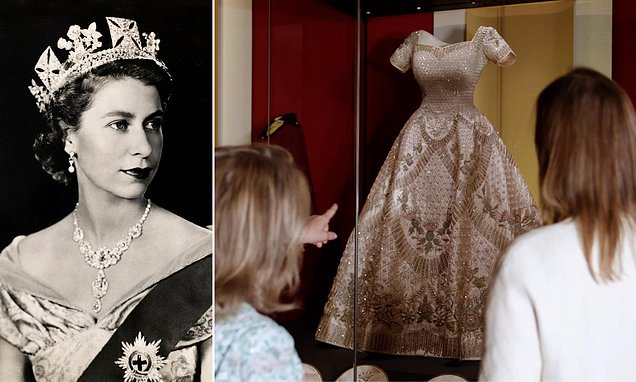
Royal historian Rebecca English has unveiled a newly catalogued Buckingham Palace exhibition detailing the precise stylistic demands Queen Elizabeth made on her 1953 coronation gown, transforming a simple dress into a powerful instrument of international diplomacy.
The newly opened wardrobe archive reveals how the young monarch navigated the delicate post-war era, forcing designer Norman Hartnell to weave the political realities of the Commonwealth into her garments. With millions tuning in globally, the dress served as a silent broadcast of unity during a fragile geopolitical moment, an act of sartorial statesmanship that continues to influence modern diplomatic dress codes.
The Commonwealth Mandate
The original sketches by Norman Hartnell envisioned an ethereal gown adorned entirely with pearls and white crystals. The monarch rejected this initial concept, demanding that the dress incorporate the floral emblems of the Commonwealth nations. This singular directive forced a complete redesign of the historic garment.
Hartnell was tasked with seamlessly integrating the English Tudor rose, the Scottish thistle, the Irish shamrock, and the Welsh leek. The inclusion of the leek posed a particular design challenge, which Hartnell resolved by rendering the humble vegetable in sparkling diamonds to elevate its aesthetic presence alongside more traditional motifs.
The Kenyan Connection and Global Reach
For citizens across East Africa, the coronation gown carries a specific historical resonance. The young Princess Elizabeth was staying at the Treetops Hotel in Kenya in 1952 when she received the news of her father’s passing. Her subsequent coronation the following year solidified a reign that would deeply intertwine with Kenya’s own journey toward independence.
The exhibition highlights how the Queen utilized her wardrobe to signal respect to international territories. By integrating global symbols into her most sacred garment, she established a precedent for diplomatic dressing that modern leaders continue to emulate. Today, visiting dignitaries in Nairobi frequently adopt local textiles or symbolic colors to convey solidarity, a direct descendant of the Queen’s 1953 stylistic strategy.
The Numbers Behind the Archive
The scale of the royal wardrobe exhibition provides unprecedented insight into the logistics of monarchical dressing. The collection features:
Over 200 meticulously preserved garments spanning a seven-decade reign.Nine specific outfits worn during the Blitz to project resilience to the British public.Garments weighing up to 15 kilograms due to the density of ceremonial embroidery.Dozens of hand-me-down dresses from the post-war rationing era, signifying shared national sacrifice.
These figures illustrate the heavy physical and symbolic weight the monarch bore during public appearances. The meticulous cataloging at Windsor Castle ensures these garments remain protected for future historical analysis.
A Masterclass in Visual Communication
The exhibition also features the majestic grey satin dress designed by Hardy Amies, worn during a pivotal 1957 state visit to the United States. This garment, embroidered with a pattern of golden leaves, was crafted to resonate with American sensibilities while maintaining a distinctively British elegance.
Experts point out that the monarch possessed an innate understanding of television’s emerging power. The coronation was the first to be broadcast globally, demanding a gown that would translate effectively through the grainy black-and-white screens of the era while maintaining dazzling physical presence in Westminster Abbey.
The legacy of this strategic dressing is evident in contemporary political campaigns across the globe. From the careful color selection of ties in parliamentary debates to the use of culturally significant fabrics at international summits, the principles established by the young Queen remain actively deployed by modern statespersons. The profound historical weight of the 1953 gown serves as a testament to the intersection of art and political strategy. Every thread and gemstone was calculated to project stability in an era of rapid decolonization and global realignment. What emerges from the Palace archives is a portrait of a leader who understood that in the theater of international relations, visual symbolism often speaks louder than the most carefully crafted diplomatic address.