
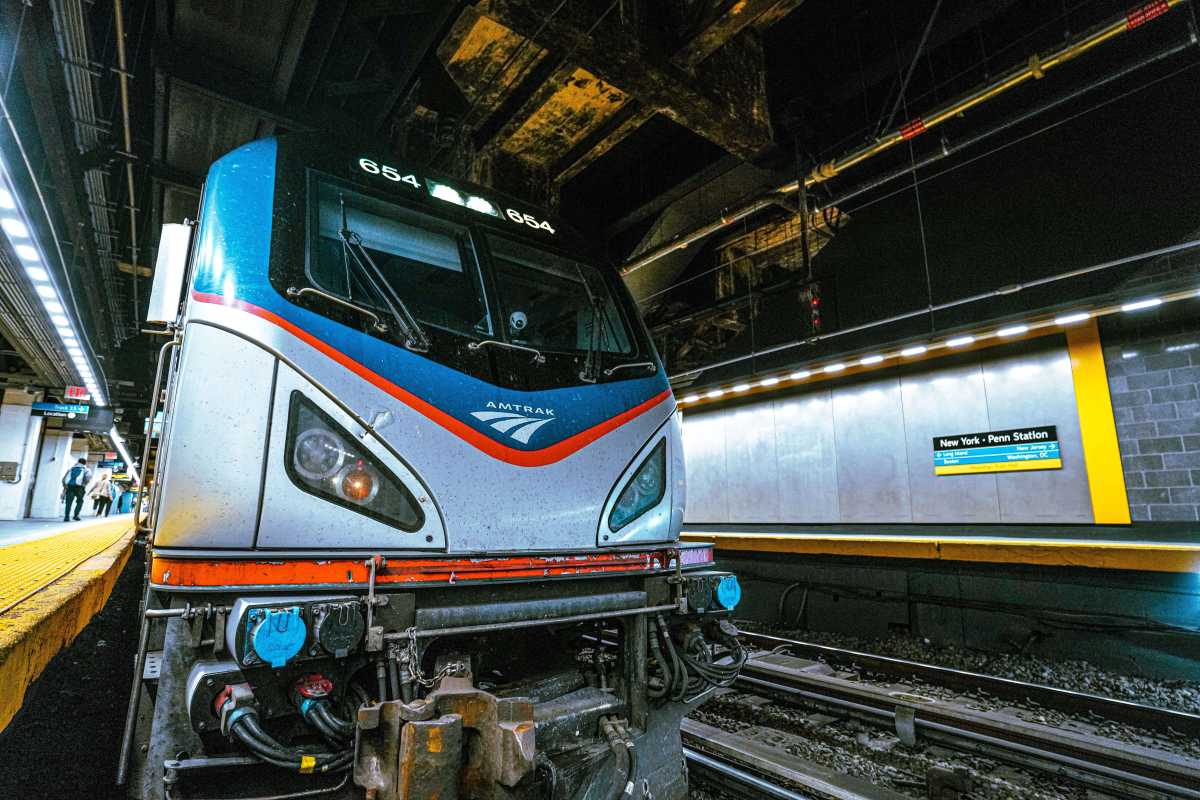
A federal judge dealt Amtrak a major legal setback on Friday by denying its request for a temporary order that would have forced Metro-North Railroad to once again allow it to use tracks they share for non-passenger train movements.
U.S. District Judge Jed Rakoff dismissed Amtrak’s plea for the court to force Metro-North, which is part of the MTA, to give the federal rail service access to its tracks to run trains not carrying passengers in the Bronx, upstate, and Connecticut while its suit, filed last month, plays out.
Rakoff’s decision came a day after he heard oral arguments on May 21. He said he would file an opinion explaining his ruling at a later date.
“Upon careful consideration of the briefs, the supportive declarations, and the arguments of counsel, the court hereby denies the petition,” he wrote.
In response to the ruling, MTA spokesperson Aaron Donovan said: “We are pleased that the Court denied Amtrak’s petition for an injunction.”
In their suit, Amtrak’s attorneys argue the MTA’s move to deny it access to tracks on both the New Haven Line (between New Rochelle in Westchester and New Haven, CT) and the Hudson Line (between New York City and Poughkeepsie) has already forced it to “cancel and delay passenger train runs.” It contends it has guaranteed access to both sections of track under its decades-old “Hudson Agreement” and “New Haven Agreement” with Metro-North.
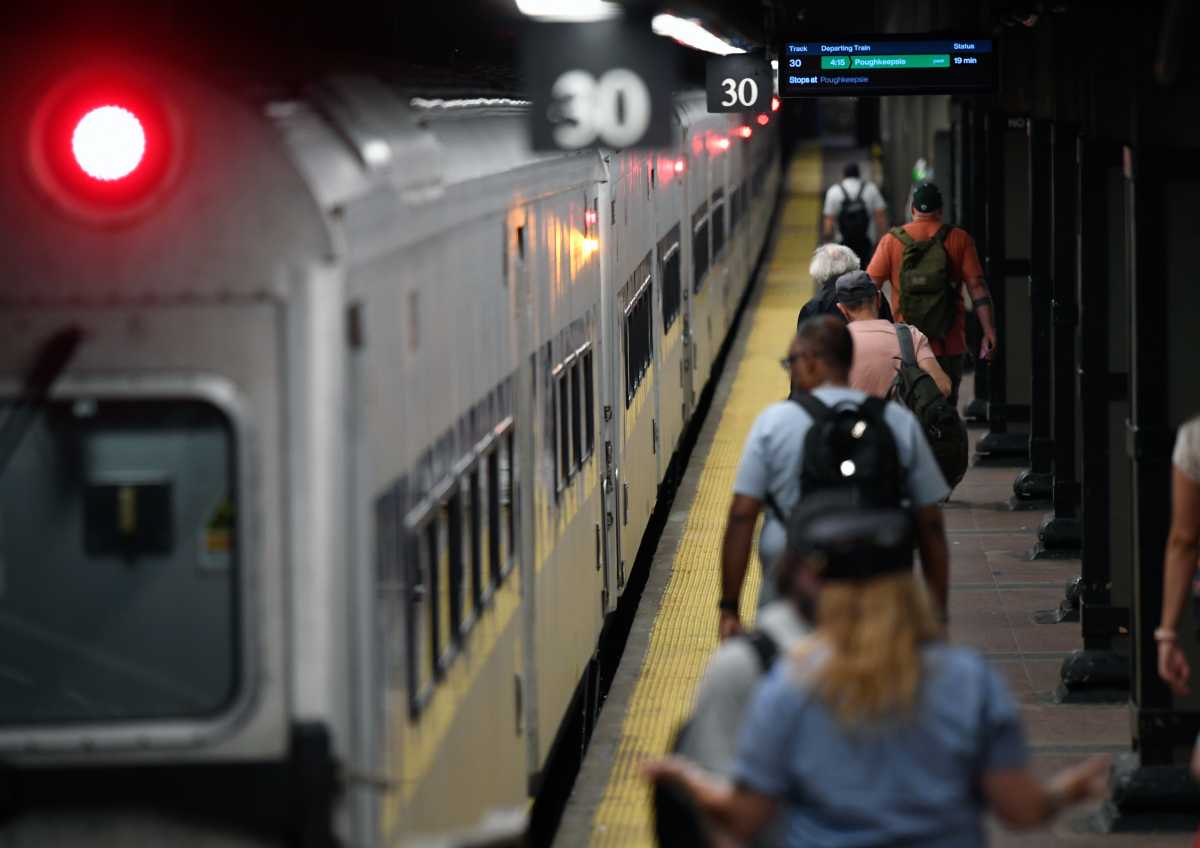 Commuters on a Metro-North Railroad platform at Grand Central Station on March 11, 2025.Marc A. Hermann / MTA
Specifically, the agency says it has not been able to run “track geometry” cars, which monitor track conditions; test new “NextGen” Acela trains; and reposition its equipment for inspection and maintenance
In a statement, Amtrak said it will press forward with its case despite the setback.
“Friday’s ruling was preliminary,” the agency said. “We will move forward with this case to ensure our customers receive the safety and reliability of our service they deserve and that Metro-North is putting at risk.”
Amtrak’s lawyers claim the MTA’s actions were retaliation for overhead wires that one of its new Acela trains allegedly damaged on the New Haven Line.
In legal filings, the MTA’s attorneys offered a different version of events.
They contended that the agency only began denying Amtrak access to its tracks after five incidents where Metro North trains’ “pantographs,” which allow them to draw power from overhead lines,” detached from the wires. In all of those instances, the MTA deployed crews to reattach the pantographs, and in two of them, they had to repair damaged overhead lines.
The MTA says it requested compensation for damages from Amtrak when the agency asked to run another Acela test in March, according to legal filings. Amtrak did not agree and filed its suit instead, they claim.
“Metro-North is committed to keeping customers safe and protecting our vital infrastructure, and it is entirely appropriate for Metro-North to require Amtrak to agree to accept responsibility for any damage their trains may cause to the Metro-North network,” Donovan said in his statement.
When Amtrak first filed its suit, top MTA officials charged that the move was intended to distract from a separate dispute between the two agencies over a section of track owned by the feds, but used by both rail services, in the eastern Bronx.
The tiff concerns the Penn Access project, which involves building four new Metro-North stations on the section of track in question— known as the Hell Gate Line. The undertaking is aimed at bringing north-south rail service to an underserved section of the Bronx — where trains pass through, but don’t stop.
MTA officials say that Amtrak has gone back on its agreement with the transit authority, by not providing it the service outages it says are needed for constructing the new stations. The agency has delayed the project, pushing back its projected completion to 2030 at the earliest, citing the delays it says the lack of access has caused.
“It’s not clear who in the federal government is directing Amtrak’s lawyers to create distractions from the real issue—getting Bronxites the service they deserve,” said John McCarthy, the MTA’s external relations head, at the time.
“The people of the Bronx have been waiting generations, watching trains blow by without stopping. We have a project that will change that and improve lives for people in the Bronx,” he added.