
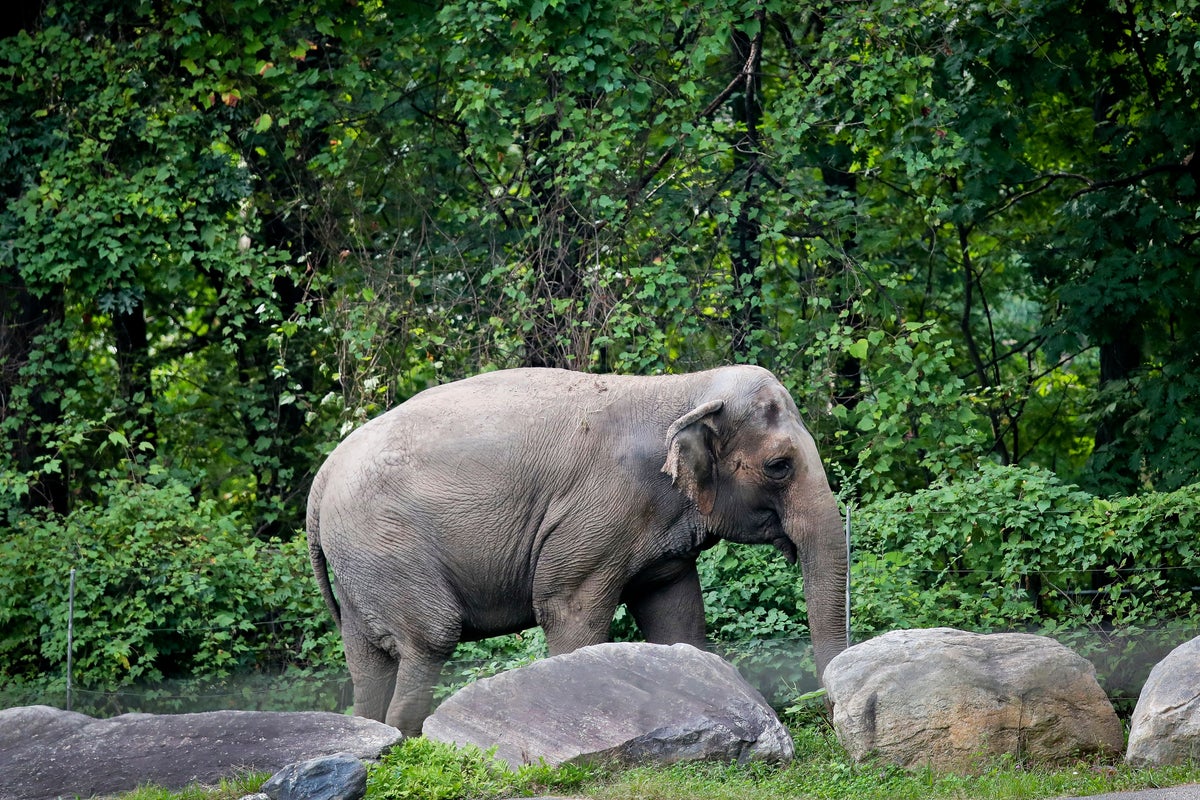
Happy, the 55-year-old Asian elephant whose profound cognitive abilities sparked a landmark legal battle over animal personhood, has been euthanized at the Bronx Zoo following a rapid, irreversible decline from inoperable internal tumors.
The death of the beloved pachyderm marks the end of an era for the Wildlife Conservation Society and reignites fierce global debate regarding the ethics of keeping highly intelligent, socially complex creatures in urban captivity. Happy was not merely an exhibit; she was a scientific pioneer and the focal point of a revolutionary legal movement that sought to redefine the boundaries of bodily liberty. Details remain under independent verification.
A Groundbreaking Mind in Captivity
Born in the wild in Asia before being transported to the United States as a one-year-old calf, Happy arrived at the Bronx Zoo in 1977. Over the next five decades, she became a fixture of the institution, deeply beloved by generations of visitors and the keepers who tended to her daily needs. Her handlers noted her high intelligence, describing how she would playfully stash treats like strawberries and watermelon inside her massive ears for later consumption.
However, Happy’s true legacy was forged in 2005. She participated in a groundbreaking cognitive study that fundamentally altered scientific understanding of animal consciousness. Placed in front of a massive mirror, Happy repeatedly used her trunk to touch a painted ‘X’ above her eye—a mark visible only in her reflection. This successful completion of the mirror self-recognition test proved a level of self-awareness previously believed to exist only in humans, great apes, and dolphins.
The Medical Reality and Final Days
Despite the meticulous care provided by veterinary staff, the biological realities of age ultimately overwhelmed the massive animal. The median life expectancy for Asian elephants in North American zoos is approximately 45 years, a milestone Happy surpassed by a full decade.
Rapid Decline: Zoo officials reported a sudden deterioration in her health over recent weeks, characterized by failing kidney and liver functions.Post-Mortem Findings: A necropsy revealed severe, crippling arthritis and massive, inoperable uterine tumors that evaded standard diagnostic imaging.The Euthanasia Decision: Faced with incurable pain and a deteriorating quality of life, the veterinary board executed the difficult decision to euthanize her on Tuesday.The Last Survivor: Her death leaves Patty, a 57-year-old elephant, as the sole remaining pachyderm at the Bronx Zoo, which previously committed to ceasing all future elephant acquisitions.Social Isolation: Happy had lived in a separate enclosure from Patty since 2006 following deadly compatibility issues with other herd members, a fact heavily criticized by animal advocates.A Landmark Legal Battle for Personhood
Happy’s profound intelligence and solitary confinement became the catalyst for unprecedented legal action. In 2018, the Nonhuman Rights Project (NhRP) filed a writ of habeas corpus on her behalf. This ancient legal principle, traditionally used to challenge the unlawful imprisonment of human beings, was deployed to argue that Happy was an “extraordinarily cognitively complex and autonomous nonhuman being” deserving of basic rights to bodily liberty.
The organization fought relentlessly through the New York state court system, demanding she be relocated to a sprawling, naturalistic sanctuary. While the New York Court of Appeals ultimately ruled against granting her legal personhood in 2022, the dissenting opinions and massive public support laid the intellectual groundwork for future animal rights litigation.
The Global Shift in Wildlife Conservation
Happy’s tragic story resonates deeply within global conservation circles, particularly in East Africa, where the concept of caged elephants is antithetical to local wildlife management. In Kenya, organizations like the Sheldrick Wildlife Trust focus intensely on the rehabilitation and eventual wild release of orphaned elephants into massive ecosystems like Tsavo National Park. The African model prioritizes herd dynamics, vast migratory freedom, and natural socialization.
The debate surrounding the Bronx Zoo is increasingly viewed through this global lens. While urban zoos argue their exhibits foster crucial public support for conservation funding, critics assert that forcing a creature capable of profound self-awareness to live in a confined, artificial environment is morally unjustifiable. The financial resources utilized to maintain a single elephant in New York could theoretically protect thousands of wild acres in Kenya.
As the Bronx Zoo mourns the loss of its most famous resident, Happy leaves behind a legacy that transcends the iron bars of her enclosure. She forced humanity to look into the mirror and confront the agonizing reality of what it truly means to hold a sentient mind captive.